
Daily Caller
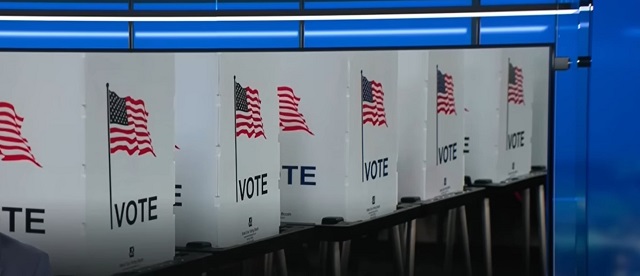
‘Zuck Bucks’ Need To Be Stopped Cold


 From the Daily Caller News Foundation
By Jason Snead
It is less than 90 days to Election Day, and right on queue the group behind the “Zuck Bucks” campaign of 2020 is back with a new scheme. This time, the Center for Tech and Civic Life (CTCL) is doling out millions in grant dollars to rural election administrators in 19 states.
Election officers beware. The group is trying to turn the government offices that run elections into bastions of partisan progressive activism. Election officials striving for nonpartisanship should steer clear.
CTCL rose to prominence during the unprecedented election of 2020. The group got $350 million from Meta CEO Mark Zuckerberg, which it then funneled disproportionately to swing-state communities that ultimately voted for Joe Biden.
Racine, Wisconsin used its CTCL money to purchase a mobile voting van that in 2022 it deployed to heavily Democrat areas of the city to register voters and collect ballots. Earlier this year, a judge declared that illegal.
After 2020, a majority of states moved to ban or restrict private funding for running election offices, including several on a bipartisan basis. This year, Wisconsin voters approved two constitutional amendments to ban private funding after the scope of CTCL’s involvement was revealed. Even Mark Zuckerberg announced he would no longer back the group’s grants.
But that did not stop CTCL. Instead, it created “Zuck Bucks 2.0,” an $80 million program called the U.S. Alliance for Election Excellence.
Now, CTCL is offering grants to rural counties, saying it is merely helping cash-strapped offices on the eve of a contentious election. Sound familiar?
The sudden interest in flyover country is laughable. In 2020, rural areas got token grants of just $5,000 while urban areas got millions. CTCL claimed that big cities have more voters and therefore need more money. Subsequent analyses showed that blue counties got far money more per voter than red counties.

Perhaps CTCL hopes this move can insulate it against criticism that it is once again influencing elections. Not so fast. Reports indicate that CTCL is setting aside $2.5 million for rural grants.
CTCL is giving $3 million to Clark County, Nevada, for this election cycle alone. Add in the huge grants offered to heavily Democrat DeKalb County, Georgia and Madison, Wisconsin, and CTCL has given nearly three times the grants to just these heavily Democrat areas (located in swing states, no less) than hundreds of rural counties could get combined.
In fairness, CTCL is not wrong that rural areas often need additional resources. But those funds should come from state and local taxpayers, not partisan groups pushing an agenda.
And make no mistake, CTCL has a political agenda. Though it claims to be nonpartisan, it’s founder and executive director is a former Obama Foundation fellow and used to work at a group the Washington Post once labeled the “Democratic party’s Hogwarts for digital wizardry.” CTCL’s donors are just as left-wing, with major liberal organizations like the Skoll Foundation, Democracy Fund, and Arabella Advisors’ New Venture Fund footing its bills.
Small wonder, then, that by this April 28 states had banned or restricted CTCL-style private funding. Over the last few years, residents in communities from Greenwich, Connecticut, to Brunswick County, North Carolina, have opposed election administrators joining ranks with such a partisan group. Ottawa County, Michigan, declined to accept $1.5 million in CTCL funds with the county clerk explaining that accepting the grant could compromise public confidence in elections.
Over the next few months, CTCL will offer hundreds of rural counties “free” money. Many may feel inclined to take it. Before they do, they should know who they are doing business with.
Rural election offices may need additional funding, but turning to partisan groups like CTCL just puts public trust in elections at risk. County officials should treat CTCL’s latest offer of “free” money the way they would treat a windowless van hanging a sign marked “free candy:”
Stay away and warn your friends.
Jason Snead is the Executive Director of Honest Elections Project Action.

From the Daily Caller News Foundation
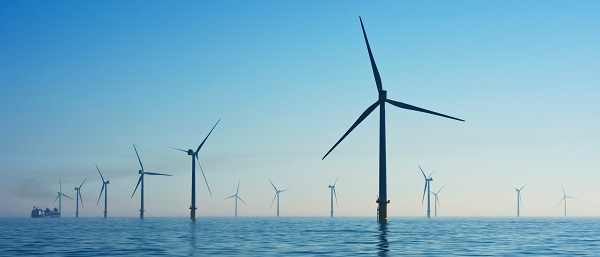
Interior Secretary Doug Burgum leveled the Trump administration’s latest broadside at the struggling U.S. offshore wind industry on Monday, ordering an immediate suspension of activities at the five big wind projects currently in development.
“Today we’re sending notifications to the five large offshore wind projects that are under construction that their leases will be suspended due to national security concerns,” Burgum told Fox Business host Maria Bartiromo. “During this time of suspension, we’ll work with the companies to try to find a mitigation. But we completed the work that President Trump has asked us to do. The Department of War has come back conclusively that the issues related to these large offshore wind programs have created radar interference that creates a genuine risk for the U.S.”
Predictably, reaction to Burgum’s order was immediate, with opponents of offshore wind praising the move, and industry supporters slamming it. In Semafor’s energy-related newsletter on Tuesday, energy and climate editor Tim McDowell quotes an unnamed ex-Energy Department official as claiming, “the Pentagon and intelligence services, which are normally sensitive to even extremely low-probability risks, never flagged this as a concern previously.” (RELATED: Trump Admin Orders Offshore Wind Farm Pauses Over ‘National Security Risks’)
Yet, a simple 30-second Google search finds a wealth of articles going back to as early as October 2014 discussing ways to mitigate the long-ago identified issue of interference with air defense radars by these enormous windmills, some of which are taller than the Eiffel Tower. It is a simple fact that the issue was repeatedly raised during the Biden Administration’s mad rush to speed these giant windmill operations into the construction phase by cutting corners in the permitting process.
In May, 2024, the Bureau of Ocean Energy Management’s (BOEM) own analysis related to the Atlantic Shores South project contains a detailed discussion of the potential impacts and suggests multiple ways to mitigate for them. An Oct. 29, 2024 memo of understanding between BOEM and the Biden Department of Defense calls for increased collaboration between the two departments as a response to concerns from members of Congress and others related to these very long-known potential impacts.
The Georgia Tech Research Institute published a study dated June 6, 2022 detailing “Radar Impacts, Potential Mitigation, from Offshore Wind Turbines.” That study was in fact commissioned by the National Academies of Sciences, Engineering, and Medicine (NASEM), a private non-profit that functions as an advisory group to the federal government.
Oh.
A report published in February 2024 by International Defense Security & Technology, Inc. describes the known issues thusly:
“Wind turbines can create clutter on radar screens in a number of ways. First, the metal towers and blades of wind turbines can reflect radar signals. This can create false returns on radar screens, which can make it difficult to detect and track real targets.
“Second, the rotating blades of wind turbines can create a Doppler effect on radar signals. This can cause real targets to appear to be moving at different speeds than they actually are. This can also make it difficult to track real targets.”
The simple Google search I conducted returns hundreds of articles dating all the way back to 2006 related to this long-known yet unresolved issue that could present a very real threat to national security. The fact that the Biden administration, in its religious zeal to speed these enormous offshore industrial projects into the construction phase, chose to downplay and ignore this threat in no way obligates his successor in office to commit the same dereliction of duty.
Some wind proponents are cynically raising concerns that a future Democratic administration could use this example as justification for cancelling oil and gas projects. It’s as if they’ve all forgotten about the previous four years of the Autopen presidency, which featured Joe Biden’s Day 1 order cancelling the 80% completed Keystone XL pipeline, a year-long moratorium on LNG export permitting, an attempt to set aside more than 200 million acres of the U.S. offshore from future leasing, and too many other destructive moves to detail here.
Again, a simple web search reveals that experts all over the world believe this is a real problem. If so, it needs to be addressed as a matter of national security. Burgum is intent on doing that. All half-baked talking points aside, this really isn’t complicated.
David Blackmon is an energy writer and consultant based in Texas. He spent 40 years in the oil and gas business, where he specialized in public policy and communications.
Daily Caller
While Western Nations Cling to Energy Transition, Pragmatic Nations Produce Energy and Wealth

From the Daily Caller News Foundation
History will likely remember 2025 as the year energy corporatists finally stopped pretending there is a climate crisis. For a decade, a bizarre theater of the absurd played out as titans of the oil and gas industry apologized for their core business while pledging allegiance to a “green transition” that existed mostly in the imaginations of Western bureaucrats. But the curtain has seemingly fallen.
ExxonMobil, one of the world’s largest energy producers, has slashed $10 billion from its low-carbon investment commitments through 2030. Simultaneously, the company announced that it expects $25 billion in earnings growth from 2024 to 2030 to be powered primarily by increases in oil and gas production, which will push daily output to 5.5 million barrels of oil equivalent by the end of the decade.
This is not a company abandoning climate responsibility but rather at last recognizing what has long been obvious: The path prescribed by the climate industrial complex is economically destructive and operationally impossible – even with massive government subsidies.
Dear Readers:
As a nonprofit, we are dependent on the generosity of our readers.
Please consider making a small donation of any amount here.
Thank you!
For years, the global energy strategy has been surreal. Companies that built the modern world on the back of energy-dense hydrocarbons indulged those celebrating the arrival of wind turbines and solar panels to power civilization. But reality, stubborn and unforgiving, has interrupted the psychedelic revelry.
ExxonMobil’s low-carbon investments will be paced to policy support and customer demand, says the company. That is corporate speak meaning that spending on green projects is paused unless the government – using our tax dollars – subsidizes the risk or until a market exists.
Megaprojects, once heralded as the future, are now in line for deferral. Why? Because without taxpayer handouts, the economics of trying to bury underground a plant food like carbon dioxide simply do not work – and defy common sense.
The energy sector is pivoting from a strategy of “grow clean at all costs” to “returns first, transition last.” “Green” projects are being relegated to a secondary capital bucket – a token for good PR instead of a core activity.
Europe’s Shell and Aker BP and Canada’s Enbridge have withdrawn from the Science Based Targets initiative to establish “science-based emissions reductions.” This was a retreat from what is described as a “credible, science-based net-zero framework” because there was neither credibility nor science. It was a political suicide pact. The energy giants looked at the cliff’s edge and refused to jump.
British multinational BP, having abandoned its promise to go “Beyond Petroleum,” has raised its oil and gas spending and softened its renewable targets.
ENEOS Holdings, a Japanese refiner, has discarded hydrogen production targets, with CEO Tomohide Miyata explaining that “the shift toward a carbon-neutral society appears to be slowing.”
These U-turns represent a renaissance in policy realism. Energy needs do not disappear because politicians make speeches at climate summits or corporations allocate funds to ESG programs or governments attempt to control consumption and choices of appliances and automobiles.
Second thoughts about an inevitably doomed “green” transition is a victory for the single mother in the U.S. trying to budget for winter heating and for the small business owner in the U.K. whose margins are crushed by one of the highest commercial electricity rates in the world. And for the billions of people in developing nations, this pivot could be salvation from generational poverty.
The question now is whether governments will recognize what corporations have made clear: that the energy transition was a fantasy infused with scientific language and draped in moralistic gingerbread. Or will they continue to increase subsidies and regulations?
Very likely, there will be a bifurcation: on the one hand, western bureaucracies, particularly in Europe, continuing an economic decline under mandates and taxes, and on the other, pragmatic governments, many of them in Asia, pursuing prosperity with fuels and technologies that work.
Vijay Jayaraj is a Science and Research Associate at the CO2 Coalition, Fairfax, Va. He holds an M.S. in environmental sciences from the University of East Anglia and a postgraduate degree in energy management from Robert Gordon University, both in the U.K., and a bachelor’s in engineering from Anna University, India. He served as a research associate with the Changing Oceans Research Unit at University of British Columbia, Canada.


Alberta Next Panel calls to reform how Canada works

All 12 Vaccinated vs. Unvaccinated Studies Found the Same Thing: Unvaccinated Children Are Far Healthier

Canadian government launches trial version of digital ID for certain licenses, permits

Carney Floor Crossing Raises Counterintelligence Questions aimed at China, Former Senior Mountie Argues
-
Alberta2 days ago
Alberta Next Panel calls to reform how Canada works
-
 International2 days ago
Georgia county admits illegally certifying 315k ballots in 2020 presidential election
-
 Business2 days ago
The “Disruptor-in-Chief” places Canada in the crosshairs
-
 Artificial Intelligence2 days ago
UK Police Pilot AI System to Track “Suspicious” Driver Journeys
-
 Energy2 days ago
‘The electric story is over’
-
 Business2 days ago
Warning Canada: China’s Economic Miracle Was Built on Mass Displacement
-
 Energy2 days ago
The Top News Stories That Shaped Canadian Energy in 2025 and Will Continue to Shape Canadian Energy in 2026
-
Daily Caller24 hours ago
US Halts Construction of Five Offshore Wind Projects Due To National Security