
Censorship Industrial Complex
‘We are in the most dangerous anti-free speech period in our history’

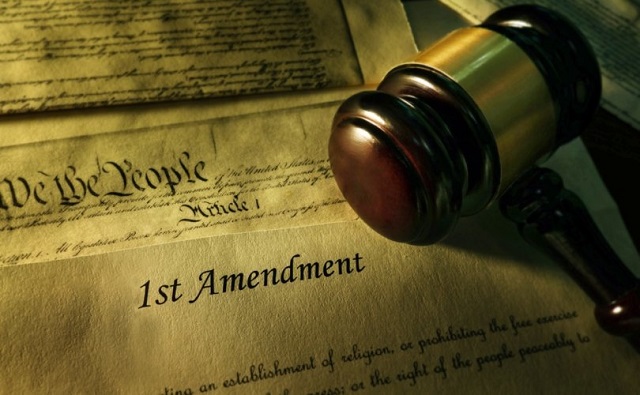

From LifeSiteNews
By Tom Olohan
“It’s hard to get a free people to give up freedom, you have to make them afraid, you have to make them very afraid. And that’s why you hear this echo chamber that its free speech that’s endangering us”
Jonathan Turley, a Fox News contributor and George Washington University law professor, issued some stark warnings on the future of free speech.
During the July 12 episode of MRC UnCensored, MRC Free Speech America Vice President Dan Schneider spoke with Turley about his new book, The Indispensable Right: Free Speech in an Age of Rage, and his observations about free speech and the media from a long and successful career.
Turley warned that journalism schools have abandoned long-held standards and young Americans have been indoctrinated against free speech. He made clear that a dangerous public-private partnership between powerful institutions threatened the future of the First Amendment.
“We are now in what the book refers to as the most dangerous anti-free speech period in our history, and the reason is indeed this alliance that has never formed before, of the government, corporations, academia [and] the media, all aligned against free speech,” he said.
Turley followed with a description of this alliance’s twisted rationale. “You now have on college campuses and in many media outlets, the unrelenting mantra that free speech is dangerous, that it is threatening us, threatening jobs, even threatening lives,” Turley said. “And the idea here is very simple, it’s hard to get a free people to give up freedom, you have to make them afraid, you have to make them very afraid. And that’s why you hear this echo chamber that its free speech that’s endangering us and if you just give the government more power over your speech you’ll be happy and safer.”

When Turley warned that the “wave” of censorship arriving in America “began in Europe,” Schneider lamented that American free speech had once inspired advocates of freedom in Europe and the world, such as Lech Wałęsa and Václav Havel. “And something has changed again, in Europe, in here, where people now see free speech as a threat to democracy, as a pose to the most important central element of democracy.”
Turley dug deep from his experience and observations to explain this state of affairs. He mentioned that he had poured 30 years of work into his book and observed the media make a massive turn for the worse during that period.
The Fox News contributor also noted that journalism schools have officially abandoned objectivity and neutrality. Turley made the point that the media had abandoned its principles in part because new graduates had been taught to abandon them: “J-schools now teach that, that objectivity and neutrality get in the way of social and political agendas. That’s what we’re producing from J-schools and its having an impact.”
To demonstrate just how radical newsrooms have become, Turley mentioned a recent conflagration at The Washington Post. Turley said that employees tried to get Post Publisher and CEO William Lewis fired for demanding changes to their unpopular and radical approach.
Reprinted with permission from NewsBusters.

Censorship Industrial Complex
US Under Secretary of State Slams UK and EU Over Online Speech Regulation, Announces Release of Files on Past Censorship Efforts


Sarah Rogers’ comments draw a new line in the sand between America’s First Amendment and Europe’s tightening grip on online speech.
|
|
Censorship Industrial Complex
Canadian university censors free speech advocate who spoke out against Indigenous ‘mass grave’ hoax
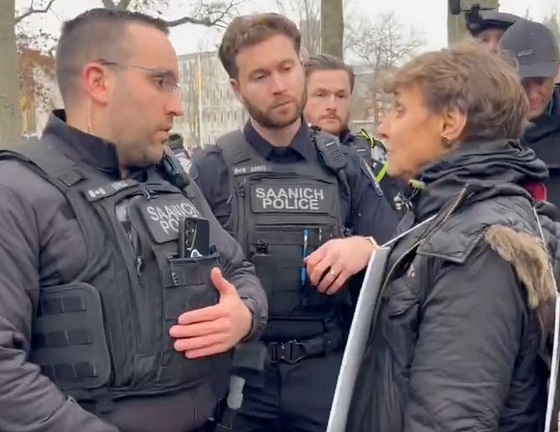
From LifeSiteNews
Dr. Frances Widdowson was arrested and given a ticket at the University of Victoria campus after trying to engage in conversation about ‘the disputed claims of unmarked graves in Kamloops.’
A Canadian academic who spoke out against claims there are mass unmarked graves of kids on former Indigenous residential schools, and who was arrested on a university campus as a result for trespassing, is fighting back with the help of a top constitutional group.
Dr. Frances Widdowson was arrested and given a ticket on December 2, 2025, at the University of Victoria (UVic) campus after trying to engage in conversation about “the disputed claims of unmarked graves in Kamloops,” noted the Justice Centre for Constitutional Freedoms (JCCF) in a recent news release.
According to the JCCF, Widdowson was trying to initiate a “good faith” conversation with people on campus, along with the leader of OneBC provincial party, Dallas Brodi.
“My arrest at the University of Victoria is an indication of an institution that is completely unmoored from its academic purpose,” said Widdowson in a statement made available to LifeSiteNews.
She added that the “institution” has been “perpetuating the falsehood” of the remains of 215 children “being confirmed at Kamloops since 2021, and is intent on censoring any correction of this claim.”
“This should be of concern for everyone who believes that universities should be places of open inquiry and critical thinking, not propaganda and indoctrination,” she added.
UVic had the day before Widdowson’s arrest warned on its website that those in favor of free speech were “not permitted to attend UVic property for the purpose of speaking publicly.”
Despite the warning, Widdowson, when she came to campus, was met with some “100 aggressive protesters assembled where she intended to speak at Petch Fountain,” noted the JCCF.
The protesters consisted of self-identified Communists, along with Antifa-aligned people and Hamas supporters.
When Widdowson was confronted by university security, along with local police, she was served with a trespass notice.
“When she declined to leave, she was arrested, detained for about two hours, and charged under British Columbia’s Trespass Act—an offence punishable by fines up to $2,000 or up to six months’ imprisonment,” said the JCCF.
According to Constitutional lawyer Glenn Blackett, UVic actions are shameful, as it “receives hundreds of millions of taxpayer dollars annually while it facilitates the arrest of Canadians attempting to engage in free inquiry on campus.”
Widdowson’s legal team, with the help of the JCCF, will be defending her ticket to protect her “Charter-protected freedoms of expression and peaceful assembly.”
Widdowson served as a tenured professor at Mount Royal University in Calgary, Alberta, before she was fired over criticism of her views on identity politics and Indigenous policy, notes the JCCF. She was vindicated, however, as an arbitrator later found her termination was wrongful.
In 2021 and 2022, the mainstream media ran with inflammatory and dubious claims that hundreds of children were buried and disregarded by Catholic priests and nuns who ran some Canadian residential schools. The reality is, after four years, there have been no mass graves discovered at residential schools.
However, as the claims went unfounded, over 120 churches, most of them Catholic and many of them on Indigenous lands that serve the local population, have been burned to the ground, vandalized, or defiled in Canada since the spring of 2021.
Last year, retired Manitoba judge Brian Giesbrecht said Canadians are being “deliberately deceived by their own government” after blasting the former Trudeau government for “actively pursuing” a policy that blames the Catholic Church for the unfounded “deaths and secret burials” of Indigenous children.
As reported by LifeSiteNews, new private members’ Bill C-254, “An Act To Amend The Criminal Code” introduced by New Democrat MP Leah Gazan, looks to give jail time to people who engage in so-called “Denialism.” The bill would look to jail those who question the media and government narrative surrounding Canada’s “Indian Residential School system” that there are mass graves despite no evidence to support this claim.


Why is Canada paying for dairy ‘losses’ during a boom?
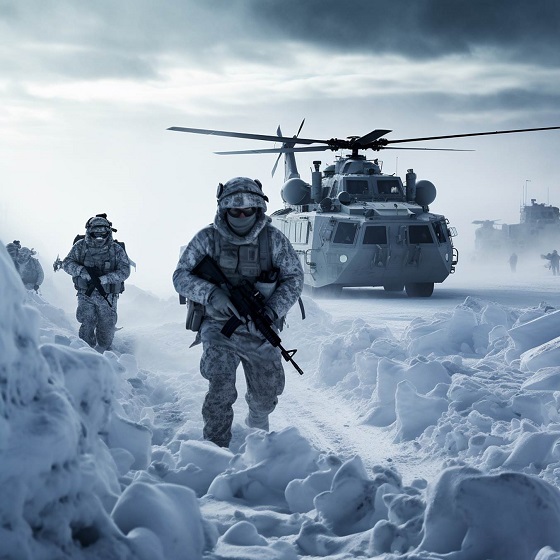
Ottawa’s Newly Released Defence Plan Crosses a Dangerous Line

Hunting Poilievre Covers For Upcoming Demographic Collapse After Boomers
Carney Floor Crossing Raises Counterintelligence Questions aimed at China, Former Senior Mountie Argues
-
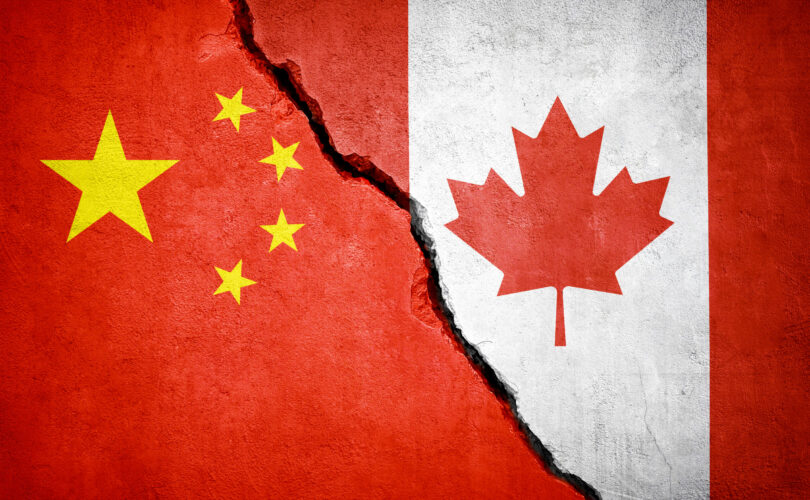 International19 hours ago
Ottawa is still dodging the China interference threat
-
 Business17 hours ago
There’s No Bias at CBC News, You Say? Well, OK…
-
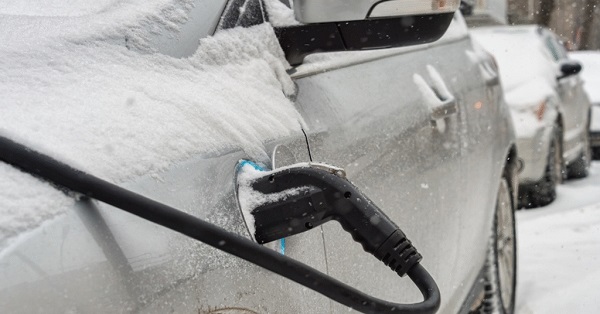 Automotive16 hours ago
Canada’s EV gamble is starting to backfire
-
 International18 hours ago
2025: The Year The Narrative Changed
-
 Fraser Institute2 days ago
Carney government sowing seeds for corruption in Ottawa
-
 Alberta2 days ago
Alberta Next Panel calls for less Ottawa—and it could pay off
-
 Daily Caller2 days ago
While Western Nations Cling to Energy Transition, Pragmatic Nations Produce Energy and Wealth
-
 Business1 day ago
Residents in economically free states reap the rewards