
Opinion
V: Remember Remember the 3rd of November


The power of speculative fiction is amazing.
Consider the examples of Brave New World, Animal Farm, 1984 and V. Their dystopian visions of our collective future was shocking, yet it was only recently that the power of the fiction was evident. Everything that was previously written is passing before our eyes.

Last year, V, was merely a brilliant film that is becoming a classic dystopian classic. This year, its power to predict the abuse of power, the misuse of the power of truth, and the power of the written and spoken word coming to fruition.
Comic book writer Alan Moore was THE brightest, most brilliant, creative writers in our modern comic book era (1980 onward). His work on Swamp thing turned what was a mediocre book and character into a must-read gothic horror.
His exploration of a country ruled by a malevolent, all powerful evil chancellor with conspiracy undertones, with absolute control over thoughts, censorship and information is becoming all too familiar. Near the end of the film, the government (under guise), has released an Avian pandemic, an airborne virus and civil war continues stoked by secret research. While V is telling his story near the middle of the film, he notes two important things; Fear is the weapon of the government AND a politician is elected who is a devil incarnate with absolute power with no empathy.
The Chancellor and his advisors also exhibit the use of government spin over a long series of events. In the film, the first bombing by V is claimed by the government to be the unscheduled Bailey demolition and the 1812 Overture just a bonus. During the narrative, the airborne virus is blamed on a Catholic Institution allegedly researching with bio warfare. Their use of government spin to divert the public from the true activities of V is a common tool in the kit of propaganda and image publicity, a practise that has descended into Virtue Signalling today and has given rise to a negative view of ‘conspiracy,’ or views that run counter to the ‘official’ story released by the powers that be to justify their responses.

The overwhelming visual in the film is that of the Guy Fawkes Mask and its symbolism. Now, we can consider that masks in our society today represent safety to some, and unwarranted governmental control to others. Complying with mask ‘regulations’ without belief in their effectiveness or complying because of a belief in their effectiveness requires both deception and faith, two sides of a coin. Another aspect of the Guy Fawkes visage is that of anonymity. In the film, thousands and thousands of masks are distributed guaranteeing wearers the ability to hide behind the truth or behind a great lie.
Let us move from fiction to ‘reality,’ and consider the situation that our world faces in 2020.
In 2019, the worlds financial and political organizations had been signalling that the economic health of the world had been decreasing and a long-term recession was possible. In early 2020, the situation was not better.
Depending on which side of the Covid 19 coin you fall on, this dreaded virus was active in mid 2019 in Wuhan and actually had been in development by the NIH and several US Universities and laboratories prior to defunding and moved to China OR it was a real virus the Chinese government released. The global players in the virus ‘fight,’ the W.H.O., The C.D.C., pharmaceuticals, investors and government health professionals laid out a ‘pandemic’ policy that included economic shut down, lockdowns, mandatory masks and a future vaccine that would save the world, even if these measures cause more damage than they are supposed to cure.
It is incredibly fascinating that after early Covid 19 mis-steps, the original scripts remain for responses despite evidence to the contrary gathered by even the W.H.O. and the C.D.C. which suggests a reversal of their earlier stances are ignored by the masses and even called ‘conspiracy’ by the main stream media that gobbled up their extreme measures. An example of this is the revised infection and mortality rates released by the C.D.C. that shows their new creation (patented by the C.D.C.) is less dangerous than a regular flu. Even the W.H.O has deemed that lockdowns and masks are not effective and has stated that, yet government policy has not reflected this voice of ‘authority.’ If we add in the growing evidence that shows increased rates of bacteriological infections and deaths in healthy individuals due to mask usage, a clear pattern has emerged, the treatment and ‘protection’ may be worse than the disease.
Meanwhile, as I have written previously, doctors and health professionals around the world including Canada have initiated legal action against governments to defend their patients from ineffective treatments. The Great Barrington Declaration signed now by more than 54,000 professionals takes issue with government response that places politics and profit before research and fact.
The Great Barrington Declaration states that:
“Covid-19 is less dangerous than many other harms, including influenza. As immunity builds in the population, the risk of infection to all – including the vulnerable – falls. We know that all populations will eventually reach herd immunity – i.e. the point at which the rate of new infections is stable…”
Yet, if world-wide professionals have enough confidence to call upon world leaders to change their policies and treatments, why do the naysayers such as Dr. Faucci have such power to dismiss a global, scientific and research based position?
With the US election rising to a crescendo this month, a factor has arisen that shows the effectiveness of yet one more tool in the tool belt of the most powerful organizations in the world: censorship. Facebook, twitter, google and other groups routinely use ‘fact checkers’ to vet posts not inline with the approved storyline. Health related stories that question Covid 19 stats, treatments and causes are routinely buried or deleted giving rise to alternate sites that have been labeled ‘conspiracy.’

In the dystopian novels by Orwell and Huxley, censorship is used extensively to control populations and films like the Matrix explore that concept. ‘Drinking the Kool aid,’ or ‘taking the blue pill,’ are phrases used to describe those who buy the accepted storylines as fact.
As an aside, the Canadian government has posted an ad looking for a ‘Story teller.’
Censorship is not merely relegated to social media and news organizations but rather it has been entrenched in constitutions around the world now by practise.
The Canadian government has Islamophobia laws in place. Some countries have anti-covid 19 ‘news’ laws proposed. Justin Trudeau, in his response to the French attack recently noted that ‘Free speech has its limits.’ I wonder who decides those limits and on what topics.
With the sheer volume of distraction news in the media today, and the ability of search engines and platforms to rank breaking stories REAL news is lost. In the US, the various broadcast news organizations have biases, and regularly practise those. Fox, CNN, TNN, ABC, the CBC, CTV and other networks routinely present half truths and ignore pressing issues and movements that test democracy and free speech.
In the film near the end, Evey and Finch, the detective are standing beside the train loaded with explosives. V is dead in the train covered with roses.
In a scene loaded with symbolism and decisiveness, she pulls the lever and sends the train towards destruction on Guy Fawkes Day.
“This country needs more than a building right now, it needs hope,” she says and the strains of the 1812 Overture rise as the flames consume the Parliament.
Theatrical, yes.
True, yes.
Today, in every country around the world we need Hope.
US Citizens need hope that the ‘building’ of political corruption is decimated. Canadian citizens need hope that our Liberal government will take control of our raging debt before we have to mortgage the Canadian Rockies to the Chinese. Western Canadians want hope that the federal government will recognize the value of our mineral resources and allow us to develop them for economic stability. Our citizens, North American, need hope to believe that we will be allowed to shop, live, worship and raise our families without onerous regulations and penalties.

There is an image of the man known as V esca
ping from the burning St. Mary’s that encapsulates the genesis of his journey and his mission. It symbolizes our present truth vs Lie, God vs Satan, Good vs evil, freedom vs control battle struggle.
V states through narration in the film, “Beneath this mask is an idea and ideas are bulletproof.”
Cut to the 1812 Overture….

Crime
The Uncomfortable Demographics of Islamist Bloodshed—and Why “Islamophobia” Deflection Increases the Threat

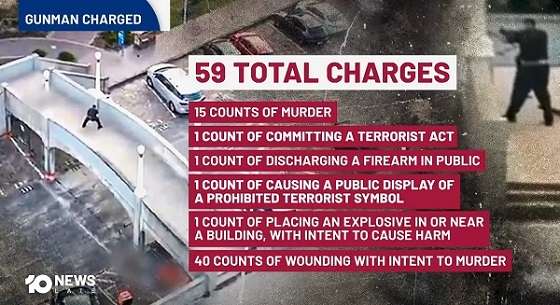

Addressing realities directly is the only path toward protecting communities, confronting extremism, and preventing further loss of life, Canadian national security expert argues.
After attacks by Islamic extremists, a familiar pattern follows. Debate erupts. Commentary and interviews flood the media. Op-eds, narratives, talking points, and competing interpretations proliferate in the immediate aftermath of bloodshed. The brief interval since the Bondi beach attack is no exception.
Many of these responses condemn the violence and call for solidarity between Muslims and non-Muslims, as well as for broader societal unity. Their core message is commendable, and I support it: extremist violence is horrific, societies must stand united, and communities most commonly targeted by Islamic extremists—Jews, Christians, non-Muslim minorities, and moderate Muslims—deserve to live in safety and be protected.
Yet many of these info-space engagements miss the mark or cater to a narrow audience of wonks. A recurring concern is that, at some point, many of these engagements suggest, infer, or outright insinuate that non-Muslims, or predominantly non-Muslim societies, are somehow expected or obligated to interpret these attacks through an Islamic or Muslim-impact lens. This framing is frequently reinforced by a familiar “not a true Muslim” narrative regarding the perpetrators, alongside warnings about the risks of Islamophobia.
These misaligned expectations collide with a number of uncomfortable but unavoidable truths. Extremist groups such as ISIS, Al-Qaeda, Hamas, Hezbollah, and decentralized attackers with no formal affiliations have repeatedly and explicitly justified their violence through interpretations of Islamic texts and Islamic history. While most Muslims reject these interpretations, it remains equally true that large, dynamic groups of Muslims worldwide do not—and that these groups are well prepared to, and regularly do, use violence to advance their version of Islam.
Islamic extremist movements do not, and did not, emerge in a vacuum. They draw from the broader Islamic context. This fact is observable, persistent, and cannot be wished or washed away, no matter how hard some may try or many may wish otherwise.
Given this reality, it follows that for most non-Muslims—many of whom do not have detailed knowledge of Islam, its internal theological debates, historical divisions, or political evolution—and for a considerable number of Muslims as well, Islamic extremist violence is perceived as connected to Islam as it manifests globally. This perception persists regardless of nuance, disclaimers, or internal distinctions within the faith and among its followers.
THE COST OF DENIAL AND DEFLECTION
Denying or deflecting from these observable connections prevents society from addressing the central issues following an Islamic extremist attack in a Western country: the fatalities and injuries, how the violence is perceived and experienced by surviving victims, how it is experienced and understood by the majority non-Muslim population, how it is interpreted by non-Muslim governments responsible for public safety, and how it is received by allied nations. Worse, refusing to confront these difficult truths—or branding legitimate concerns as Islamophobia—creates a vacuum, one readily filled by extremist voices and adversarial actors eager to poison and pollute the discussion.
Following such attacks, in addition to thinking first of the direct victims, I sympathize with my Muslim family, friends, colleagues, moderate Muslims worldwide, and Muslim victims of Islamic extremism, particularly given that anti-Muslim bigotry is a real problem they face. For Muslim victims of Islamic extremism, that bigotry constitutes a second blow they must endure. Personal sympathy, however, does not translate into an obligation to center Muslim communal concerns when they were not the targets of the attack. Nor does it impose a public obligation or override how societies can, do, or should process and respond to violence directed at them by Islamic extremists.
As it applies to the general public in Western nations, the principle is simple: there should be no expectation that non-Muslims consider Islam, inter-Islamic identity conflicts, internal theological disputes, or the broader impact on the global Muslim community, when responding to attacks carried out by Islamic extremists. That is, unless Muslims were the victims, in which case some consideration is appropriate.
Quite bluntly, non-Muslims are not required to do so and are entitled to reject and push back against any suggestion that they must or should. Pointedly, they are not Muslims, a fact far too many now seem to overlook.
The arguments presented here will be uncomfortable for many and will likely provoke polarizing discussion. Nonetheless, they articulate an important, human-centered position regarding how Islamic extremist attacks in Western nations are commonly interpreted and understood by non-Muslim majority populations.
Non-Muslims are free to give no consideration to Muslim interests at any time, particularly following an Islamic extremist attack against non-Muslims in a non-Muslim country. The sole exception is that governments retain an obligation to ensure the safety and protection of their Muslim citizens, who face real and heightened threats during these periods. This does not suggest that non-Muslims cannot consider Muslim community members; it simply affirms that they are under no obligation to do so.
The impulse for Muslims to distance moderate Muslims and Islam from extremist attacks—such as the targeting of Jews in Australia or foiled Christmas market plots in Poland and Germany—is understandable.
Muslims do so to protect their own interests, the interests of fellow Muslims, and the reputation of Islam itself. Yet this impulse frequently collapses into the “No True Scotsman” fallacy, pointing to peaceful Muslims as the baseline while asserting that the attackers were not “true Muslims.”
Such claims oversimplify the reality of Islam as it manifests globally and fail to address the legitimate political and social consequences that follow Islamic extremist attacks in predominantly non-Muslim Western societies. These deflections frequently produce unintended effects, such as strengthening anti-Muslim extremist sentiments and movements and undermining efforts to diminish them.
The central issue for public discourse after an Islamic extremist attack is not debating whether the perpetrators were “true” or “false” Muslims, nor assessing downstream impacts on Muslim communities—unless they were the targets.
It is a societal effort to understand why radical ideologies continue to emerge from varying—yet often overlapping—interpretations of Islam, how political struggles within the Muslim world contribute to these ideologies, and how non-Muslim-majority Western countries can realistically and effectively confront and mitigate threats related to Islamic extremism before the next attack occurs and more non-Muslim and Muslim lives are lost.
Addressing these realities directly is the only path toward protecting communities, confronting extremism, and preventing further loss of life.
Ian Bradbury, a global security specialist with over 25 years experience, transitioned from Defence and NatSec roles to found Terra Nova Strategic Management (2009) and 1NAEF (2014). A TEDx, UN, NATO, and Parliament speaker, he focuses on terrorism, hybrid warfare, conflict aid, stability operations, and geo-strategy.
The Bureau is a reader-supported publication.
To receive new posts and support my work, consider becoming a free or paid subscriber.


By
Individuals and communities must take responsibility for their own safety.
|
||||||||||||||||||||||||||||||||||||||||||||||||||
|
|
||||||||||||||||||||||||||||||||||||||||||||||||||
|
||||||||||||||||||||||||||||||||||||||||||||||||||
|
||||||||||||||||||||||||||||||||||||||||||||||||||
|
||||||||||||||||||||||||||||||||||||||||||||||||||
|
||||||||||||||||||||||||||||||||||||||||||||||||||
|
||||||||||||||||||||||||||||||||||||||||||||||||||
|
||||||||||||||||||||||||||||||||||||||||||||||||||
|
||||||||||||||||||||||||||||||||||||||||||||||||||
|
||||||||||||||||||||||||||||||||||||||||||||||||||
|
||||||||||||||||||||||||||||||||||||||||||||||||||
|
||||||||||||||||||||||||||||||||||||||||||||||||||



Western Campuses Help Build China’s Digital Dragnet With U.S. Tax Funds, Study Warns
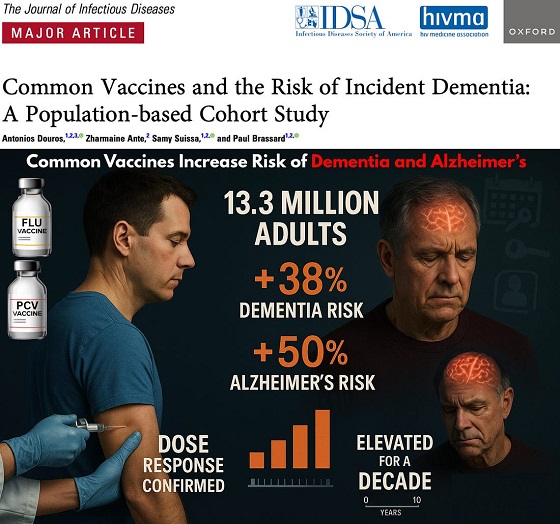
Common Vaccines Linked to 38-50% Increased Risk of Dementia and Alzheimer’s

Trump DOJ seeks to quash Pfizer whistleblower’s lawsuit over COVID shots

The $50 Billion Question: EVs Never Delivered What Ottawa Promised
-
 Digital ID2 days ago
Canada releases new digital ID app for personal documents despite privacy concerns
-
 Community1 day ago
Charitable giving on the decline in Canada
-
 Bruce Dowbiggin2 days ago
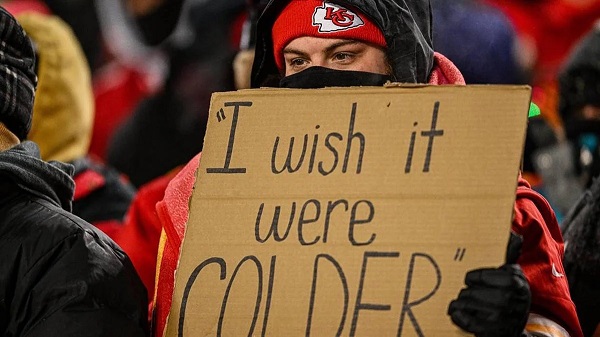
NFL Ice Bowls Turn Down The Thermostat on Climate Change Hysteria
-
 Energy2 days ago
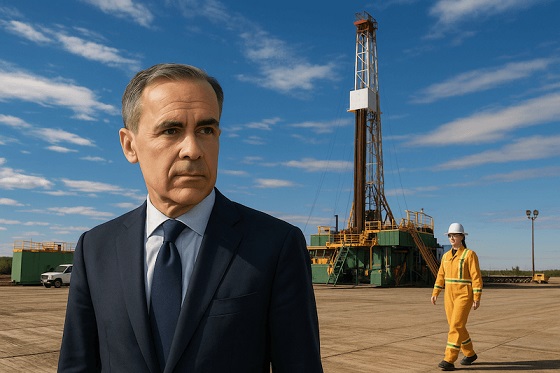
Canada’s sudden rediscovery of energy ambition has been greeted with a familiar charge: hypocrisy
-
 Crime2 days ago
Trump designates fentanyl a ‘weapon of mass destruction’
-
 Energy2 days ago
Can we not be hysterical about AI and energy usage?
-
 Energy2 days ago
Energy security matters more than political rhetoric
-
 Alberta1 day ago
Canada’s New Green Deal