
COVID-19
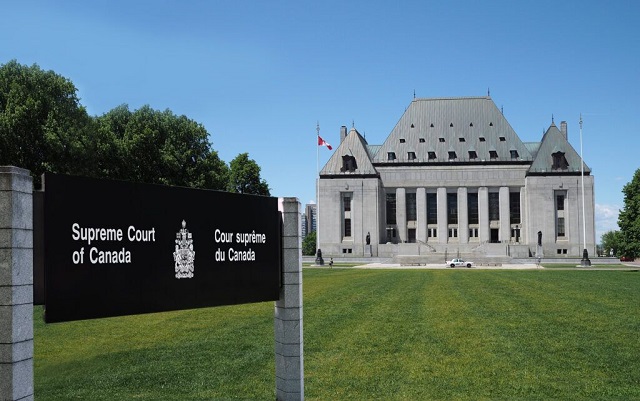
Supreme Court declines to hear Covid vaccine travel mandate cases


From the Justice Centre for Constitutional Freedoms
At the time the federal government rescinded the vaccine travel mandate, the Minister of Transport had threatened to bring back the mandate without hesitation.
The Justice Centre for Constitutional Freedoms is disappointed to announce that the Supreme Court of Canada has declined to hear the appeals in two cases that challenged the federal Covid vaccine travel mandate. The cases are Peckford et al. v. Canada and Hon. Maxime Bernier v. Canada.
The Justice Centre supported Applicants in both cases. The Applications for Leave to Appeal to the Supreme Court of Canada were filed separately.
The Hon. Brian Peckford, former Premier of Newfoundland and Labrador, was an applicant in one case, along with five others. Mr. Peckford is the last living signer of the Canadian Charter of Rights and Freedoms. The other case was brought by the Hon. Maxime Bernier, the leader of the People’s Party of Canada.
In both cases, the Federal Court held the issues were moot because the vaccine travel mandate had been rescinded after the cases had been filed and cross-examination had occurred, but prior to the court hearings. Dismissing a case as moot means that the court has found that its decision will not have a practical effect and that it is not worth the time and effort to decide the case otherwise.
In regard to the Covid vaccine travel mandate, however, at the time the federal government rescinded the vaccine travel mandate, the Minister of Transport had threatened to bring back the mandate without hesitation.
The Applicants argued that the doctrine of mootness ought to be reconsidered by the Supreme Court because emergency orders by their nature are evasive of review, resulting in no oversight by courts or elected legislators.
Hearing these cases would have allowed the Supreme Court to determine whether it is appropriate to allow governments to evade judicial scrutiny of their decisions made through emergency orders. Unlike legislation passed by Parliament, emergency orders are made through Cabinet orders and are protected by Cabinet privilege, meaning Canadians cannot learn the reasoning behind the decisions.

Lawyer Allison Pejovic says, “This case was of paramount importance to all Canadians, and they have been denied the right to know whether the federal government acted lawfully in preventing them from travelling and leaving the country based on their refusal to take a novel medication that failed to prevent transmission of Covid, and that has caused death and serious harm to many people worldwide. Deeming cases challenging draconian emergency orders that harmed millions of Canadians moot damages confidence in the justice system and undermines the rule of law.”
Background
On August 13, 2021, the federal government announced its intention of implementing a vaccine requirement for travelling on planes, trains or ships. The government, led by Prime Minister Justine Trudeau, did this two days before announcing a federal election, essentially making it an election promise. After winning a minority in Parliament, the Minister of Transport implemented the mandate on November 30, 2021.
Both the Peckford and Bernier cases asked the Federal Court to strike down the mandate as a breach of Charter sections 2, 6, 7, 8 and 15. The most significant breach was to Charter section 6, mobility rights. All applicants were essentially barred from travelling across Canada in any practical manner and could not leave the country. In Mr. Bernier’s case, this meant he was essentially barred from campaigning.
Of note, on cross examination a government bureaucrat admitted she did not receive any medical advice to implement such a mandate. It was done solely on the direction from the Minister of Transport and the federal Cabinet.
Just a few days after cross examinations concluded, the government ended the mandate on June 20, 2022. Both cases were dismissed by the Federal Court as moot in October 2022. The subsequent Appeals were dismissed by the Federal Court of Appeal.

From LifeSiteNews
A judge ruled that the Ontario Court of Justice is already ‘satisfied’ with Chris Barber’s sentence and taking away his very livelihood would be ‘disproportionate.’
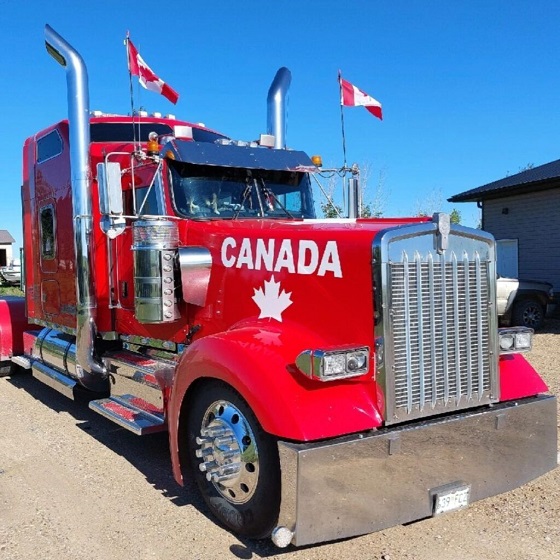
A Canadian judge has dismissed a demand from Canadian government lawyers to seize Freedom Convoy leader Chris Barber’s “Big Red” semi-truck.
On Friday, Ontario Court of Justice Judge Heather Perkins-McVey denied the Crown’s application seeking to forfeit Barber’s truck.
She ruled that the court is already “satisfied” with Barber’s sentence and taking away his very livelihood would be “disproportionate.”
“This truck is my livelihood,” said Barber in a press release sent to LifeSiteNews.
“Trying to permanently seize it for peacefully protesting was wrong, and I’m relieved the court refused to allow that to happen,” he added.
Criminal defense lawyer Marwa Racha Younes was welcoming of the ruling as well, stating, “We find it was the right decision in the circumstances and are happy with the outcome.”
John Carpay, president of the Justice Centre for Constitutional Freedoms (JCCF), said the decision is “good news for all Canadians who cherish their Charter freedom to assemble peacefully.”
READ: Freedom Convoy protester appeals after judge dismissed challenge to frozen bank accounts
“Asset forfeiture is an extraordinary power, and it must not be used to punish Canadians for participating in peaceful protest,” he added in the press release.
As reported recently by LifeSiteNews, the Canadian government claimed that Barber’s truck is an “offence-related property” relating to his involvement in the 2022 protests against Canada’s COVID mandates.
At this time, the court ruling ends any forfeiture proceedings for the time being, however Barber will continue to try and appeal his criminal conviction and house arrest sentence.
Barber’s truck, a 2004 Kenworth long-haul he uses for business, was a focal point in the 2022 protests. He drove it to Ottawa, where it was parked for an extended period of time, but he complied when officials asked him to move it.
On October 7, 2025, after a long trial, Ontario Court Justice Perkins-McVey sentenced Barber and Tamara Lich, the other Freedom Convoy leader, to 18 months’ house arrest. They had been declared guilty of mischief for their roles as leaders of the 2022 protest against COVID mandates, and as social media influencers.
Lich and Barber have filed appeals of their own against their house arrest sentences, arguing that the trial judge did not correctly apply the law on their mischief charges.
Government lawyers for the Crown have filed an appeal of the acquittals of Lich and Barber on intimidation charges.
The pair’s convictions came after a nearly two-year trial despite the nonviolent nature of the popular movement.
From LifeSiteNews
Protestor Evan Blackman’s legal team argues Trudeau’s Emergencies Act-based bank account freezes were punitive state action tied directly to protest participation.
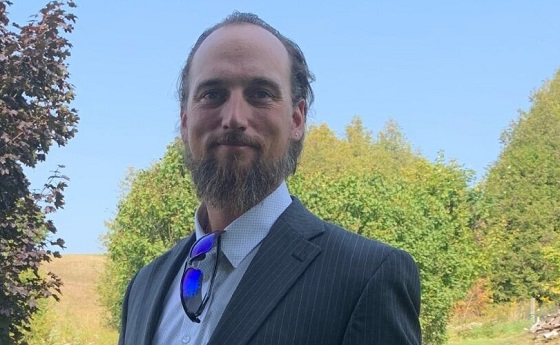
A Freedom Convoy protester whose bank accounts were frozen by the Canadian government says a judge erred after his ruling did not consider the fact that the funds were frozen under the Emergencies Act, as grounds for a stay of proceedings.
In a press release sent out earlier this week, the Justice Centre for Constitutional Freedoms (JCCF) said that Freedom Convoy protestor Evan Blackman will challenge a court ruling in his criminal case via an appeal with the Ontario Superior Court of Justice.
“This case raises serious questions about how peaceful protest is treated in Canada and about the lasting consequences of the federal government’s unlawful use of the Emergencies Act,” noted constitutional lawyer Chris Fleury. “The freezing of protestors’ bank accounts was part of a coordinated effort to suppress dissent, and courts ought to be willing to scrutinize that conduct.”
Blackman was arrested on February 18, 2022, during the police crackdown on Freedom Convoy protests against COVID restrictions, which was authorized by the Emergencies Act (EA). The EA was put in place by former Prime Minister Justin Trudeau’s Liberal government, which claimed the protests were violent, despite no evidence that this was the case.
Blackman’s three bank accounts with TD Bank were frozen due to his participation in the Freedom Convoy, following a directive ordered by Trudeau.
As reported by LifeSiteNews, in November of this year, Blackman was convicted at his retrial even though he had been acquitted at his original trial. In 2023, Blackman’s “mischief” and “obstructing police” charges were dismissed by a judge due to lack of evidence and the “poor memory of a cop regarding key details of the alleged criminal offences.”
His retrial resulted in Blackman getting a conditional discharge along with 12 months’ probation and 122 hours of community service, along with a $200 victim fine surcharge.
After this, Blackman’s application for a stay of proceedings was dismissed by the court. He had hoped to have his stay of proceedings, under section 24(1) of the Charter of Rights and Freedoms, allowed. However, the judge ruled that the freezing of his bank accounts was legally not related to his arrest, and because of this, the stay of proceedings lacked standing.
The JCCF disagreed with this ruling, noting, it “stands in contrast to a Federal Court decision finding that the government’s invocation of the Emergencies Act was unreasonable and violated Canadians’ Charter rights, including those targeted by the financial measures used against Freedom Convoy protestors.”
As of press time, a hearing date has not been scheduled.
In 2024, Federal Court Justice Richard Mosley ruled that Trudeau was “not justified” in invoking the Emergencies Act.
In early 2022, the Freedom Convoy saw thousands of Canadians from coast to coast come to Ottawa to demand an end to COVID mandates in all forms. Despite the peaceful nature of the protest, Trudeau’s federal government enacted the EA in mid-February.
After the protesters were cleared out, which was achieved through the freezing of bank accounts of those involved without a court order as well as the physical removal and arrest of demonstrators, Trudeau revoked the EA on February 23, 2022.


Ottawa’s Newly Released Defence Plan Crosses a Dangerous Line

Carney Floor Crossing Raises Counterintelligence Questions aimed at China, Former Senior Mountie Argues

All 12 Vaccinated vs. Unvaccinated Studies Found the Same Thing: Unvaccinated Children Are Far Healthier
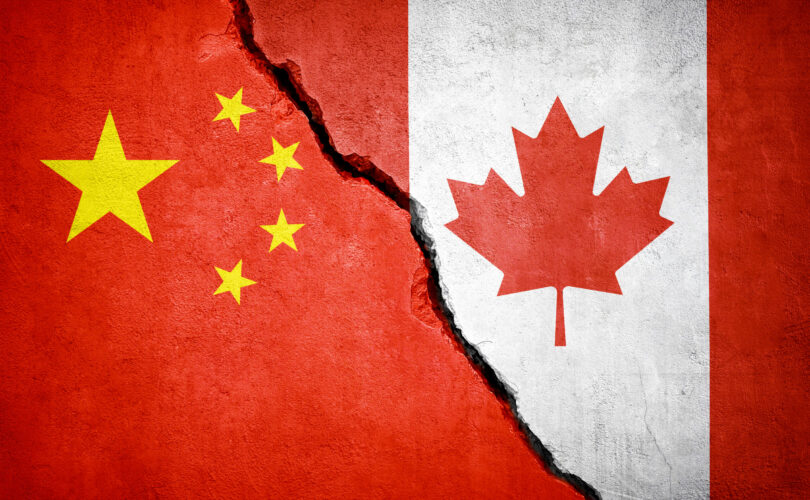
Ottawa is still dodging the China interference threat
-
 Agriculture23 hours ago
End Supply Management—For the Sake of Canadian Consumers
-
 Digital ID21 hours ago
Canadian government launches trial version of digital ID for certain licenses, permits
-
 Alberta20 hours ago
Alberta Next Panel calls to reform how Canada works
-
 Business18 hours ago
The “Disruptor-in-Chief” places Canada in the crosshairs
-
 International15 hours ago
Georgia county admits illegally certifying 315k ballots in 2020 presidential election
-
 Artificial Intelligence19 hours ago
UK Police Pilot AI System to Track “Suspicious” Driver Journeys
-
 Energy14 hours ago
‘The electric story is over’
-
 International22 hours ago
World-leading biochemist debunks evolutionary theory