
Brownstone Institute
Poynter’s Creepy ‘Fact-Based Expression’

From the Brownstone Institute

Fact-based expression.
That is what the once vaunted now openly vile Poynter Institute – a pivot point of the international censorship-industrial complex – wishes to “strengthen…around the globe.”
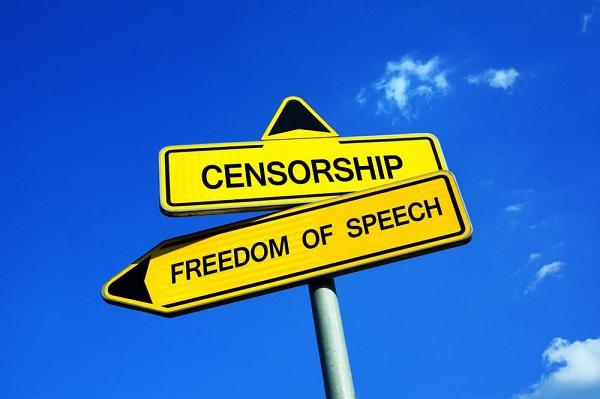
Pointedly, not “free speech,” but “fact-based expression.”
They’re not the same thing.
This absurd term, floated through the invite to read the institute’s annual and recently released “Impact Report,” may at first blush seem to be yet another silly woke wiggle, like “birthing person (mother) or “involved in the criminal justice system” (a felon) or “experiencing homelessness” (vagrant).
Like many Orwellian neologisms, it might, if you hear it only once or twice, seem to make a tiny bit of sense because “fact-based expression” implies telling the truth.
But like so many other progressive rewordings, it is purely an attempt to sound reasonable so as to mask a deeply ominous intent.
That intent? To control speech and public discourse by being the lone decider as to what is factual and what is not and those decisions are being – and will be – made based on the sociopolitical outlook of the progressive woke elite, the socialite socialist statist global drivers that fund Poynter.
But the Poynter Institute – once the premier media/journalism teaching and thinking, for lack of a better term, organizations – made a significant error in rolling out the term: it appears right after “free press,” inviting the clear comparison.
“…meaningful achievements we have made to help strengthen a free press and fact-based expression around the globe,” is how the email introduction to the report read.
So why not simply say “free speech?”
Because that’s not what they want at all (they don’t really believe in a free press either, noting the importance of the press being “responsible,” i.e..housebroken.)
To the contrary, “fact-based expression” demands both self and external censorship, a political, social, and cultural censorship that will drown out and drone on.
That is the business Poynter is in now – fact-checking. So Poynter will be telling the world what constitutes “fact-based expression” and what is not, what is verboten.
How convenient for Poynter, how wonderful for the globalists, how terrible for everyone else.
And Poynter has the connections to make it stick – take December, 2020 and Covid for example.
The American Medical Association “partnered” with Poynter to spread the gospel of vaccines, of pandemic panic, and the evils of “misinformation.”
Poynter even offered an online course that local (and national) news people from around the country could take that would leverage the trust they have built in the community to convince people to take the “vaccine:”
We know from previous vaccination efforts that local news is critically important: Audiences trust local news the most, and local journalists will be critical in guiding the public to vaccine administration sites and explaining eligibility.
The first rounds of vaccines will be based on new mRNA technology that, while being a scientific breakthrough, may raise questions in the public’s mind about safety and efficacy. We will explain the technology in ways you can pass along to the public.
The course made sure the locals reported how safe the vaccine was, how important it was, and what “misinformation” about the vaccine needed to be shot down.
Oddly enough, it also worked to help journalists “explain to audiences the importance of the second dosage of the vaccines.” On December 4, 2020 – curiously early for that specific topic – the “vaccine” had been out for only a couple of weeks.
As for all of 2020, you can see Poynter’s round-up here. Note it features the term “covidiot.”
(And you can watch a rerun of the webinar here.)
How convenient for Poynter, how wonderful for the globalists, how terrible for everyone else.
Just nine years ago, Poynter had a budget of $3.8 million and, unless you worked in the media, you had no idea it even existed. Today, thanks to massive support from the likes of Google, Meta (Facebook), and others, Poynter is a $15 million a year nexus point for those who wish to control the press and, more importantly, what everyone else says.
Poynter runs PolitiFact, a media outlet that pretends to be in the business of checking facts.
But it does no such thing. It is a global elite swamp third-party validation machine that twists and turns and backflips to put its “FACT” stamp of approval on just about anything that needs to be buttressed.
Or, more importantly, it stamps “FALSE” on a statement or story or concept that is at odds with the current popular narrative that keeps that same global elite in power (a litany of Poynter’s obfuscation and the tricks it uses can be found here).
It runs MediaWise, an outfit that claims to train (largely) younger people how to spot “misinformation,” something that does not actually exist but is a pillar of the censor’s claim to their right to exist. And through its “Teen Fact Checking Network,” Poynter is training a new generation of censors.
If Poynter were honestly trying to stop misinformation, it would not practice the art so well.
And Poynter is the home of the International Fact Checking Network, a group of global media and other fact-checking organizations that is dedicated to “fighting repression and misinformation.”
To quote the IFCN chief: “Misinformation is on the march. The politically powerful are using disinformation to confuse the public and control the agenda. And fact-checkers and other journalists face attack and harassment simply for doing their jobs,” said Angie Drobnic Holan, IFCN director. “Yet our work continues. We are on the side of truth. We are on the side of information integrity.”
And the IFCN determines what is the truth, what information has the requisite “integrity” to pass muster?
In other words, doing to the world what it has done to the United States: work with social media and government agencies to stamp out dissent.
April 2 was “International Fact Checking Day.” To honor the occasion, Drobnic Holan took to her blog to claim that fact-checkers are not censors and, it appears, that the Murthy v. Missouri case currently in front of the United States Supreme Court is not really about the basic and immutable American tenet of freedom of speech but about letting misinformers keep muddying the waters of official truth:
The Supreme Court case is primarily about the government’s actions in dealing with tech platforms: Did the Biden administration go too far in asking for takedowns of vaccine-related misinformation? For years, similar attacks have been aimed at fact-checkers. As director of the International Fact-Checking Network, I’ve watched this movement label fact-checkers as part of a “censorship industrial complex,” claiming that fact-checkers are trying to suppress debatable information.
Ironically, this deeply misleading argument itself is aimed at suppressing critique and debate.
Google and Meta (Facebook) and TikTok are, as noted, Poynter funders and use its products to help decide what is or is not allowed on their platforms. That actual fact does not bode well for the neutrality of Poynter’s fact-checking efforts.
Specifically as to TikTok, Poynter proudly claims that “(T)hrough innovative fact-checking partnerships with Meta and TikTok, PolitiFact is slowing the spread of thousands of pieces of false or harmful online content each month — reducing future views of false information by 80% on average.”
And Poynter decides what is “harmful” and “false.”
And just a few days ago, clearly in response to the bill to force the sale of TikTok going through Congress, Poynter decided to “fact check” who really owns TikTok. Poynter decided that the statement that the “Chinese government owns TikTok” is – surprise surprise – false.
Because of its vaunted past, Poynter is the respectable (actually becoming less respectable with each passing million) face of the international movement to determine what the public can talk about.
And it seems being in the “fact” industry is good for business – budget tripled, staff doubled, got far more notoriety, and getting a bit of actual global power, all in the past decade.
Google, Meta, the Omidyar network (lefty media funders), The Just Trust (a spinoff of the Chan-Zuckerberg Initiative that focuses on “criminal justice), TikTok, the MacArthur Foundation, and the Stanford Impact Labs, which “invests in teams of researchers working with leaders in government, business, and communities to design, test, and scale interventions that can help us make progress on some of the world’s most pressing and persistent social challenges” are some of the major funders of Poynter.
All of the above are powerful progressive/woke companies and foundations and are intertwined with the global movement to muzzle the freedom of the average person, to create a rental world in which people will simply be interchangeable cogs to be watched, fed, and placated.
Another funder of Poynter is the National Endowment for Democracy (NED), one of the most caustic – and powerful – members of the international “civil society” behemoth that lay somewhere between government and private industry and is now more powerful than either.
Note: NED was specifically founded in the 1980s to do in public what the CIA could no longer do in secret: play international politics, foment revolutions, buy supporters, and influence foreign media.
Another Poynter partner is the Alliance for Securing Democracy (ASD), a stepchild of the still-extant German Marshall Fund.
Reminder – the Marshall Plan was set up after World War II to help rebuild Germany and Europe; the Fund was created by the West German government and is now one of most slithery internationalist think tanks on the planet.
Last November, Poynter hosted a very very poorly attended “United Facts of America” online symposium, which included the participation of the Fund and the ASD. The ASD was the group behind the “Hamilton 68” Russian disinformation dashboard, a tool used countless times by the mainstream media to show how much Russia had warped the American electoral process.
The world can expect to see “fact-based expression” more often in the very near future, can expect to hear “Are you in favor of lying?” arguments if you say you are worried about the new rubric, and can expect to see ‘fact-based expression” in law books soon as an appropriate mitigation of free and unfettered speech.
The concept is already making headway – see the Online Harms Bill proposed in Canada, which “authorizes house arrest and electronic tagging for a person considered likely to commit a future (hate) crime.”
Poynter is a far far distance away from its original mission, but in theory still understands the actual news business. We asked them what exactly is “fact-based expression:”
“What is ‘fact-based expression’ exactly? What does that term mean? It has to be different from ‘free speech’ because (the report intro) would have read ‘free speech’ just as it did ‘free press.’”
The response from the transparent media training foundation?
“We have seen your message and I have shared it with the team. We did see your deadline note in the subject line and in the body text. We’ll try to respond as soon as we can, keeping your deadline in mind.”
No further response – I guess “the team” didn’t want to answer the question or they didn’t have a “fact-based expression” to reply with.
Author


From the Brownstone Institute
Every morning, hundreds of millions of people perform a socially approved ritual. They line up for coffee. They joke about not being functional without caffeine. They openly acknowledge dependence and even celebrate it. No one calls this addiction degenerate. It is framed as productivity, taste, wellness—sometimes even virtue.
Now imagine the same professional discreetly using a nicotine pouch before a meeting. The reaction is very different. This is treated as a vice, something vaguely shameful, associated with weakness, poor judgment, or public health risk.
From a scientific perspective, this distinction makes little sense.
Caffeine and nicotine are both mild psychoactive stimulants. Both are plant-derived alkaloids. Both increase alertness and concentration. Both produce dependence. Neither is a carcinogen. Neither causes the diseases historically associated with smoking. Yet one has become the world’s most acceptable addiction, while the other remains morally polluted even in its safest, non-combustible forms.
This divergence has almost nothing to do with biology. It has everything to do with history, class, marketing, and a failure of modern public health to distinguish molecules from mechanisms.
Two Stimulants, One Misunderstanding
Nicotine acts on nicotinic acetylcholine receptors, mimicking a neurotransmitter the brain already uses to regulate attention and learning. At low doses, it improves focus and mood. At higher doses, it causes nausea and dizziness—self-limiting effects that discourage excess. Nicotine is not carcinogenic and does not cause lung disease.
Caffeine works differently, blocking adenosine receptors that signal fatigue. The result is wakefulness and alertness. Like nicotine, caffeine indirectly affects dopamine, which is why people rely on it daily. Like nicotine, it produces tolerance and withdrawal. Headaches, fatigue, and irritability are routine among regular users who skip their morning dose.
Pharmacologically, these substances are peers.
The major difference in health outcomes does not come from the molecules themselves but from how they have been delivered.
Combustion Was the Killer
Smoking kills because burning organic material produces thousands of toxic compounds—tar, carbon monoxide, polycyclic aromatic hydrocarbons, and other carcinogens. Nicotine is present in cigarette smoke, but it is not what causes cancer or emphysema. Combustion is.
When nicotine is delivered without combustion—through patches, gum, snus, pouches, or vaping—the toxic burden drops dramatically. This is one of the most robust findings in modern tobacco research.
And yet nicotine continues to be treated as if it were the source of smoking’s harm.
This confusion has shaped decades of policy.
How Nicotine Lost Its Reputation
For centuries, nicotine was not stigmatized. Indigenous cultures across the Americas used tobacco in religious, medicinal, and diplomatic rituals. In early modern Europe, physicians prescribed it. Pipes, cigars, and snuff were associated with contemplation and leisure.
The collapse came with industrialization.
The cigarette-rolling machine of the late 19th century transformed nicotine into a mass-market product optimized for rapid pulmonary delivery. Addiction intensified, exposure multiplied, and combustion damage accumulated invisibly for decades. When epidemiology finally linked smoking to lung cancer and heart disease in the mid-20th century, the backlash was inevitable.
But the blame was assigned crudely. Nicotine—the named psychoactive component—became the symbol of the harm, even though the damage came from smoke.
Once that association formed, it hardened into dogma.
How Caffeine Escaped
Caffeine followed a very different cultural path. Coffee and tea entered global life through institutions of respectability. Coffeehouses in the Ottoman Empire and Europe became centers of commerce and debate. Tea was woven into domestic ritual, empire, and gentility.
Crucially, caffeine was never bound to a lethal delivery system. No one inhaled burning coffee leaves. There was no delayed epidemic waiting to be discovered.
As industrial capitalism expanded, caffeine became a productivity tool. Coffee breaks were institutionalized. Tea fueled factory schedules and office routines. By the 20th century, caffeine was no longer seen as a drug at all but as a necessity of modern life.
Its downsides—dependence, sleep disruption, anxiety—were normalized or joked about. In recent decades, branding completed the transformation. Coffee became lifestyle. The stimulant disappeared behind aesthetics and identity.
The Class Divide in Addiction
The difference between caffeine and nicotine is not just historical. It is social.
Caffeine use is public, aesthetic, and professionally coded. Carrying a coffee cup signals busyness, productivity, and belonging in the middle class. Nicotine use—even in clean, low-risk forms—is discreet. It is not aestheticized. It is associated with coping rather than ambition.
Addictions favored by elites are rebranded as habits or wellness tools. Addictions associated with stress, manual labor, or marginal populations are framed as moral failings. This is why caffeine is indulgence and nicotine is degeneracy, even when the physiological effects are similar.
Where Public Health Went Wrong
Public health messaging relies on simplification. “Smoking kills” was effective and true. But over time, simplification hardened into distortion.
“Smoking kills” became “Nicotine is addictive,” which slid into “Nicotine is harmful,” and eventually into claims that there is “No safe level.” Dose, delivery, and comparative risk disappeared from the conversation.
Institutions now struggle to reverse course. Admitting that nicotine is not the primary harm agent would require acknowledging decades of misleading communication. It would require distinguishing adult use from youth use. It would require nuance.
Bureaucracies are bad at nuance.
So nicotine remains frozen at its worst historical moment: the age of the cigarette.
Why This Matters
This is not an academic debate. Millions of smokers could dramatically reduce their health risks by switching to non-combustion nicotine products. Countries that have allowed this—most notably Sweden—have seen smoking rates and tobacco-related mortality collapse. Countries that stigmatize or ban these alternatives preserve cigarette dominance.
At the same time, caffeine consumption continues to rise, including among adolescents, with little moral panic. Energy drinks are aggressively marketed. Sleep disruption and anxiety are treated as lifestyle issues, not public health emergencies.
The asymmetry is revealing.
Coffee as the Model Addiction
Caffeine succeeded culturally because it aligned with power. It supported work, not resistance. It fit office life. It could be branded as refinement. It never challenged institutional authority.
Nicotine, especially when used by working-class populations, became associated with stress relief, nonconformity, and failure to comply. That symbolism persisted long after the smoke could be removed.
Addictions are not judged by chemistry. They are judged by who uses them and whether they fit prevailing moral narratives.
Coffee passed the test. Nicotine did not.
The Core Error
The central mistake is confusing a molecule with a method. Nicotine did not cause the smoking epidemic. Combustion did. Once that distinction is restored, much of modern tobacco policy looks incoherent. Low-risk behaviors are treated as moral threats, while higher-risk behaviors are tolerated because they are culturally embedded.
This is not science. It is politics dressed up as health.
A Final Thought
If we applied the standards used against nicotine to caffeine, coffee would be regulated like a controlled substance. If we applied the standards used for caffeine to nicotine, pouches and vaping would be treated as unremarkable adult choices.
The rational approach is obvious: evaluate substances based on dose, delivery, and actual harm. Stop moralizing chemistry. Stop pretending that all addictions are equal. Nicotine is not harmless. Neither is caffeine. But both are far safer than the stories told about them.
This essay only scratches the surface. The strange moral history of nicotine, caffeine, and acceptable addiction exposes a much larger problem: modern institutions have forgotten how to reason about risk.
Author


From the Brownstone Institute
I recently purchased Aaron Siri’s new book Vaccines, Amen. As I flipped though the pages, I noticed a section devoted to his now-famous deposition of Dr Stanley Plotkin, the “godfather” of vaccines.
I’d seen viral clips circulating on social media, but I had never taken the time to read the full transcript — until now.
Siri’s interrogation was methodical and unflinching…a masterclass in extracting uncomfortable truths.
A Legal Showdown
In January 2018, Dr Stanley Plotkin, a towering figure in immunology and co-developer of the rubella vaccine, was deposed under oath in Pennsylvania by attorney Aaron Siri.
The case stemmed from a custody dispute in Michigan, where divorced parents disagreed over whether their daughter should be vaccinated. Plotkin had agreed to testify in support of vaccination on behalf of the father.
What followed over the next nine hours, captured in a 400-page transcript, was extraordinary.
Plotkin’s testimony revealed ethical blind spots, scientific hubris, and a troubling indifference to vaccine safety data.
He mocked religious objectors, defended experiments on mentally disabled children, and dismissed glaring weaknesses in vaccine surveillance systems.
A System Built on Conflicts
From the outset, Plotkin admitted to a web of industry entanglements.
He confirmed receiving payments from Merck, Sanofi, GSK, Pfizer, and several biotech firms. These were not occasional consultancies but long-standing financial relationships with the very manufacturers of the vaccines he promoted.
Plotkin appeared taken aback when Siri questioned his financial windfall from royalties on products like RotaTeq, and expressed surprise at the “tone” of the deposition.
Siri pressed on: “You didn’t anticipate that your financial dealings with those companies would be relevant?”
Plotkin replied: “I guess, no, I did not perceive that that was relevant to my opinion as to whether a child should receive vaccines.”
The man entrusted with shaping national vaccine policy had a direct financial stake in its expansion, yet he brushed it aside as irrelevant.
Contempt for Religious Dissent
Siri questioned Plotkin on his past statements, including one in which he described vaccine critics as “religious zealots who believe that the will of God includes death and disease.”
Siri asked whether he stood by that statement. Plotkin replied emphatically, “I absolutely do.”
Plotkin was not interested in ethical pluralism or accommodating divergent moral frameworks. For him, public health was a war, and religious objectors were the enemy.
He also admitted to using human foetal cells in vaccine production — specifically WI-38, a cell line derived from an aborted foetus at three months’ gestation.
Siri asked if Plotkin had authored papers involving dozens of abortions for tissue collection. Plotkin shrugged: “I don’t remember the exact number…but quite a few.”
Plotkin regarded this as a scientific necessity, though for many people — including Catholics and Orthodox Jews — it remains a profound moral concern.
Rather than acknowledging such sensitivities, Plotkin dismissed them outright, rejecting the idea that faith-based values should influence public health policy.
That kind of absolutism, where scientific aims override moral boundaries, has since drawn criticism from ethicists and public health leaders alike.
As NIH director Jay Bhattacharya later observed during his 2025 Senate confirmation hearing, such absolutism erodes trust.
“In public health, we need to make sure the products of science are ethically acceptable to everybody,” he said. “Having alternatives that are not ethically conflicted with foetal cell lines is not just an ethical issue — it’s a public health issue.”
Safety Assumed, Not Proven
When the discussion turned to safety, Siri asked, “Are you aware of any study that compares vaccinated children to completely unvaccinated children?”
Plotkin replied that he was “not aware of well-controlled studies.”
Asked why no placebo-controlled trials had been conducted on routine childhood vaccines such as hepatitis B, Plotkin said such trials would be “ethically difficult.”
That rationale, Siri noted, creates a scientific blind spot. If trials are deemed too unethical to conduct, then gold-standard safety data — the kind required for other pharmaceuticals — simply do not exist for the full childhood vaccine schedule.
Siri pointed to one example: Merck’s hepatitis B vaccine, administered to newborns. The company had only monitored participants for adverse events for five days after injection.
Plotkin didn’t dispute it. “Five days is certainly short for follow-up,” he admitted, but claimed that “most serious events” would occur within that time frame.
Siri challenged the idea that such a narrow window could capture meaningful safety data — especially when autoimmune or neurodevelopmental effects could take weeks or months to emerge.
Siri pushed on. He asked Plotkin if the DTaP and Tdap vaccines — for diphtheria, tetanus and pertussis — could cause autism.
“I feel confident they do not,” Plotkin replied.
But when shown the Institute of Medicine’s 2011 report, which found the evidence “inadequate to accept or reject” a causal link between DTaP and autism, Plotkin countered, “Yes, but the point is that there were no studies showing that it does cause autism.”
In that moment, Plotkin embraced a fallacy: treating the absence of evidence as evidence of absence.
“You’re making assumptions, Dr Plotkin,” Siri challenged. “It would be a bit premature to make the unequivocal, sweeping statement that vaccines do not cause autism, correct?”
Plotkin relented. “As a scientist, I would say that I do not have evidence one way or the other.”
The MMR
The deposition also exposed the fragile foundations of the measles, mumps, and rubella (MMR) vaccine.
When Siri asked for evidence of randomised, placebo-controlled trials conducted before MMR’s licensing, Plotkin pushed back: “To say that it hasn’t been tested is absolute nonsense,” he said, claiming it had been studied “extensively.”
Pressed to cite a specific trial, Plotkin couldn’t name one. Instead, he gestured to his own 1,800-page textbook: “You can find them in this book, if you wish.”
Siri replied that he wanted an actual peer-reviewed study, not a reference to Plotkin’s own book. “So you’re not willing to provide them?” he asked. “You want us to just take your word for it?”
Plotkin became visibly frustrated.
Eventually, he conceded there wasn’t a single randomised, placebo-controlled trial. “I don’t remember there being a control group for the studies, I’m recalling,” he said.
The exchange foreshadowed a broader shift in public discourse, highlighting long-standing concerns that some combination vaccines were effectively grandfathered into the schedule without adequate safety testing.
In September this year, President Trump called for the MMR vaccine to be broken up into three separate injections.
The proposal echoed a view that Andrew Wakefield had voiced decades earlier — namely, that combining all three viruses into a single shot might pose greater risk than spacing them out.
Wakefield was vilified and struck from the medical register. But now, that same question — once branded as dangerous misinformation — is set to be re-examined by the CDC’s new vaccine advisory committee, chaired by Martin Kulldorff.
The Aluminium Adjuvant Blind Spot
Siri next turned to aluminium adjuvants — the immune-activating agents used in many childhood vaccines.
When asked whether studies had compared animals injected with aluminium to those given saline, Plotkin conceded that research on their safety was limited.
Siri pressed further, asking if aluminium injected into the body could travel to the brain. Plotkin replied, “I have not seen such studies, no, or not read such studies.”
When presented with a series of papers showing that aluminium can migrate to the brain, Plotkin admitted he had not studied the issue himself, acknowledging that there were experiments “suggesting that that is possible.”
Asked whether aluminium might disrupt neurological development in children, Plotkin stated, “I’m not aware that there is evidence that aluminum disrupts the developmental processes in susceptible children.”
Taken together, these exchanges revealed a striking gap in the evidence base.
Compounds such as aluminium hydroxide and aluminium phosphate have been injected into babies for decades, yet no rigorous studies have ever evaluated their neurotoxicity against an inert placebo.
This issue returned to the spotlight in September 2025, when President Trump pledged to remove aluminium from vaccines, and world-leading researcher Dr Christopher Exley renewed calls for its complete reassessment.
A Broken Safety Net
Siri then turned to the reliability of the Vaccine Adverse Event Reporting System (VAERS) — the primary mechanism for collecting reports of vaccine-related injuries in the United States.
Did Plotkin believe most adverse events were captured in this database?
“I think…probably most are reported,” he replied.
But Siri showed him a government-commissioned study by Harvard Pilgrim, which found that fewer than 1% of vaccine adverse events are reported to VAERS.
“Yes,” Plotkin said, backtracking. “I don’t really put much faith into the VAERS system…”
Yet this is the same database officials routinely cite to claim that “vaccines are safe.”
Ironically, Plotkin himself recently co-authored a provocative editorial in the New England Journal of Medicine, conceding that vaccine safety monitoring remains grossly “inadequate.”
Experimenting on the Vulnerable
Perhaps the most chilling part of the deposition concerned Plotkin’s history of human experimentation.
“Have you ever used orphans to study an experimental vaccine?” Siri asked.
“Yes,” Plotkin replied.
“Have you ever used the mentally handicapped to study an experimental vaccine?” Siri asked.
“I don’t recollect…I wouldn’t deny that I may have done so,” Plotkin replied.
Siri cited a study conducted by Plotkin in which he had administered experimental rubella vaccines to institutionalised children who were “mentally retarded.”
Plotkin stated flippantly, “Okay well, in that case…that’s what I did.”
There was no apology, no sign of ethical reflection — just matter-of-fact acceptance.
Siri wasn’t done.
He asked if Plotkin had argued that it was better to test on those “who are human in form but not in social potential” rather than on healthy children.
Plotkin admitted to writing it.
Siri established that Plotkin had also conducted vaccine research on the babies of imprisoned mothers, and on colonised African populations.
Plotkin appeared to suggest that the scientific value of such studies outweighed the ethical lapses—an attitude that many would interpret as the classic ‘ends justify the means’ rationale.
But that logic fails the most basic test of informed consent. Siri asked whether consent had been obtained in these cases.
“I don’t remember…but I assume it was,” Plotkin said.
Assume?
This was post-Nuremberg research. And the leading vaccine developer in America couldn’t say for sure whether he had properly informed the people he experimented on.
In any other field of medicine, such lapses would be disqualifying.
A Casual Dismissal of Parental Rights
Plotkin’s indifference to experimenting on disabled children didn’t stop there.
Siri asked whether someone who declined a vaccine due to concerns about missing safety data should be labelled “anti-vax.”
Plotkin replied, “If they refused to be vaccinated themselves or refused to have their children vaccinated, I would call them an anti-vaccination person, yes.”
Plotkin was less concerned about adults making that choice for themselves, but he had no tolerance for parents making those choices for their own children.
“The situation for children is quite different,” said Plotkin, “because one is making a decision for somebody else and also making a decision that has important implications for public health.”
In Plotkin’s view, the state held greater authority than parents over a child’s medical decisions — even when the science was uncertain.
The Enabling of Figures Like Plotkin
The Plotkin deposition stands as a case study in how conflicts of interest, ideology, and deference to authority have corroded the scientific foundations of public health.
Plotkin is no fringe figure. He is celebrated, honoured, and revered. Yet he promotes vaccines that have never undergone true placebo-controlled testing, shrugs off the failures of post-market surveillance, and admits to experimenting on vulnerable populations.
This is not conjecture or conspiracy — it is sworn testimony from the man who helped build the modern vaccine program.
Now, as Health Secretary Robert F. Kennedy, Jr. reopens long-dismissed questions about aluminium adjuvants and the absence of long-term safety studies, Plotkin’s once-untouchable legacy is beginning to fray.
Republished from the author’s Substack


Georgia county admits illegally certifying 315k ballots in 2020 presidential election

Why Japan wants Western Canadian LNG

Sweden Fixed What Canada Won’t Even Name

Land use will be British Columbia’s biggest issue in 2026
-
 International2 days ago
“Captured and flown out”: Trump announces dramatic capture of Maduro
-
 International2 days ago
Trump Says U.S. Strike Captured Nicolás Maduro and Wife Cilia Flores; Bondi Says Couple Possessed Machine Guns
-
Energy1 day ago
The U.S. Just Removed a Dictator and Canada is Collateral Damage
-
 International1 day ago
US Justice Department Accusing Maduro’s Inner Circle of a Narco-State Conspiracy
-
 Haultain Research1 day ago
Trying to Defend Maduro’s Legitimacy
-
 Business2 days ago
Vacant Somali Daycares In Viral Videos Are Also Linked To $300 Million ‘Feeding Our Future’ Fraud
-
 Daily Caller21 hours ago
Trump Says US Going To Run Venezuela After Nabbing Maduro
-
International1 day ago
U.S. Claims Western Hemispheric Domination, Denies Russia Security Interests On Its Own Border