
Opinion
November 18 is when the city will decide either to turn lemons into lemonade or just pucker up.


November 18 2019 is the day we see if our city leaders are good money managers.
Home buyers want to be in a buyer’s market when they buy or build a house. Home buyers want low interest rates when they buy or build a house. Guess what we are in a buyer’s market and interest rates are low.
Red Deer County uses this to their advantage and ramped up construction projects when tenders were coming in at 50% of boom prices and with low interest rates. It’s a win/win time for the county.
Blackfalds sped up construction of the new public works yard when the original plan for 8 acres for $8.3 million became an option to do 10 acres for $5 million.
The City of Red Deer has been talking about building a new aquatic centre in Red Deer for almost 18 years since the Collicutt opened without a 50m pool.

6 years ago it was a $75 million project, then it was estimated to be $87 million and then $95 million and sometimes spoken of costing $100 million with Taj Mahal being an adjective. That was boom time estimates, and in ten more years at 5% annual increases could mean $150 million.

Red Deer’s two closest neighbours, Blackfalds and Red Deer County, are taking advantage of being in a buyer’s market and low interest rates to build. The city wants to wait and replace windows at city hall instead.
The windows may need replacing and city hall staff may get drafts at work but that is short term thinking. Are they not planning on moving into the courthouse when the new one is built?
The city wants to build another ice rink next year after building one at the college and replacing the one downtown. We may need another ice rink but we absolutely need a 50m pool. The Collicutt’s pool is the newest at 18 years and the others are decades older.
We could not afford to build the pool during the boom times and being a sellers’ market and now we are being told that we can’t afford a pool with possibly 50% discounted tenders on land at historically lower prices, during bust times.
Red Deer County and Blackfalds made lemonade out of lemons while the city just puckered up.
November 18 is the date the city will decide whether to make lemonade or burden our children with the cost of building a $150 million dollar pool during a sellers market and possibly higher interest rates.


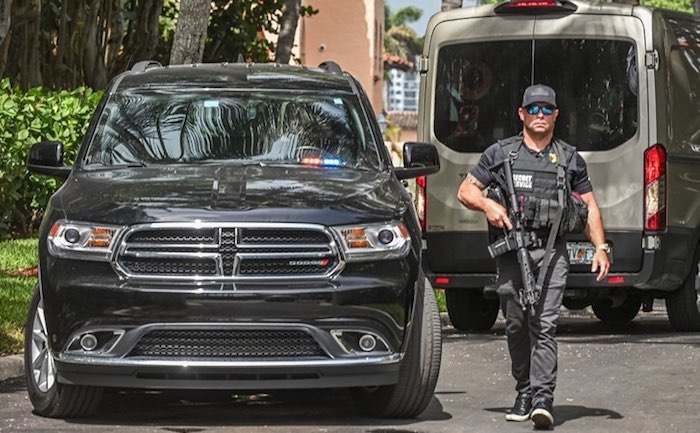

Newly released internal FBI records show that agents themselves doubted they had enough evidence to justify the August 2022 raid on President Trump’s Mar-a-Lago home, but were pushed forward anyway by senior officials inside the Biden Justice Department — a decision that Republican lawmakers now say confirms a grave abuse of federal power.
The documents, made public Tuesday by Senate Judiciary Committee Chairman Chuck Grassley, reveal weeks of internal frustration inside the FBI as agents struggled to establish probable cause that classified material remained at Trump’s Palm Beach estate. In one July 13, 2022 email from the FBI’s Washington Field Office, an official complained that investigators had spent six “counterproductive” weeks chasing a warrant without uncovering any new evidence. “We haven’t generated any new facts, but keep being given draft after draft after draft,” the official wrote, questioning how long the effort could continue without a witness or fresh intelligence to justify a search. Despite those concerns, the DOJ pressed ahead.
Grassley called the disclosures “shocking,” writing on X that the records show the “FBI DID NOT BELIEVE IT HAD PROBABLE CAUSE to raid Pres Trump’s Mar-a-Lago home but Biden DOJ pushed for it anyway.” The Iowa Republican said the emails and memoranda point to a “miscarriage of justice” driven from the top down, not a careful law-enforcement decision grounded in evidence. According to the records, witness interviews conducted after Trump returned classified documents on June 3, 2022 failed to produce proof that sensitive materials were still being concealed at the resort.
Emails exchanged in the week leading up to the Aug. 8 raid show FBI officials actively searching for what they described as a “second path” to obtain a warrant, while also warning about how the operation would look if carried out against a former president. Washington Field Office counterintelligence chief Tony Riedlinger and then-assistant director Steven D’Antuono were included on the discussions, which stressed the need for a “professional, low key” approach and cooperation from Trump attorney Evan Corcoran — a plan that agents cautioned “may not go well at DOJ.” Internal correspondence shows that senior Justice Department officials were unmoved by those concerns. One DOJ official later told colleagues he “frankly [didn’t] give a damn about the optics.”
The records also indicate the DOJ had been preparing for a raid far earlier than previously acknowledged. Emails from early June 2022 show prosecutors wanted a search warrant ready within days of a meeting with Corcoran, anticipating noncompliance and refusing to grant extensions for document production. By July, the scope of the proposed search had expanded dramatically, covering Trump’s office, storage rooms, owner’s quarters, and any other spaces that might have held government records — with only guest rooms explicitly excluded.
When the warrant was finally executed, it bore little resemblance to the restrained operation agents had discussed internally. Trump was not in Florida at the time, having traveled to his Bedminster golf club in New Jersey, leaving behind only a small staff. Dozens of FBI agents arrived with lights and sirens, searched multiple areas of the property, entered Melania Trump’s bedroom, and cracked open a safe in Trump’s office. Agents remained on site for most of the day. Trump condemned the action on Truth Social, calling it unprecedented and unnecessary after months of cooperation. “Nothing like this has ever happened to a President of the United States before,” he wrote.
Attorney General Merrick Garland ultimately approved the raid over objections raised within the FBI. The search later became the foundation for special counsel Jack Smith’s indictment of Trump in June 2023 on multiple counts related to classified documents. That case collapsed when U.S. District Judge Aileen Cannon ruled that Smith had been unlawfully appointed without congressional authorization.
In a cover letter accompanying the document release, FBI Assistant Director Marshall Yates said the bureau was turning over the records in the interest of transparency and restoring public trust. For Grassley and other Republicans, the emails instead reinforce what Trump supporters have argued for years — that the Mar-a-Lago raid was not the product of neutral law enforcement, but a politically driven decision imposed by a Justice Department willing to override its own investigators to target a sitting president’s chief political rival.
Indigenous
Residential school burials controversy continues to fuel wave of church arsons, new data suggests


By Edgardo Sepulveda for Inside Policy
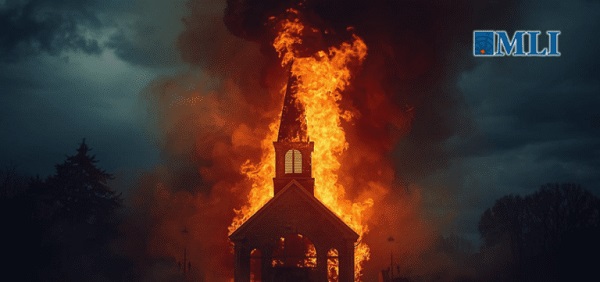
Church arsons surged again in 2024 according to new data released by Statistics Canada—continuing a disturbing trend first uncovered by a Macdonald-Laurier Institute investigation published last year.
Scorched Earth: A quantitative analysis of arson at Canadian religious institutions and its threat to reconciliation, which I published last April, warned that the arson wave – almost certainly spurred by ongoing anger over potential unmarked burials of children at residential schools –would not disappear without concerted government policy intervention.
Unfortunately, my prediction is proving accurate.
Newly available custom data from Statistics Canada confirms that arsons in 2024 continued at nearly double the baseline level established from 2011–17.
This persistent elevation is particularly concerning given that arson is a dangerous crime with significant financial costs and, in the case of religious institutions, broader implications for Canadian society and political discourse. Most importantly for those committed to Indigenous reconciliation, the apparent lack of effective policy response risks undermining public support for reconciliation efforts—suggesting these crimes are not being treated with the seriousness they deserve, particularly because many targets are Catholic churches associated with residential school legacies.
Scorched Earth developed specific terms and a conceptual framework to analyze arsons at religious institutions. First, I refer to “potential unmarked burials” rather than other terminology, including “mass graves” – language suggesting verified remains and, potentially, the site of clandestine burials. Neither has been established. No remains have been verified at any of the 21 announced sites. The Tk’emlúps te Secwépemc First Nation revised its own characterization of the Kamloops, BC, announcements in May 2024 to “probable unmarked burial sites,” a significant shift from its initial May 2021 announcement of “remains of 215 children.” This precipitated announcement, together with some of the initial media coverage in Canada and elsewhere, likely contributed to the intensity of the arson response.
Second, the conceptual framework, updated with the latest Statistics Canada data, separates “baseline” from “excess” arson associated with specific shocks, such as the announcements. It shows that arsons at religious institutions have remained elevated since the initial spike in 2021. Based on careful geographic statistical analysis presented in Scorched Earth, I demonstrated that the most likely explanation for elevated arsons was a criminal response prompted by the 17 announcements of potential unmarked burials at former residential schools, beginning in Kamloops, B.C., in May 2021. Four additional announcements occurred in 2024, bringing the total to 21. While data through 2023 showed no detectable increase in arsons related to the Israel-Gaza conflict, analysis of 2024 data suggests this changed: arsons in response to that conflict now constitute a minority of the increase above baseline levels, with the majority remaining those related to announcements of potential unmarked burials.
Investigation and Prosecution Rates Remain Insufficient for Effective Deterrence
Statistics Canada’s newly released custom clearance data for arson at religious institutions provides the first comprehensive official view of law enforcement effectiveness in these cases, superseding the preliminary compilation included in Scorched Earth.
Crimes in Canada are considered “solved” when police identify a suspect with sufficient evidence to support charges. Cases are then classified as “cleared” through two mechanisms: laying charges (“cleared by charge”) or alternative processes such as diversion programs (“cleared otherwise”).
As Figure 2 illustrates, the cleared-by-charge rate for all arson averaged 13.1 per cent over the 2011–24 period. For religious institutions, the yearly average reached 14.4 per cent—marginally higher but still concerning. The clearance rate for religious institutions shows significant year-over-year variability, reflecting the smaller statistical base compared to all arsons. The “cleared otherwise” category adds an average of 4.7 per cent for both arson types.
While these low clearance rates align with those for other property crimes, the continuing elevated arson rate suggests they provide insufficient deterrence for either first-time or serial arsonists. Evidence from Scorched Earth indicates that sustained clearance rates in the mid-30 per cent range—achieved by the National Church Arson Task Force (NCATF) in the United States during the 1990s—effectively reduced church arsons targeting predominantly Black congregations in the American South.
While my statistical analysis indicates that announcements of potential unmarked burials likely motivated many incidents, this remains circumstantial evidence. Direct evidence would require confessions or explicit statements of rationale from arrested arsonists, or credible claims of responsibility from organized groups. Out of the 306 arsons at religious institutions over the 2021-24 period, 53 resulted in charges and 13 were cleared through alternative processes, totaling 64 cleared incidents—an overall clearance rate of 21 per cent.
A clearance rate at this level, while insufficient for effective deterrence, makes it unlikely that most arsons during this period resulted from organized political, ideological, or anti-religious campaigns. A coordinated campaign would likely be visible to investigators even at this clearance level. Since police identify suspects in far more cases than they prosecute, investigators develop a broader perspective on potential culprits than clearance rates alone suggest. Law enforcement officials have not provided any indication of such organized campaigns.
Federal and Provincial Funding Addresses Searches But Ignores Consequences
Neither federal nor provincial governments have introduced policy initiatives addressing elevated arson rates at religious institutions, despite substantial new funding for related matters.
Following the Kamloops announcement, the federal government launched the Residential Schools Missing Children Community Support program, providing $246 million to hundreds of communities, including for research and field investigations. Separately, British Columbia, Alberta, Ontario, and other provinces have committed hundreds of millions in additional dollars, including programs to address mental health effects from the search process and announcements.
This funding inventory highlights a significant policy gap: substantial resources address the cause—announcements of potential unmarked burials—while none target the effect: arsons at religious institutions.
Even viewed narrowly as a crime issue, recent government responses to other property crimes demonstrate available policy tools. When auto theft peaked in 2023, the federal government announced $121 million in federal support, convened a national summit with all levels of government and law enforcement, and released a National Action Plan by May 2024.
Policy Gaps and a Call to Action
The NCATF, created in response to arsons targeting Black churches in the 1990s United States, achieved clearance rates sufficient to reduce incidents. Canada possesses the same policy tools but has not deployed them for residential school-related arsons.
This is not a matter of capacity or institutional precedent. Recent government responses to other serious property crimes, such as auto theft, demonstrate that Canada can mobilize coordinated federal-provincial action when it chooses to. The apparent policy inaction since 2021 for residential school-related arsons must end.
Canada is not powerless to stop the arsonists. The policy recommendations set out in Scorched Earth continue to be valid:
- Create a national or regional integrated police/fire investigations unit focused specifically on arson at religious institutions. This integrated unit would investigate arsons at all religious institutions—Christian, Muslim, Jewish, and others.
- Improve Indigenous police and fire protection services, including to ensure full Indigenous participation in the integrated unit.
- Complete the long-running project of building and maintaining a comprehensive and timely national and on-reserve database of fire statistics.
Law enforcement officials must thoroughly investigate and prosecute the arsonists. The attacks threaten reconciliation and full Indigenous equality—and they must be condemned by all Canadians.
Economist Edgardo Sepulveda has more than 30 years of experience advising clients in more than forty countries. He has written for Jacobin magazine, TVO Today, and the Alberta Federation of Labour, and has been lead author of three peer-reviewed academic articles in the last five years. He received his BA (Hon) from the University of British Columbia and his MA from Queen’s University, both in Economics. He established Sepulveda Consulting Inc. in 2006.


Wayne Gretzky’s Terrible, Awful Week.. And Soccer/ Football.

Western Campuses Help Build China’s Digital Dragnet With U.S. Tax Funds, Study Warns

Common Vaccines Linked to 38-50% Increased Risk of Dementia and Alzheimer’s

Trump DOJ seeks to quash Pfizer whistleblower’s lawsuit over COVID shots
-
 Great Reset2 days ago
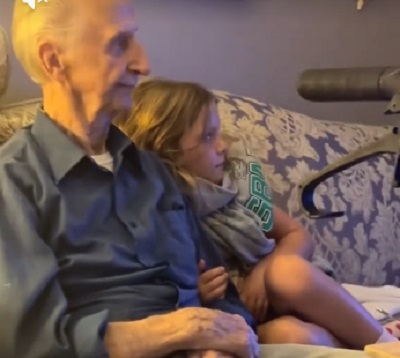
Viral TikTok video shows 7-year-old cuddling great-grandfather before he’s euthanized
-
 Daily Caller1 day ago
Chinese Billionaire Tried To Build US-Born Baby Empire As Overseas Elites Turn To American Surrogates
-
 Alberta1 day ago
Schools should go back to basics to mitigate effects of AI
-
 International2 days ago
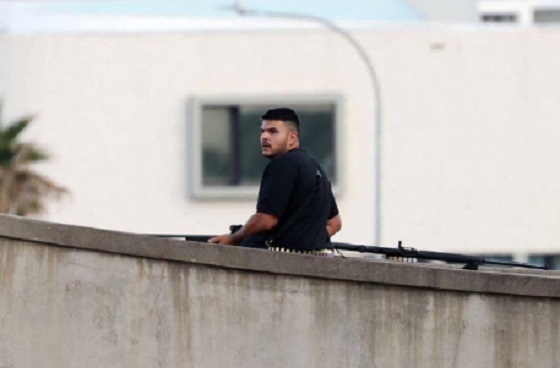
At Least 15 Killed In Shooting Targeting Jewish Community At Australia’s Bondi Beach, Police Say
-
 International1 day ago
Two states designate Muslim group as terrorist
-
 Digital ID1 day ago
Canada releases new digital ID app for personal documents despite privacy concerns
-
 Business1 day ago
Major tax changes in 2026: Report
-
 Censorship Industrial Complex1 day ago
Death by a thousand clicks – government censorship of Canada’s internet