
Brownstone Institute
Gears of the Refugee Machine



From the Brownstone Institute

This refugee epidemic is an orchestrated phenomenon, planned and supported by international organizations in cahoots with the United States government. It is not intended to solve a refugee problem. Its purpose is obviously something other than an amelioration of the suffering of displaced people.
A solid majority of American citizens now recognize that Biden’s many millions of alleged refugees are anything but the real deal. In all probability, some of these illegal immigrants are members of the “tired and poor” seeking a shortcut into the United States, but also include a number of spies, drug mules, human traffickers, criminals, and convicts. As for legitimate refugees, in all likelihood they represent less than 10% of the total.
The moment Biden took office, he invited the world to come to America — illegally.
He dismantled the proven methods used to stem the flow of illegal immigrants and publicly encouraged foreigners to come through the Southern border. As the numbers of illegal immigrants increased, the border patrol were shifted from patrolling the border to sitting behind desks and helping illegal immigrants to gain entry into the country. Most of the border patrol resent having been converted into neutered bureaucrats but had to follow orders or else get drummed out of the corps.
In short, Americans (indeed, the entire world) now realize that the Biden administration is dedicated to getting as many illegal aliens into the country as possible. This is, of course, aiding and abetting illegal behavior, but rampant corruption in the media, academia, and politics ignores or dismisses it.
Captive to leftist agendas, these institutions view citizenship as an antiquated concept that, along with an anachronistic constitution, must be eradicated — no holds barred.
Since Biden became president, his ushers have guided roughly nine million illegals into the United States. By pretending that they are refugees from war or persecution, it was possible to cloak them in sympathetic attire: ‘No compassionate person would ever reject a poor, mistreated refugee.’
At the start of Biden’s presidency, the flow of illegal immigrants originated from relatively few countries, most of which were in central America. In those days, a majority were impoverished people seeking a better life — illegal in their entry but not malevolent in their intent. A certain remainder, however, were not good people.
But over the past three years the border jumpers have started coming from all around the world — so much so that they now represent over 160 different countries. Most of them, by the way, are healthy, single, young men.
Since war and persecution are considered to be the causes of refugee flows, one should ask if it is reasonable to believe that three-quarters of all the countries in the world are afflicted by war or oppression. Next, one might ask why it is that women and children and the elderly are less susceptible to becoming refugees than healthy young men.
This refugee epidemic is an orchestrated phenomenon, planned and supported by international organizations in cahoots with the United States government. It is not intended to solve a refugee problem. Its purpose is obviously something other than an amelioration of the suffering of displaced people.
Since this refugee invasion is tearing apart our country, the federal government — especially the Department of Homeland Security — should be publishing detailed statistics regarding daily, weekly, monthly, and cumulative numbers for illegal immigrants admitted into the United States. There should be similar tabulations for deportations, gotaways, etc. Comparable tables should be readily available for age and sex structure. Parallel statistical fact sheets regarding contraband and drug seizures along with relevant data regarding the apprehended smugglers should be made public as well.
As long as the government was anxious to scare the bejeezus out of everybody regarding Covid-19, it had no trouble publishing data regarding infections, hospitalizations, and deaths. The fact that it is not doing anything similar for the ongoing refugee invasion suggests it is trying to hide something.
Since there are only about 35 countries in all of the Americas, this infiltration out of Mexico across our Southwest border includes invaders from about 130 additional countries located overseas. Those people fly to the Americas, but not to the United States (which is their destination). We can draw a couple of conclusions: they are not poor and they would have trouble getting into the United States legally. Most anybody who could get into the US on a visitor’s visa and then simply overstay would do that rather than flying to, say, Mexico City and then hoofing it northward.
Huge chunks of the American populace have been hoodwinked into thinking that anybody who crosses the border illegally is just trying to grab a share of the good life and should be allowed to remain. But, alas, the invasion is an orchestrated phenomenon. We have known for years that various countries and non-governmental organizations have been organizing and assisting the mass movement of people up through Mexico to and across the US border.

This was evident even back in the first year or two of the Trump presidency when organized caravans of illegal immigrants were arriving with the specific intent of numerically overwhelming the border patrol.
We now know that even the United Nations is involved in housing, feeding, and transporting would-be illegal immigrants headed north. It follows that our federal government is the main source of funding for much of this UN effort. The American citizenry remains ignorant about this.
Border crossings in Central America are tightly regulated for people like you and me, but clustered hoards of illegal immigrants are magically waved through from one country to the next. There are six or seven border crossings to be made before reaching the United States. Do you really think administrations in those countries are unaware of the situation? The unencumbered passage of millions of migrants is only possible if critical palms have been well greased — by Yankee dollars that Americans have paid in taxes.
For those who are unaware, the frontier zone between Central America’s Panama and South America’s Colombia is called the Darien Gap — a thick, wet jungle of hill country through which no road passes. Until recently, it was rarely penetrated and only by extreme adventurers or suspect characters, but now has three different jungle trails for illegal wannabes headed north. On any given day, thousands of people complete the trek, virtually always in large groups accompanied by several guides.

This 50-75 miles of jungle trekking has become a conduit for those from the Caribbean and South America who can find no easier pathway to the US. It is also favored by many of those coming from overseas since the country of Ecuador does not require a visa for entry and the circumvention of designated border crossings into Colombia is relatively easy.
Those with means but from countries whose citizens are severely restrained from traveling to other countries fly to Quito, circumvent the Colombian border stations, hazard the Darien Gap, and use either their feet or buses and trains to reach the US border. And virtually always this is done as part of a large group consisting mostly of strangers.
Many Americans are unaware of the degree to which illegal migrants are recruited and assisted by international and non-governmental organizations — all of which wish to see the United States Southern border eradicated. The flood of illegal immigrants across the border is clearly an invasion being sponsored by a globalist ideology.
What with the assistance of the UN and nongovernmental agencies, the Panamanian end of the Darien Gap now has established encampments offering meals and dry sleeping arrangements for the clusters of migrants who make the passage. More sinister is a separate camp specifically for Chinese passage-makers.
Evidently, crossing the Darien Gap takes the lives of some who become sick or have an accident, but the attrition is not sufficient to deter the flow. The larger point is that getting into the United States from distant locations involves a support system designed to game the American border controls. Millions of illegal border crossers are part of something bigger and more nefarious than simple, individualistic decisions to sneak into the United States.
American citizens are being exploited by the globalist elite that view countries as anachronisms. So convinced are they of their own moral superiority that the wishes of America’s ordinary people carry no weight. What we on this side of the border view as a chaotic influx of illegal immigrants is in fact a planned effort, a coordinated attempt to break down the integrity of the United States, the only country in the world still in a position to defeat the globalist agenda.
It is a difficult battle since much of America’s elite has been seduced into believing that globalism imposed from the top down is the ideal way to achieve the “unification of all humanity” — an idealistic goal that would just happen to put many of those same elite in control of the envisioned New World Order. The ordinary American who disapproves of illegal immigration wants it to stop but many of the national leaders want it to continue (although they hide their true intentions).
For all its flaws and weaknesses, for all its corruption, the United States remains the final bastion for protection of individual rights. The system being imposed from the top down will inevitably sacrifice the will of the people to the globalist vision — and that will prove to be the essence of tyranny and a wellspring of untold suffering.
Those interested in this topic might appreciate the more detailed observations of Bret Weinstein in the Dark Horse Podcast. He develops a hypothesis (i.e. a possible explanation of a phenomenon) that there are in fact two different migrations going on, one involving very large numbers of people from a great variety of source areas and evidently motivated by a desire for a better life, but the other being a purely Chinese flow that enjoys greater affluence and therefore less hazardous transit.
Bret explores the possibility that this sub-stream is in fact a Trojan migration designed to inject into the United States a sort of fifth column of healthy young males that with the ripeness of time will be well-positioned to undermine America whenever a US-China conflict becomes kinetic. He observes that this stream maintains a separate identity until having completed the journey through the Darien Gap but then presumably becomes integrated into the larger flow before reaching the United States border, thereby masking its distinct character. The meat of Bret Weinstein’s hypothesis is discussed between the 10th and 110th minutes of the podcast.
Author


From the Brownstone Institute
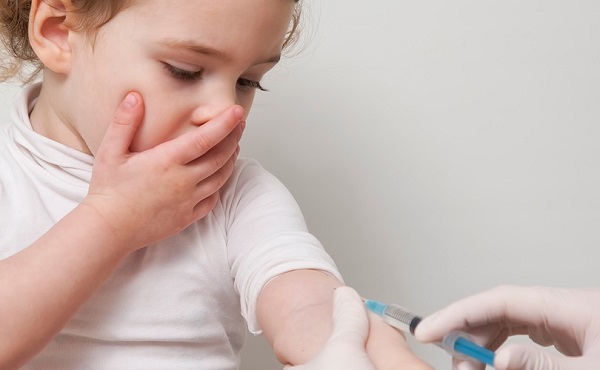
I recently purchased Aaron Siri’s new book Vaccines, Amen. As I flipped though the pages, I noticed a section devoted to his now-famous deposition of Dr Stanley Plotkin, the “godfather” of vaccines.
I’d seen viral clips circulating on social media, but I had never taken the time to read the full transcript — until now.
Siri’s interrogation was methodical and unflinching…a masterclass in extracting uncomfortable truths.
A Legal Showdown
In January 2018, Dr Stanley Plotkin, a towering figure in immunology and co-developer of the rubella vaccine, was deposed under oath in Pennsylvania by attorney Aaron Siri.
The case stemmed from a custody dispute in Michigan, where divorced parents disagreed over whether their daughter should be vaccinated. Plotkin had agreed to testify in support of vaccination on behalf of the father.
What followed over the next nine hours, captured in a 400-page transcript, was extraordinary.
Plotkin’s testimony revealed ethical blind spots, scientific hubris, and a troubling indifference to vaccine safety data.
He mocked religious objectors, defended experiments on mentally disabled children, and dismissed glaring weaknesses in vaccine surveillance systems.
A System Built on Conflicts
From the outset, Plotkin admitted to a web of industry entanglements.
He confirmed receiving payments from Merck, Sanofi, GSK, Pfizer, and several biotech firms. These were not occasional consultancies but long-standing financial relationships with the very manufacturers of the vaccines he promoted.
Plotkin appeared taken aback when Siri questioned his financial windfall from royalties on products like RotaTeq, and expressed surprise at the “tone” of the deposition.
Siri pressed on: “You didn’t anticipate that your financial dealings with those companies would be relevant?”
Plotkin replied: “I guess, no, I did not perceive that that was relevant to my opinion as to whether a child should receive vaccines.”
The man entrusted with shaping national vaccine policy had a direct financial stake in its expansion, yet he brushed it aside as irrelevant.
Contempt for Religious Dissent
Siri questioned Plotkin on his past statements, including one in which he described vaccine critics as “religious zealots who believe that the will of God includes death and disease.”
Siri asked whether he stood by that statement. Plotkin replied emphatically, “I absolutely do.”
Plotkin was not interested in ethical pluralism or accommodating divergent moral frameworks. For him, public health was a war, and religious objectors were the enemy.
He also admitted to using human foetal cells in vaccine production — specifically WI-38, a cell line derived from an aborted foetus at three months’ gestation.
Siri asked if Plotkin had authored papers involving dozens of abortions for tissue collection. Plotkin shrugged: “I don’t remember the exact number…but quite a few.”
Plotkin regarded this as a scientific necessity, though for many people — including Catholics and Orthodox Jews — it remains a profound moral concern.
Rather than acknowledging such sensitivities, Plotkin dismissed them outright, rejecting the idea that faith-based values should influence public health policy.
That kind of absolutism, where scientific aims override moral boundaries, has since drawn criticism from ethicists and public health leaders alike.
As NIH director Jay Bhattacharya later observed during his 2025 Senate confirmation hearing, such absolutism erodes trust.
“In public health, we need to make sure the products of science are ethically acceptable to everybody,” he said. “Having alternatives that are not ethically conflicted with foetal cell lines is not just an ethical issue — it’s a public health issue.”
Safety Assumed, Not Proven
When the discussion turned to safety, Siri asked, “Are you aware of any study that compares vaccinated children to completely unvaccinated children?”
Plotkin replied that he was “not aware of well-controlled studies.”
Asked why no placebo-controlled trials had been conducted on routine childhood vaccines such as hepatitis B, Plotkin said such trials would be “ethically difficult.”
That rationale, Siri noted, creates a scientific blind spot. If trials are deemed too unethical to conduct, then gold-standard safety data — the kind required for other pharmaceuticals — simply do not exist for the full childhood vaccine schedule.
Siri pointed to one example: Merck’s hepatitis B vaccine, administered to newborns. The company had only monitored participants for adverse events for five days after injection.
Plotkin didn’t dispute it. “Five days is certainly short for follow-up,” he admitted, but claimed that “most serious events” would occur within that time frame.
Siri challenged the idea that such a narrow window could capture meaningful safety data — especially when autoimmune or neurodevelopmental effects could take weeks or months to emerge.
Siri pushed on. He asked Plotkin if the DTaP and Tdap vaccines — for diphtheria, tetanus and pertussis — could cause autism.
“I feel confident they do not,” Plotkin replied.
But when shown the Institute of Medicine’s 2011 report, which found the evidence “inadequate to accept or reject” a causal link between DTaP and autism, Plotkin countered, “Yes, but the point is that there were no studies showing that it does cause autism.”
In that moment, Plotkin embraced a fallacy: treating the absence of evidence as evidence of absence.
“You’re making assumptions, Dr Plotkin,” Siri challenged. “It would be a bit premature to make the unequivocal, sweeping statement that vaccines do not cause autism, correct?”
Plotkin relented. “As a scientist, I would say that I do not have evidence one way or the other.”
The MMR
The deposition also exposed the fragile foundations of the measles, mumps, and rubella (MMR) vaccine.
When Siri asked for evidence of randomised, placebo-controlled trials conducted before MMR’s licensing, Plotkin pushed back: “To say that it hasn’t been tested is absolute nonsense,” he said, claiming it had been studied “extensively.”
Pressed to cite a specific trial, Plotkin couldn’t name one. Instead, he gestured to his own 1,800-page textbook: “You can find them in this book, if you wish.”
Siri replied that he wanted an actual peer-reviewed study, not a reference to Plotkin’s own book. “So you’re not willing to provide them?” he asked. “You want us to just take your word for it?”
Plotkin became visibly frustrated.
Eventually, he conceded there wasn’t a single randomised, placebo-controlled trial. “I don’t remember there being a control group for the studies, I’m recalling,” he said.
The exchange foreshadowed a broader shift in public discourse, highlighting long-standing concerns that some combination vaccines were effectively grandfathered into the schedule without adequate safety testing.
In September this year, President Trump called for the MMR vaccine to be broken up into three separate injections.
The proposal echoed a view that Andrew Wakefield had voiced decades earlier — namely, that combining all three viruses into a single shot might pose greater risk than spacing them out.
Wakefield was vilified and struck from the medical register. But now, that same question — once branded as dangerous misinformation — is set to be re-examined by the CDC’s new vaccine advisory committee, chaired by Martin Kulldorff.
The Aluminium Adjuvant Blind Spot
Siri next turned to aluminium adjuvants — the immune-activating agents used in many childhood vaccines.
When asked whether studies had compared animals injected with aluminium to those given saline, Plotkin conceded that research on their safety was limited.
Siri pressed further, asking if aluminium injected into the body could travel to the brain. Plotkin replied, “I have not seen such studies, no, or not read such studies.”
When presented with a series of papers showing that aluminium can migrate to the brain, Plotkin admitted he had not studied the issue himself, acknowledging that there were experiments “suggesting that that is possible.”
Asked whether aluminium might disrupt neurological development in children, Plotkin stated, “I’m not aware that there is evidence that aluminum disrupts the developmental processes in susceptible children.”
Taken together, these exchanges revealed a striking gap in the evidence base.
Compounds such as aluminium hydroxide and aluminium phosphate have been injected into babies for decades, yet no rigorous studies have ever evaluated their neurotoxicity against an inert placebo.
This issue returned to the spotlight in September 2025, when President Trump pledged to remove aluminium from vaccines, and world-leading researcher Dr Christopher Exley renewed calls for its complete reassessment.
A Broken Safety Net
Siri then turned to the reliability of the Vaccine Adverse Event Reporting System (VAERS) — the primary mechanism for collecting reports of vaccine-related injuries in the United States.
Did Plotkin believe most adverse events were captured in this database?
“I think…probably most are reported,” he replied.
But Siri showed him a government-commissioned study by Harvard Pilgrim, which found that fewer than 1% of vaccine adverse events are reported to VAERS.
“Yes,” Plotkin said, backtracking. “I don’t really put much faith into the VAERS system…”
Yet this is the same database officials routinely cite to claim that “vaccines are safe.”
Ironically, Plotkin himself recently co-authored a provocative editorial in the New England Journal of Medicine, conceding that vaccine safety monitoring remains grossly “inadequate.”
Experimenting on the Vulnerable
Perhaps the most chilling part of the deposition concerned Plotkin’s history of human experimentation.
“Have you ever used orphans to study an experimental vaccine?” Siri asked.
“Yes,” Plotkin replied.
“Have you ever used the mentally handicapped to study an experimental vaccine?” Siri asked.
“I don’t recollect…I wouldn’t deny that I may have done so,” Plotkin replied.
Siri cited a study conducted by Plotkin in which he had administered experimental rubella vaccines to institutionalised children who were “mentally retarded.”
Plotkin stated flippantly, “Okay well, in that case…that’s what I did.”
There was no apology, no sign of ethical reflection — just matter-of-fact acceptance.
Siri wasn’t done.
He asked if Plotkin had argued that it was better to test on those “who are human in form but not in social potential” rather than on healthy children.
Plotkin admitted to writing it.
Siri established that Plotkin had also conducted vaccine research on the babies of imprisoned mothers, and on colonised African populations.
Plotkin appeared to suggest that the scientific value of such studies outweighed the ethical lapses—an attitude that many would interpret as the classic ‘ends justify the means’ rationale.
But that logic fails the most basic test of informed consent. Siri asked whether consent had been obtained in these cases.
“I don’t remember…but I assume it was,” Plotkin said.
Assume?
This was post-Nuremberg research. And the leading vaccine developer in America couldn’t say for sure whether he had properly informed the people he experimented on.
In any other field of medicine, such lapses would be disqualifying.
A Casual Dismissal of Parental Rights
Plotkin’s indifference to experimenting on disabled children didn’t stop there.
Siri asked whether someone who declined a vaccine due to concerns about missing safety data should be labelled “anti-vax.”
Plotkin replied, “If they refused to be vaccinated themselves or refused to have their children vaccinated, I would call them an anti-vaccination person, yes.”
Plotkin was less concerned about adults making that choice for themselves, but he had no tolerance for parents making those choices for their own children.
“The situation for children is quite different,” said Plotkin, “because one is making a decision for somebody else and also making a decision that has important implications for public health.”
In Plotkin’s view, the state held greater authority than parents over a child’s medical decisions — even when the science was uncertain.
The Enabling of Figures Like Plotkin
The Plotkin deposition stands as a case study in how conflicts of interest, ideology, and deference to authority have corroded the scientific foundations of public health.
Plotkin is no fringe figure. He is celebrated, honoured, and revered. Yet he promotes vaccines that have never undergone true placebo-controlled testing, shrugs off the failures of post-market surveillance, and admits to experimenting on vulnerable populations.
This is not conjecture or conspiracy — it is sworn testimony from the man who helped build the modern vaccine program.
Now, as Health Secretary Robert F. Kennedy, Jr. reopens long-dismissed questions about aluminium adjuvants and the absence of long-term safety studies, Plotkin’s once-untouchable legacy is beginning to fray.
Republished from the author’s Substack


From the Brownstone Institute

A walk through a dozen convenience stores in Montgomery County, Pennsylvania, says a lot about how US nicotine policy actually works. Only about one in eight nicotine-pouch products for sale is legal. The rest are unauthorized—but they’re not all the same. Some are brightly branded, with uncertain ingredients, not approved by any Western regulator, and clearly aimed at impulse buyers. Others—like Sweden’s NOAT—are the opposite: muted, well-made, adult-oriented, and already approved for sale in Europe.
Yet in the United States, NOAT has been told to stop selling. In September 2025, the Food and Drug Administration (FDA) issued the company a warning letter for offering nicotine pouches without marketing authorization. That might make sense if the products were dangerous, but they appear to be among the safest on the market: mild flavors, low nicotine levels, and recyclable paper packaging. In Europe, regulators consider them acceptable. In America, they’re banned. The decision looks, at best, strange—and possibly arbitrary.
What the Market Shows
My October 2025 audit was straightforward. I visited twelve stores and recorded every distinct pouch product visible for sale at the counter. If the item matched one of the twenty ZYN products that the FDA authorized in January, it was counted as legal. Everything else was counted as illegal.
Two of the stores told me they had recently received FDA letters and had already removed most illegal stock. The other ten stores were still dominated by unauthorized products—more than 93 percent of what was on display. Across all twelve locations, about 12 percent of products were legal ZYN, and about 88 percent were not.
The illegal share wasn’t uniform. Many of the unauthorized products were clearly high-nicotine imports with flashy names like Loop, Velo, and Zimo. These products may be fine, but some are probably high in contaminants, and a few often with very high nicotine levels. Others were subdued, plainly meant for adult users. NOAT was a good example of that second group: simple packaging, oat-based filler, restrained flavoring, and branding that makes no effort to look “cool.” It’s the kind of product any regulator serious about harm reduction would welcome.
Enforcement Works
To the FDA’s credit, enforcement does make a difference. The two stores that received official letters quickly pulled their illegal stock. That mirrors the agency’s broader efforts this year: new import alerts to detain unauthorized tobacco products at the border (see also Import Alert 98-06), and hundreds of warning letters to retailers, importers, and distributors.
But effective enforcement can’t solve a supply problem. The list of legal nicotine-pouch products is still extremely short—only a narrow range of ZYN items. Adults who want more variety, or stores that want to meet that demand, inevitably turn to gray-market suppliers. The more limited the legal catalog, the more the illegal market thrives.
Why the NOAT Decision Appears Bizarre
The FDA’s own actions make the situation hard to explain. In January 2025, it authorized twenty ZYN products after finding that they contained far fewer harmful chemicals than cigarettes and could help adult smokers switch. That was progress. But nine months later, the FDA has approved nothing else—while sending a warning letter to NOAT, arguably the least youth-oriented pouch line in the world.
The outcome is bad for legal sellers and public health. ZYN is legal; a handful of clearly risky, high-nicotine imports continue to circulate; and a mild, adult-market brand that meets European safety and labeling rules is banned. Officially, NOAT’s problem is procedural—it lacks a marketing order. But in practical terms, the FDA is punishing the very design choices it claims to value: simplicity, low appeal to minors, and clean ingredients.
This approach also ignores the differences in actual risk. Studies consistently show that nicotine pouches have far fewer toxins than cigarettes and far less variability than many vapes. The biggest pouch concerns are uneven nicotine levels and occasional traces of tobacco-specific nitrosamines, depending on manufacturing quality. The serious contamination issues—heavy metals and inconsistent dosage—belong mostly to disposable vapes, particularly the flood of unregulated imports from China. Treating all “unauthorized” products as equally bad blurs those distinctions and undermines proportional enforcement.
A Better Balance: Enforce Upstream, Widen the Legal Path
My small Montgomery County survey suggests a simple formula for improvement.
First, keep enforcement targeted and focused on suppliers, not just clerks. Warning letters clearly change behavior at the store level, but the biggest impact will come from auditing distributors and importers, and stopping bad shipments before they reach retail shelves.
Second, make compliance easy. A single-page list of authorized nicotine-pouch products—currently the twenty approved ZYN items—should be posted in every store and attached to distributor invoices. Point-of-sale systems can block barcodes for anything not on the list, and retailers could affirm, once a year, that they stock only approved items.
Third, widen the legal lane. The FDA launched a pilot program in September 2025 to speed review of new pouch applications. That program should spell out exactly what evidence is needed—chemical data, toxicology, nicotine release rates, and behavioral studies—and make timely decisions. If products like NOAT meet those standards, they should be authorized quickly. Legal competition among adult-oriented brands will crowd out the sketchy imports far faster than enforcement alone.
The Bottom Line
Enforcement matters, and the data show it works—where it happens. But the legal market is too narrow to protect consumers or encourage innovation. The current regime leaves a few ZYN products as lonely legal islands in a sea of gray-market pouches that range from sensible to reckless.
The FDA’s treatment of NOAT stands out as a case study in inconsistency: a quiet, adult-focused brand approved in Europe yet effectively banned in the US, while flashier and riskier options continue to slip through. That’s not a public-health victory; it’s a missed opportunity.
If the goal is to help adult smokers move to lower-risk products while keeping youth use low, the path forward is clear: enforce smartly, make compliance easy, and give good products a fair shot. Right now, we’re doing the first part well—but failing at the second and third. It’s time to fix that.
Author



Media bound to pay the price for selling their freedom to (selectively) offend

Sometimes An Ingrate Nation Pt. 2: The Great One Makes His Choice

Recent price declines don’t solve Toronto’s housing affordability crisis

Alberta will defend law-abiding gun owners who defend themselves
-
National17 hours ago
Media bound to pay the price for selling their freedom to (selectively) offend
-
Bruce Dowbiggin16 hours ago
Sometimes An Ingrate Nation Pt. 2: The Great One Makes His Choice
-
Business5 hours ago
Recent price declines don’t solve Toronto’s housing affordability crisis
-
 Daily Caller6 hours ago
Tech Mogul Gives $6 Billion To 25 Million Kids To Boost Trump Investment Accounts
-
 Business4 hours ago
Ottawa’s gun ‘buyback’ program will cost billions—and for no good reason
-
 Energy2 days ago
ELZABETH MAY HAS IT WRONG: An Alberta to Prince Rupert Oil Pipeline Will Contribute to Greater Global Oil Tanker Safety
-
 National2 days ago
Alberta will use provincial laws to stop Canadian gov’t from trying to confiscate legal firearms
-
 Energy7 hours ago
The Trickster Politics of the Tanker Ban are Hiding a Much Bigger Reckoning for B.C.