
Daily Caller
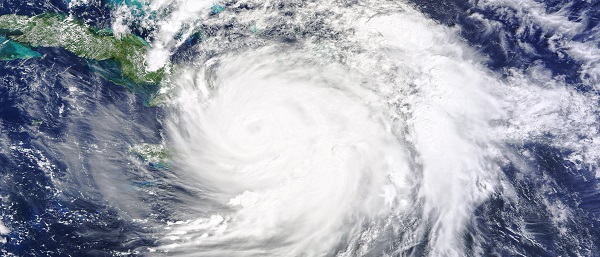
Fatalities reported Wednesday evening: Hurricane Milton Makes Landfall In Florida

From the Daily Caller News Foundation

By Hailey Gomez
Hurricane Milton officially made landfall near Siesta Key, Florida, on Wednesday night as local residents have either bunkered down or fled from the areas expected to be hit, according to the National Hurricane Center.
Dropping from a Category 4 to Category 3 storm right before landfall, the devastating storm had 120 mph sustained winds and higher gusts, the National Hurricane Center reported. Warnings about Hurricane Milton began early in the week, with lawmakers and officials urging residents within Florida’s Gulf Coast area to flee from their homes or be prepared for disastrous impacts, according to The Associated Press News.
“As Hurricane Milton makes landfall near Sarasota county, now is the time to shelter in place. First responders are staged and ready to go, as soon as weather conditions allow. Search and rescue efforts will be well underway to save lives before dawn, and they will continue for as long as it takes,” Republican Florida Gov. Ron DeSantis posted to X.
An estimated 2 million people, including those within the Tampa, St. Petersburg and Clearwater, Florida, area, were under a flash-flood warning from the Tampa National Weather Service, as “between 6 and 12 inches of rain” had already fallen.
Violent videos of the storm have began to circulating on X showing powerful winds tearing apart homes, trees and power lines.
BREAKING: Multiple people dead following tornado outbreak from Hurricane Milton in St. Lucie County, Florida, local media reports#HurricanMilton #miltonhurricane #Milton #StormFootage #FloridaStorm https://t.co/EoMxODqfuV pic.twitter.com/UrMEsXE22j
— Smriti Sharma (@SmritiSharma_) October 10, 2024
Early reports indicated fatalities occurred due to tornado touchdowns prior to landfall on Florida’s Atlantic coast, according to West Palm Beach-based affiliate WPTV. While details remain unclear about the deceased, St. Lucie County Sheriff Keith Pearson confirmed to the outlet “multiple people” have been killed.
The storm comes on the heels of Hurricane Helene, a Category 4 storm, which resulted in the deaths of over 200 people as it ripped through North Carolina, Georgia, South Carolina, Tennessee and Virginia after first making landfall in Florida on the evening of Sept. 26.

Daily Caller
Scathing Indictment Claims Nicolás Maduro Orchestrated Drug-Fueled ‘Culture Of Corruption’ Which Plagued Entire Region
From the Daily Caller News Foundation
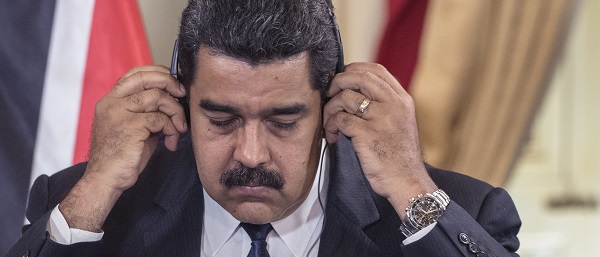
Ousted socialist Venezuelan dictator Nicolás Maduro was the mastermind of a pervasive drug-fueled “culture of corruption” which extended all the way to the U.S.’s backyard, according to the scathing indictment against him, his wife, his son, and others, released Saturday.
Hours after President Donald Trump announced Maduro’s capture and removal from power, Attorney General Pam Bondi confirmed the deposed despot and his wife, Cilia Flores, were indicted in the Southern District of New York on four charges, including narco-terrorism conspiracy, and “will soon face the full wrath of American justice” on U.S. soil. A grand jury found Maduro “and corrupt members of his regime enabled corruption fueled by drug trafficking throughout” the Latin American region, including in Mexico and Central America, and empowered notorious crime syndicates such as Tren de Aragua (TdA), according to the unsealed indictment.
Signed by Trump-appointed U.S. Attorney Jay Clayton, the 25-page indictment names six defendants, including the deposed Maduro, Flores, and Maduro’s 35-year-old son from his first marriage, Nicolás “Nicolasito” Maduro Guerra. It also names as defendants TdA leader Niño Guerrero and two high-profile members of Maduro’s United Socialist Party, Diosdado Cabello Rondón and Ramón Rodríguez Chacín.
Dear Readers:
As a nonprofit, we are dependent on the generosity of our readers.
Please consider making a small donation of any amount here.
Thank you!
Maduro, “like former President [Hugo] Chávez before him[,] participates in, perpetuates, and protects a culture of corruption in which powerful Venezuelan elites enrich themselves through drug trafficking and the protection of their partner drug traffickers,” the indictment alleges. “The profits of that illegal activity flow to corrupt rank-and-file civilian, military, and intelligence officials, who operate in a patronage system run by those at the top-referred to as the Cartel de Los Soles or Cartel of the Suns, a reference to the sun insignia affixed to the uniforms of high-ranking Venezuelan military officials.”
The Trump administration’s State Department announced it was designating the Cartel de Los Soles as a Foreign Terrorist Organization (FTO) in November 2025. Secretary of State Marco Rubio wrote in a statement at the time the cartel “is headed by Nicolás Maduro and other high-ranking individuals of the illegitimate Maduro regime who have corrupted Venezuela’s military, intelligence, legislature, and judiciary.”
The indictment also notes the South American nation “sits in a geographically valuable location for drug traffickers” and that, around the time Chávez came to power in 1999, “Venezuela became a safe haven” for them.
“In that environment, cocaine trafficking flourished,” the indictment continues, citing State Department estimates from arund 2020, with between 200 and 250 tons of the drug being trafficked through the country each year.
The charging document goes on to allege Maduro, his wife, son, and political allies had “partnered with narcotics traffickers and narco-terrorist groups, who dispatched processed cocaine from Venezuela to the United States via transshipment points in the Caribbean and Central America, such as Honduras, Guatemala, and Mexico.”
“Through this drug trafficking, [Maduro] and corrupt members of his regime enabled corruption fueled by drug trafficking throughout the region,” the indictment continues. “The transshipment points in Honduras, Guatemala, and Mexico similarly relied on a culture of corruption, in which cocaine traffickers operating in those countries paid a portion of their own profits to politicians who protected and aided them. In turn, these politicians used the cocaine-fueled payments to maintain and augment their political power.”
Maduro and his regime also “facilitated the empowerment and growth of violent narco-terrorist groups fueling their organizations with cocaine profits,” according to the indictment.
The charging document notably identifies organizations which collaborated with the Maduro regime: Colombian communist militant groups Revolutionary Armed Forces of Colombia (FARC) and National Liberation Army (ELN); Mexican syndicates the Sinaloa Cartel and Los Zetas; and Guerrero’s TdA.
The indictment also alleges Maduro Guerra, the captured dictator’s son, personally “worked to ship hundreds of kilograms of cocaine from Venezuela to Miami, Florida” around the year 2017. Maduro Guerra is a member of his father’s political party and served as a Deputy to the Venezuelan National Assembly since 2021.
“During this time, MADURO GUERRA spoke with his drug trafficking partners about, among other things, shipping low-quality cocaine to New York because it could not be sold in Miami, arranging a 500-kilogram shipment of cocaine to be unloaded from a cargo container near Miami, and using scrap metal containers to smuggle cocaine into the ports of New York,” the document reads.
From the Daily Caller News Foundation
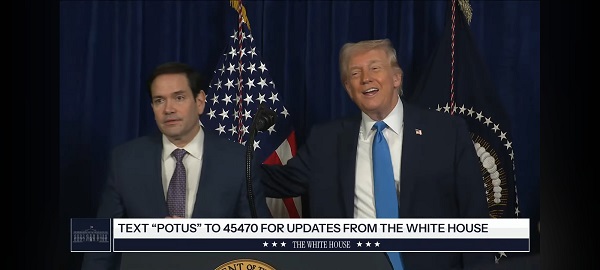
President Donald Trump said during a Saturday press conference that the United States would “run” Venezuela until a “judicious” transition could take place in the country.
Trump announced in a Saturday morning post to Truth Social that U.S. military forces carried out a law enforcement operation capturing Venezuelan President Nicolás Maduro and his wife in Caracas early Saturday morning. During his press conference later that day, Trump said that the United States would also seek to repair the infrastructure of Venezuela’s oil industry.
“We are going to run the country until such time as we can do a safe, proper and judicious transition. So, we don’t want to be involved with having somebody else get in and we have the same situation that we had for the last long period of years,” Trump said. “So, we are going to run the country until such time as we can do a safe, proper and judicious transition, and it has to be judicious because that’s what we’re all about.”
“We want peace, liberty and justice for the great people of Venezuela and that includes many from Venezuela that are now living in the United States and want to go back to their country. It’s their homeland,” Trump continued.
Many Congressional Democrats accused Trump of illegally engaging in a “regime change” operation. Trump said that Venezuela could be “making money” once its infrastructure was repaired.
“We’re there now, but we’re going to stay until such time as the proper transition can take place,” Trump said during the press conference. “We’re going to run it essentially until such time as a proper transition can take place.”
“As everyone knows the oil business in Venezuela has been a bust, a total bust for a long period of time. They were pumping almost nothing by comparison to what they could have been pumping and what could have taken place,” Trump continued. “We’re going to have our very large United States oil companies, the biggest anywhere in the world, go in, spend billions of dollars, fix the badly broken infrastructure, the oil infrastructure, and start making money for the country.”
Georgia county admits illegally certifying 315k ballots in 2020 presidential election
Alberta project would be “the biggest carbon capture and storage project in the world”
Canada’s debate on energy levelled up in 2025

Why Japan wants Western Canadian LNG
-
 International1 day ago
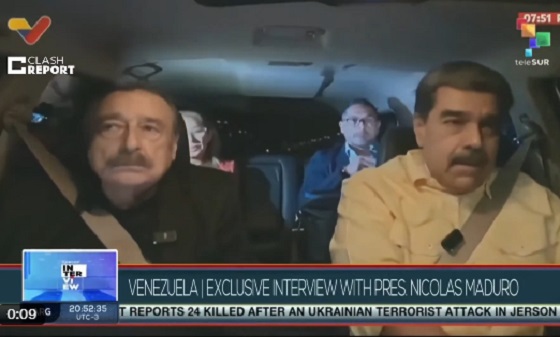
“Captured and flown out”: Trump announces dramatic capture of Maduro
-
 International1 day ago
Trump Says U.S. Strike Captured Nicolás Maduro and Wife Cilia Flores; Bondi Says Couple Possessed Machine Guns
-
Energy22 hours ago
The U.S. Just Removed a Dictator and Canada is Collateral Damage
-
 International22 hours ago
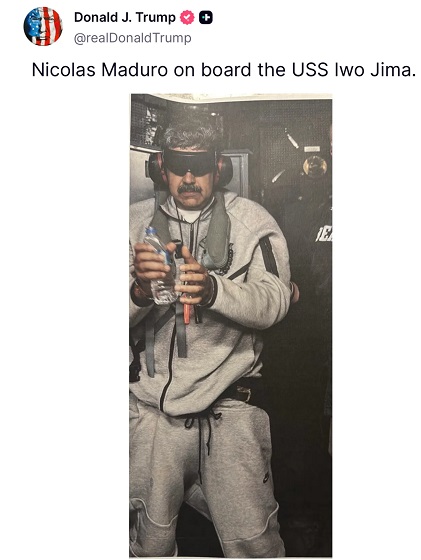
US Justice Department Accusing Maduro’s Inner Circle of a Narco-State Conspiracy
-
 Haultain Research20 hours ago
Trying to Defend Maduro’s Legitimacy
-
 Business1 day ago
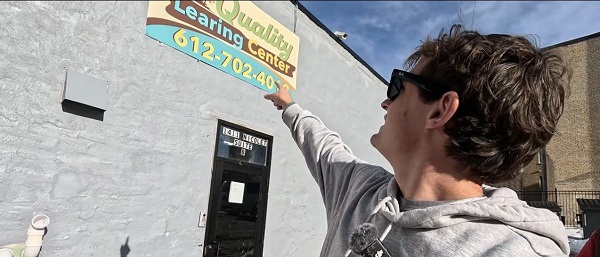
Vacant Somali Daycares In Viral Videos Are Also Linked To $300 Million ‘Feeding Our Future’ Fraud
-
Daily Caller10 hours ago
Trump Says US Going To Run Venezuela After Nabbing Maduro
-
International22 hours ago
U.S. Claims Western Hemispheric Domination, Denies Russia Security Interests On Its Own Border