
Uncategorized
White House shifts shutdown strategy, tries to bypass Pelosi


WASHINGTON — Shifting strategy, the White House invited rank-and-file House Democrats to lunch Tuesday with President Donald Trump, bypassing Speaker Nancy Pelosi and her leadership team in an effort to get centrist and freshman lawmakers on board with funding Trump’s long-promised U.S.-Mexico border wall.

Pelosi approved of lawmakers attending the meeting, telling her team that the group can see what she and others have been dealing with in trying to negotiate with Trump to end the partial government shutdown, now in its 25th day with no resolution in sight.
Pelosi predicted that after meeting with Trump the lawmakers will want to make a “citizen’s arrest,” according to the aide, who wasn’t authorized to publicly discuss the meeting and spoke on condition of anonymity.
Lawmakers invited to the White House include centrist Democrats from districts where Trump is popular, including freshmen.
Rep. Jim Cooper, D-Tenn., said he attended a meeting of fellow centrist Democrats on Monday night and that a handful of members, most of whom represent districts Trump carried in 2016, were invited.
The White House has not released a guest list.
Rep. Jim Himes of Connecticut, another centrist Democrat, said the White House is “grasping at straws.”
“The majority of Americans understand exactly what is happening here,” he said. “The president could open the government tomorrow and he refuses to. We’re very conscious of the fact that this is a bully and when you allow him to succeed by holding the government hostage you can expect to see that play run again.”
Senate Majority Leader Mitch McConnell said on the Senate floor that it’s up to Democrats to get the country off the “political carousel” of the shutdown fight. The Kentucky Republican said Democrats have turned Trump’s wall into “something evil” and have engaged in “acrobatic contortions” to avoid dealing with the security and humanitarian crisis at the southern border.
With the government shutdown now in its fourth week, negations between the White House and Congress are at a standstill. Trump has demanded $5.7 billion for the border wall; Democrats are refusing but are offering money for fencing and other border security measures.
On Monday, Trump rejected a short-term legislative fix and dug in for more combat, declaring he would “never ever back down.” The president also edged further away from the idea of trying to declare a national emergency to circumvent Congress.
“I’m not looking to call a national emergency,” Trump said Monday. “This is so simple we shouldn’t have to.”
Trump’s rejection of the short-term option proposed by Republican Sen. Lindsey Graham removed one path forward, and little else was in sight. Congressional Republicans were watching Trump for a signal for how to move next, and Democrats have not budged from their refusal to fund the wall and their demand that he reopen government before border talks resume.
In addition to the White House outreach to centrist House Democrats, about a dozen senators from both parties met Monday to discuss ways out of the shutdown gridlock. Participants included Graham and Sens. Susan Collins, R-Maine, Joe Manchin, D-W.Va., and Tim Kaine, D-Va.
Sen. John Cornyn, R-Texas, McConnell was aware of the group’s effort but added, “I wouldn’t go so far as to say he’s blessed it.” The odds of the group producing a solution without Trump’s approval seemed slim.
Meanwhile, the effects of the 25-day partial government closure were intensifying around the country.
Some 800,000 federal workers missed paychecks Friday, deepening anxieties about mortgage payments and unpaid bills, and about half of them were off the job, cutting off some services.
Trump spent the weekend in the White House reaching out to aides and lawmakers and tweeting aggressively about Democratic foes as he tried to make the case that the wall was needed on both security and humanitarian grounds. He stressed that argument repeatedly during a speech at a farming convention in New Orleans on Monday, insisting there was “no substitute” for a wall or a barrier along the southern border.
Trump has continued to insist he has the power to sign an emergency declaration to deal with what he says is a crisis of drug smuggling and trafficking of women and children at the border. But he now appears to be in no rush to make such a declaration.
Instead, he is focused on pushing Democrats to return to the negotiating table — though he walked out of the most recent talks last week.
White House officials cautioned that an emergency order remains on the table. Many inside and outside the White House hold that it may be the best option to end the budget standoff, reopening the government while allowing Trump to tell his base supporters he didn’t cave on the wall.
However, some GOP lawmakers — as well as White House aides — have
___
For AP’s complete coverage of the U.S. government shutdown: https://apnews.com/GovernmentShutdown
___
Associated Press writers Darlene Superville, Matthew Daly, Jonathan Lemire, Alan Fram and Lisa Mascaro contributed to this report.
Catherine Lucey And Jill Colvin, The Associated Press

Uncategorized
Mortgaging Canada’s energy future — the hidden costs of the Carney-Smith pipeline deal


Much of the commentary on the Carney-Smith pipeline Memorandum of Understanding (MOU) has focused on the question of whether or not the proposed pipeline will ever get built.
That’s an important topic, and one that deserves to be examined — whether, as John Robson, of the indispensable Climate Discussion Nexus, predicted, “opposition from the government of British Columbia and aboriginal groups, and the skittishness of the oil industry about investing in a major project in Canada, will kill [the pipeline] dead.”
But I’m going to ask a different question: Would it even be worth building this pipeline on the terms Ottawa is forcing on Alberta? If you squint, the MOU might look like a victory on paper. Ottawa suspends the oil and gas emissions cap, proposes an exemption from the West Coast tanker ban, and lays the groundwork for the construction of one (though only one) million barrels per day pipeline to tidewater.
But in return, Alberta must agree to jack its industrial carbon tax up from $95 to $130 per tonne at a minimum, while committing to tens of billions in carbon capture, utilization, and storage (CCUS) spending, including the $16.5 billion Pathways Alliance megaproject.
Here’s the part none of the project’s boosters seem to want to mention: those concessions will make the production of Canadian hydrocarbon energy significantly more expensive.
As economist Jack Mintz has explained, the industrial carbon tax hike alone adds more than $5 USD per barrel of Canadian crude to marginal production costs — the costs that matter when companies decide whether to invest in new production. Layer on the CCUS requirements and you get another $1.20–$3 per barrel for mining projects and $3.60–$4.80 for steam-assisted operations.
While roughly 62% of the capital cost of carbon capture is to be covered by taxpayers — another problem with the agreement, I might add — the remainder is covered by the industry, and thus, eventually, consumers.
Total damage: somewhere between $6.40 and $10 US per barrel. Perhaps more.
“Ultimately,” the Fraser Institute explains, “this will widen the competitiveness gap between Alberta and many other jurisdictions, such as the United States,” that don’t hamstring their energy producers in this way. Producers in Texas and Oklahoma, not to mention Saudi Arabia, Venezuela, or Russia, aren’t paying a dime in equivalent carbon taxes or mandatory CCUS bills. They’re not so masochistic.
American refiners won’t pay a “low-carbon premium” for Canadian crude. They’ll just buy cheaper oil or ramp up their own production.
In short, a shiny new pipe is worthless if the extra cost makes barrels of our oil so expensive that no one will want them.
And that doesn’t even touch on the problem for the domestic market, where the higher production cost will be passed onto Canadian consumers in the form of higher gas and diesel prices, home heating costs, and an elevated cost of everyday goods, like groceries.
Either way, Canadians lose.
So, concludes Mintz, “The big problem for a new oil pipeline isn’t getting BC or First Nation acceptance. Rather, it’s smothering the industry’s competitiveness by layering on carbon pricing and decarbonization costs that most competing countries don’t charge.” Meanwhile, lurking underneath this whole discussion is the MOU’s ultimate Achilles’ heel: net-zero.
The MOU proudly declares that “Canada and Alberta remain committed to achieving Net-Zero greenhouse gas emissions by 2050.” As Vaclav Smil documented in a recent study of Net-Zero, global fossil-fuel use has risen 55% since the 1997 Kyoto agreement, despite trillions spent on subsidies and regulations. Fossil fuels still supply 82% of the world’s energy.
With these numbers in mind, the idea that Canada can unilaterally decarbonize its largest export industry in 25 years is delusional.
This deal doesn’t secure Canada’s energy future. It mortgages it. We are trading market access for self-inflicted costs that will shrink production, scare off capital, and cut into the profitability of any potential pipeline. Affordable energy, good jobs, and national prosperity shouldn’t require surrendering to net-zero fantasy.If Ottawa were serious about making Canada an energy superpower, it would scrap the anti-resource laws outright, kill the carbon taxes, and let our world-class oil and gas compete on merit. Instead, we’ve been handed a backroom MOU which, for the cost of one pipeline — if that! — guarantees higher costs today and smothers the industry that is the backbone of the Canadian economy.
This MOU isn’t salvation. It’s a prescription for Canadian decline.

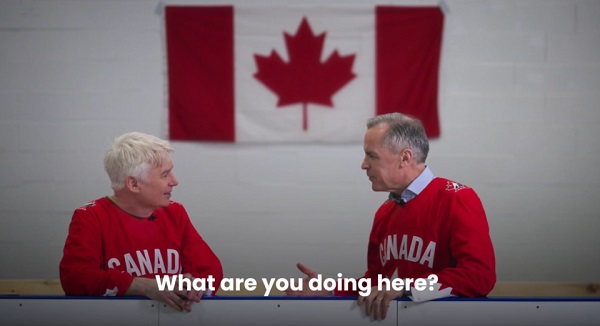

The cost of the bureaucracy increased by $6 billion last year, according to newly released numbers in Public Accounts disclosures. The Canadian Taxpayers Federation is calling on Prime Minister Mark Carney to immediately shrink the bureaucracy.
“The Public Accounts show the cost of the federal bureaucracy is out of control,” said Franco Terrazzano, CTF Federal Director. “Tinkering around the edges won’t cut it, Carney needs to take urgent action to shrink the bloated federal bureaucracy.”
The federal bureaucracy cost taxpayers $71.4 billion in 2024-25, according to the Public Accounts. The cost of the federal bureaucracy increased by $6 billion, or more than nine per cent, over the last year.
The federal bureaucracy cost taxpayers $39.6 billion in 2015-16, according to the Public Accounts. That means the cost of the federal bureaucracy increased 80 per cent over the last 10 years. The government added 99,000 extra bureaucrats between 2015-16 and 2024-25.
Half of Canadians say federal services have gotten worse since 2016, despite the massive increase in the federal bureaucracy, according to a Leger poll.
Not only has the size of the bureaucracy increased, the cost of consultants, contractors and outsourcing has increased as well. The government spent $23.1 billion on “professional and special services” last year, according to the Public Accounts. That’s an 11 per cent increase over the previous year. The government’s spending on professional and special services more than doubled since 2015-16.
“Taxpayers should not be paying way more for in-house government bureaucrats and way more for outside help,” Terrazzano said. “Mere promises to find minor savings in the federal bureaucracy won’t fix Canada’s finances.
“Taxpayers need Carney to take urgent action and significantly cut the number of bureaucrats now.”
Table: Cost of bureaucracy and professional and special services, Public Accounts
| Year | Bureaucracy | Professional and special services |
|
$71,369,677,000 |
$23,145,218,000 |
|
|
$65,326,643,000 |
$20,771,477,000 |
|
|
$56,467,851,000 |
$18,591,373,000 |
|
|
$60,676,243,000 |
$17,511,078,000 |
|
|
$52,984,272,000 |
$14,720,455,000 |
|
|
$46,349,166,000 |
$13,334,341,000 |
|
|
$46,131,628,000 |
$12,940,395,000 |
|
|
$45,262,821,000 |
$12,950,619,000 |
|
|
$38,909,594,000 |
$11,910,257,000 |
|
|
$39,616,656,000 |
$11,082,974,000 |


The “Disruptor-in-Chief” places Canada in the crosshairs
Canada’s EV gamble is starting to backfire

End Supply Management—For the Sake of Canadian Consumers

UK Police Pilot AI System to Track “Suspicious” Driver Journeys

Judge Declares Mistrial in Landmark New York PRC Foreign-Agent Case

Canadian government launches trial version of digital ID for certain licenses, permits
Alberta Next Panel calls to reform how Canada works
-
 Business2 days ago
“Magnitude cannot be overstated”: Minnesota aid scam may reach $9 billion
-
 Business2 days ago
Largest fraud in US history? Independent Journalist visits numerous daycare centres with no children, revealing massive scam
-
 Haultain Research23 hours ago
Sweden Fixed What Canada Won’t Even Name
-
 Censorship Industrial Complex2 days ago
US Under Secretary of State Slams UK and EU Over Online Speech Regulation, Announces Release of Files on Past Censorship Efforts
-
 Business23 hours ago
What Do Loyalty Rewards Programs Cost Us?
-
 Business11 hours ago
Land use will be British Columbia’s biggest issue in 2026
-
 Energy12 hours ago
Why Japan wants Western Canadian LNG
-
 Business9 hours ago
Mainstream media missing in action as YouTuber blows lid off massive taxpayer fraud