
Opinion
UK High Court upholds ban on puberty blockers for children, rejects LGBT activists’ challenge



From LifeSiteNews

The England High Court of Justice ruled that the United Kingdom’s ban on puberty blockers for children is lawful.
In a July 29 decision, Mrs. Justice Lang upheld a ban on puberty blockers for gender-confused children in England, Scotland, and Wales, after it was challenged by an LGBT activist group, TransActual.
“In my view, it was rational for the first defendant to decide that it was essential to adopt the emergency procedure to avoid serious danger to the health of children and young people who would otherwise be prescribed puberty blockers during that five- to six-month period,” Lang ruled.
Lang based her ruling on the Cass Review, an independent assessment of transgender interventions for youth commissioned by England’s National Health Service.
The four-year review of research, led by Dr. Hilary Cass, one of Britain’s top pediatricians, found no proof behind transgender activists’ assertion that gender dysphoria in children or teenagers was resolved or alleviated by so-called “gender-affirming care,” in which a young person is subjected to “social transition,” puberty blockers, cross-sex hormones, and/or mutilating surgery.
Nor, she said, is there evidence that “transitioning” kids decreases the likelihood that gender dysphoric youths will turn to suicide, as adherents of “gender transitions” claim. These findings backed up what critics of transgenderism have been saying for years.
“In my judgment,” Lang explained, “the Cass review’s findings about the very substantial risks and very narrow benefits associated with the use of puberty blockers, and the recommendation that in future the NHS prescribing of puberty blockers to children and young people should only take place in a clinical trial, and not routinely, amounted to powerful scientific evidence in support of restrictions on the supply of puberty blockers on the grounds that they were potentially harmful.”
In March, following the publication of the review, U.K. introduced a clinical policy that announced that it would not administer puberty blockers to children.
Later in May, the Conservative government doubled down on its decision, introducing an emergency ban on puberty blockers from being prescribed by private and European prescribers.
This decision was then challenged by TransActual, which falsely claimed the emergency order banning puberty blockers for children was not backed by evidence.
However, in addition to asserting a false reality that one’s sex can be changed, transgender surgeries and drugs have been linked to permanent physical and psychological damage, including cardiovascular diseases, loss of bone density, cancer, strokes and blood clots, infertility, and suicidality.
There is also overwhelming evidence that those who undergo so-called “gender transitioning” are more likely to commit suicide than those who are not subjected to irreversible surgery. A Swedish study found that those who underwent so-called “gender reassignment” surgery ended up with a 19.2 times greater risk of suicide.
Indeed, the most loving and helpful approach to people who think they are a different sex is not to encourage them in their confusion but to show them the truth.
A new study on the side effects of transgender so-called “sex change” surgeries discovered that 81 percent of those who had undergone the surgeries in the past five years reported experiencing pain simply from normal movement in the weeks and months that followed — and that many other side effects manifest as well.



Congratulations World!
Here at THB we are ending 2025 with some incredibly good news that you might not hear about anywhere else — Globally, 2025 has had one of the lowest annual death rates from disasters associated with extreme weather events in recorded history.¹
According to data from the Centre for Research on the Epidemiology of Disasters (CRED) at the Université Catholique de Louvain, Belgium (via Our World in Data), through October 2025, the world saw about 4,500 deaths related to extreme weather events.² Tragically, the final two months of 2025 saw large loss of life related to flooding in South and Southeast Asia, associated with Cyclones Senyar and Ditwah.
While the final death tolls are not yet available, reports suggest perhaps 1,600 people tragically lost their lives in these and several other events in the final two months of the year.
If those estimates prove accurate, that would make 2025 among the lowest in total deaths from extreme weather events. Ever! I am cautious here because the recent decade or so has seen many years with similarly low totals — notably 2014, 2015, 2016, 2018, 2021.
What we can say with some greater confidence is that the death rate from extreme weather events is the lowest ever at less than 0.8 deaths per 100,000 people (with population data from the United Nations). Only 2018 and 2015 are close.
To put the death rate into perspective, consider that:
- in 1960 it was >320 per 100,000;
- in 1970, >80 per 100,000;
- in 1980, ~3 per 100,000;
- in 1990, ~1.3 per 100,000;
Since 2000, six years have occurred with <1.0 deaths per 100,000 people, all since 2014. From 1970 to 2025 the death rate dropped by two orders of magnitude. This is an incredible story of human ingenuity and progress.
To be sure, there is some luck involved as large losses of life are still possible — For instance, 2008 saw almost 150,000 deaths and a death rate of ~21 per 100,000. Large casualty events remain a risk that requires our constant attention and preparation.
But make no mistake, 2025 is not unique, but part of a much longer-term trend of reduced vulnerability and improved preparation for extreme events. Underlying this trend lies the successful application of science, technology, and policy in a world that has grown much wealthier and thus far better equipped to protect people when, inevitably, extreme events do occur.
Bravo World!
Learn more:
Formetta, G., & Feyen, L. (2019). Empirical evidence of declining global vulnerability to climate-related hazards. Global Environmental Change, 57, 101920.
1
What is “recorded history”? CRED says their data is robust since 2000, as their dataset did not have complete global coverage and perviously many events went unreported. That means that the tabulations of CRED prior to 2000 are with high certainty undercounts of actual deaths related to extreme weather events.
2
Note that extreme temperature event impacts (cold and hot) are not included here — Not becaue they are not a legitimate focus, but because tracking such events has only begun in recent years, and methodologies are necessarily different when it comes to accounting for the direct loss of life related to storms and floods (e.g., epidemiological mortality vs. actual mortality). See a THB discussion of some of these issues here. My recommendation is to account for extreme temperature impacts in parallel to impacts from events like hurricanes, floods, and tornadoes — Rather than trying to combine apples and oranges.

From the Brownstone Institute
Every morning, hundreds of millions of people perform a socially approved ritual. They line up for coffee. They joke about not being functional without caffeine. They openly acknowledge dependence and even celebrate it. No one calls this addiction degenerate. It is framed as productivity, taste, wellness—sometimes even virtue.
Now imagine the same professional discreetly using a nicotine pouch before a meeting. The reaction is very different. This is treated as a vice, something vaguely shameful, associated with weakness, poor judgment, or public health risk.
From a scientific perspective, this distinction makes little sense.
Caffeine and nicotine are both mild psychoactive stimulants. Both are plant-derived alkaloids. Both increase alertness and concentration. Both produce dependence. Neither is a carcinogen. Neither causes the diseases historically associated with smoking. Yet one has become the world’s most acceptable addiction, while the other remains morally polluted even in its safest, non-combustible forms.
This divergence has almost nothing to do with biology. It has everything to do with history, class, marketing, and a failure of modern public health to distinguish molecules from mechanisms.
Two Stimulants, One Misunderstanding
Nicotine acts on nicotinic acetylcholine receptors, mimicking a neurotransmitter the brain already uses to regulate attention and learning. At low doses, it improves focus and mood. At higher doses, it causes nausea and dizziness—self-limiting effects that discourage excess. Nicotine is not carcinogenic and does not cause lung disease.
Caffeine works differently, blocking adenosine receptors that signal fatigue. The result is wakefulness and alertness. Like nicotine, caffeine indirectly affects dopamine, which is why people rely on it daily. Like nicotine, it produces tolerance and withdrawal. Headaches, fatigue, and irritability are routine among regular users who skip their morning dose.
Pharmacologically, these substances are peers.
The major difference in health outcomes does not come from the molecules themselves but from how they have been delivered.
Combustion Was the Killer
Smoking kills because burning organic material produces thousands of toxic compounds—tar, carbon monoxide, polycyclic aromatic hydrocarbons, and other carcinogens. Nicotine is present in cigarette smoke, but it is not what causes cancer or emphysema. Combustion is.
When nicotine is delivered without combustion—through patches, gum, snus, pouches, or vaping—the toxic burden drops dramatically. This is one of the most robust findings in modern tobacco research.
And yet nicotine continues to be treated as if it were the source of smoking’s harm.
This confusion has shaped decades of policy.
How Nicotine Lost Its Reputation
For centuries, nicotine was not stigmatized. Indigenous cultures across the Americas used tobacco in religious, medicinal, and diplomatic rituals. In early modern Europe, physicians prescribed it. Pipes, cigars, and snuff were associated with contemplation and leisure.
The collapse came with industrialization.
The cigarette-rolling machine of the late 19th century transformed nicotine into a mass-market product optimized for rapid pulmonary delivery. Addiction intensified, exposure multiplied, and combustion damage accumulated invisibly for decades. When epidemiology finally linked smoking to lung cancer and heart disease in the mid-20th century, the backlash was inevitable.
But the blame was assigned crudely. Nicotine—the named psychoactive component—became the symbol of the harm, even though the damage came from smoke.
Once that association formed, it hardened into dogma.
How Caffeine Escaped
Caffeine followed a very different cultural path. Coffee and tea entered global life through institutions of respectability. Coffeehouses in the Ottoman Empire and Europe became centers of commerce and debate. Tea was woven into domestic ritual, empire, and gentility.
Crucially, caffeine was never bound to a lethal delivery system. No one inhaled burning coffee leaves. There was no delayed epidemic waiting to be discovered.
As industrial capitalism expanded, caffeine became a productivity tool. Coffee breaks were institutionalized. Tea fueled factory schedules and office routines. By the 20th century, caffeine was no longer seen as a drug at all but as a necessity of modern life.
Its downsides—dependence, sleep disruption, anxiety—were normalized or joked about. In recent decades, branding completed the transformation. Coffee became lifestyle. The stimulant disappeared behind aesthetics and identity.
The Class Divide in Addiction
The difference between caffeine and nicotine is not just historical. It is social.
Caffeine use is public, aesthetic, and professionally coded. Carrying a coffee cup signals busyness, productivity, and belonging in the middle class. Nicotine use—even in clean, low-risk forms—is discreet. It is not aestheticized. It is associated with coping rather than ambition.
Addictions favored by elites are rebranded as habits or wellness tools. Addictions associated with stress, manual labor, or marginal populations are framed as moral failings. This is why caffeine is indulgence and nicotine is degeneracy, even when the physiological effects are similar.
Where Public Health Went Wrong
Public health messaging relies on simplification. “Smoking kills” was effective and true. But over time, simplification hardened into distortion.
“Smoking kills” became “Nicotine is addictive,” which slid into “Nicotine is harmful,” and eventually into claims that there is “No safe level.” Dose, delivery, and comparative risk disappeared from the conversation.
Institutions now struggle to reverse course. Admitting that nicotine is not the primary harm agent would require acknowledging decades of misleading communication. It would require distinguishing adult use from youth use. It would require nuance.
Bureaucracies are bad at nuance.
So nicotine remains frozen at its worst historical moment: the age of the cigarette.
Why This Matters
This is not an academic debate. Millions of smokers could dramatically reduce their health risks by switching to non-combustion nicotine products. Countries that have allowed this—most notably Sweden—have seen smoking rates and tobacco-related mortality collapse. Countries that stigmatize or ban these alternatives preserve cigarette dominance.
At the same time, caffeine consumption continues to rise, including among adolescents, with little moral panic. Energy drinks are aggressively marketed. Sleep disruption and anxiety are treated as lifestyle issues, not public health emergencies.
The asymmetry is revealing.
Coffee as the Model Addiction
Caffeine succeeded culturally because it aligned with power. It supported work, not resistance. It fit office life. It could be branded as refinement. It never challenged institutional authority.
Nicotine, especially when used by working-class populations, became associated with stress relief, nonconformity, and failure to comply. That symbolism persisted long after the smoke could be removed.
Addictions are not judged by chemistry. They are judged by who uses them and whether they fit prevailing moral narratives.
Coffee passed the test. Nicotine did not.
The Core Error
The central mistake is confusing a molecule with a method. Nicotine did not cause the smoking epidemic. Combustion did. Once that distinction is restored, much of modern tobacco policy looks incoherent. Low-risk behaviors are treated as moral threats, while higher-risk behaviors are tolerated because they are culturally embedded.
This is not science. It is politics dressed up as health.
A Final Thought
If we applied the standards used against nicotine to caffeine, coffee would be regulated like a controlled substance. If we applied the standards used for caffeine to nicotine, pouches and vaping would be treated as unremarkable adult choices.
The rational approach is obvious: evaluate substances based on dose, delivery, and actual harm. Stop moralizing chemistry. Stop pretending that all addictions are equal. Nicotine is not harmless. Neither is caffeine. But both are far safer than the stories told about them.
This essay only scratches the surface. The strange moral history of nicotine, caffeine, and acceptable addiction exposes a much larger problem: modern institutions have forgotten how to reason about risk.
Author



Remembering Afghanistan and the sacrifices of our military families

How to talk about housing at the holiday dinner table

Largest fraud in US history? Independent Journalist visits numerous daycare centres with no children, revealing massive scam

US Under Secretary of State Slams UK and EU Over Online Speech Regulation, Announces Release of Files on Past Censorship Efforts

Sweden Fixed What Canada Won’t Even Name
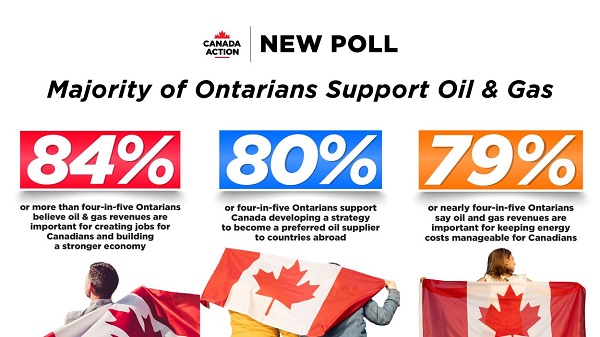
New Poll Shows Ontarians See Oil & Gas as Key to Jobs, Economy, and Trade

Alberta Next Panel calls for less Ottawa—and it could pay off
-
 Alberta2 days ago
The Canadian Energy Centre’s biggest stories of 2025
-
 Business22 hours ago
The Real Reason Canada’s Health Care System Is Failing
-
 Business2 days ago
Ottawa Is Still Dodging The China Interference Threat
-
 Business2 days ago
Resurfaced Video Shows How Somali Scammers Used Day Care Centers To Scam State
-
 Business22 hours ago
Dark clouds loom over Canada’s economy in 2026
-
Addictions19 hours ago
Coffee, Nicotine, and the Politics of Acceptable Addiction
-
 Business2 days ago
Minneapolis day care filmed empty suddenly fills with kids
-
 Business2 days ago
Disclosures reveal Minnesota politician’s husband’s companies surged thousands-fold amid Somali fraud crisis