Censorship Industrial Complex
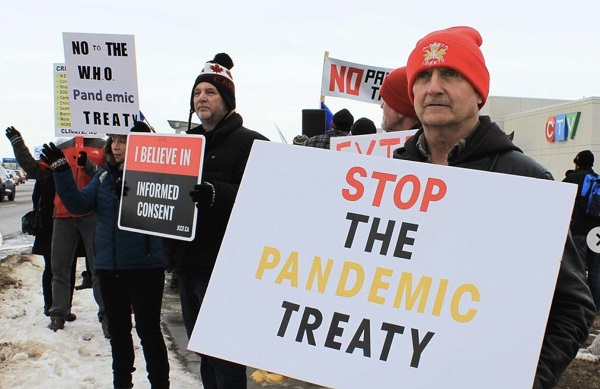
Protesters demand coverage of WHO pandemic treaty outside CTV building in Edmonton


From LifeSiteNews

Canada is set to adopt the World Health Organization’s ‘pandemic treaty’ this May, despite warnings that its provisions will undermine the country’s sovereignty in the event of crisis.
Protesters surrounded the Edmonton headquarters of mainstream media outlet CTV News last weekend to demand coverage of Canada’s plan to sign on to the World Health Organization’s pandemic treaty in May.
On March 9, Alberta 4 Liberty, a non-profit organization aimed at fight back against “the rise of totalitarian rule,” organized a protest outside the CTV News building in Edmonton to call on the mainstream to report on the WHO pandemic treaty which critics such as Conservative MP Leslyn Lewis have warned would give the globalist WHO increased power over Canada in the event of another “pandemic.”
“It’s pretty clear that this treaty does not have your health in the best interest. This treaty is all about power and control over you and your family,” Alberta 4 Liberty member Jessica Silva wrote in an Instagram post.
“The only way out is UNITED NON COMPLIANCE,” she declared.
“In May 2024 if the collective consensus is to give the W.H.O binding power on all pandemic response,” Silva warned. “This can be a pandemic of a virus, a pandemic of climate crisis, a pandemic of misinformation or anything that would consider a pandemic like response.”
Children “won’t have the quality of life and future that you have had if we don’t actually stop this pandemic treaty,” one protestor warned.
At the protest, Albertans held signs reading “exit the WHO” and “no pandemic treaty,” pleading with the mainstream media to cover the forthcoming agreement.
According to the protesters, CTV News ignored the demonstration, instead locking their gates and remaining inside their building.
Despite the lack of coverage from mainstream media, many have warned that the WHO’s treaty poses a threat to Canada’s sovereignty.
“Canada consented to the amendments to the WHO’s International Health Regulations (IHR), which limits Canada’s time to respond to further amendments, despite thousands of Canadians signing a petition expressing their concerns,” Conservative MP Leslyn Lewis warned in January, as reported by LifeSiteNews.
Lewis’ January statement followed her October endorsement of a petition demanding the Liberal government under the leadership of Prime Minister Justin Trudeau “urgently” withdraw from the United Nations and its subgroup, the World Health Organization (WHO), due to the organizations’ undermining of national “sovereignty” and the “personal autonomy” of citizens.
It warned that the “secretly negotiated” amendments could “impose unacceptable, intrusive universal surveillance, violating the rights and freedoms guaranteed in the Canadian Bill of Rights and the Charter of Rights and Freedoms.”
Despite nearly 19,000 Canadians signing the petition, the Trudeau government adopted the amendments proposed by the WHO.
The Trudeau government’s rejection of Canadians’ concerns and acceptance of the amendments should not come as a surprise considering Trudeau’s environmental goals which are in lockstep with the United Nations’ “2030 Agenda for Sustainable Development.”
Agenda 2030 was adopted by the U.N. General Assembly in 2015. Through its 17 Sustainable Development Goals (SDGs), it seeks to “transform our world for the better,” by “taking urgent action on climate change,” as well as “support[ing] the research and development of vaccines and medicines.” Some of the 17 goals also seek to expand “reproductive” services, including contraception and abortion, across the world in the name of women’s rights.
According to the UN, “all” nations working on the program “will implement this plan.”
Part of the plan includes phasing out coal-fired power plants, reducing fertilizer usage, and curbing natural gas use over the coming decades. Canada is one of the world’s largest oil and gas producers; however, Trudeau has made it one of his goals to decimate the industry.
Critics have sounded the alarm over the Trudeau government’s involvement in the WEF and other globalist groups, pointing to the socialist, totalitarian nature of the “Great Reset” agenda and its potential to usher in a Communist China-style social credit system.

Censorship Industrial Complex
US Under Secretary of State Slams UK and EU Over Online Speech Regulation, Announces Release of Files on Past Censorship Efforts

Sarah Rogers’ comments draw a new line in the sand between America’s First Amendment and Europe’s tightening grip on online speech.
|
|
Censorship Industrial Complex
Canadian university censors free speech advocate who spoke out against Indigenous ‘mass grave’ hoax
From LifeSiteNews
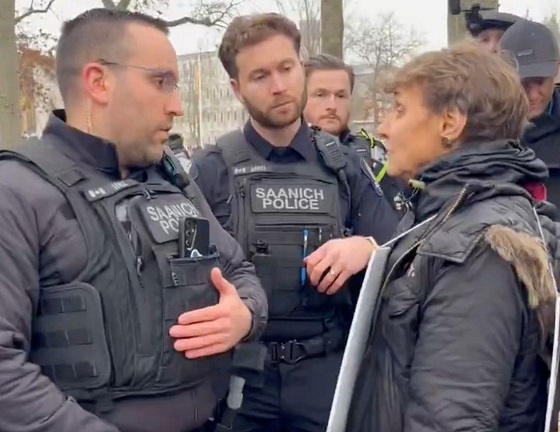
Dr. Frances Widdowson was arrested and given a ticket at the University of Victoria campus after trying to engage in conversation about ‘the disputed claims of unmarked graves in Kamloops.’
A Canadian academic who spoke out against claims there are mass unmarked graves of kids on former Indigenous residential schools, and who was arrested on a university campus as a result for trespassing, is fighting back with the help of a top constitutional group.
Dr. Frances Widdowson was arrested and given a ticket on December 2, 2025, at the University of Victoria (UVic) campus after trying to engage in conversation about “the disputed claims of unmarked graves in Kamloops,” noted the Justice Centre for Constitutional Freedoms (JCCF) in a recent news release.
According to the JCCF, Widdowson was trying to initiate a “good faith” conversation with people on campus, along with the leader of OneBC provincial party, Dallas Brodi.
“My arrest at the University of Victoria is an indication of an institution that is completely unmoored from its academic purpose,” said Widdowson in a statement made available to LifeSiteNews.
She added that the “institution” has been “perpetuating the falsehood” of the remains of 215 children “being confirmed at Kamloops since 2021, and is intent on censoring any correction of this claim.”
“This should be of concern for everyone who believes that universities should be places of open inquiry and critical thinking, not propaganda and indoctrination,” she added.
UVic had the day before Widdowson’s arrest warned on its website that those in favor of free speech were “not permitted to attend UVic property for the purpose of speaking publicly.”
Despite the warning, Widdowson, when she came to campus, was met with some “100 aggressive protesters assembled where she intended to speak at Petch Fountain,” noted the JCCF.
The protesters consisted of self-identified Communists, along with Antifa-aligned people and Hamas supporters.
When Widdowson was confronted by university security, along with local police, she was served with a trespass notice.
“When she declined to leave, she was arrested, detained for about two hours, and charged under British Columbia’s Trespass Act—an offence punishable by fines up to $2,000 or up to six months’ imprisonment,” said the JCCF.
According to Constitutional lawyer Glenn Blackett, UVic actions are shameful, as it “receives hundreds of millions of taxpayer dollars annually while it facilitates the arrest of Canadians attempting to engage in free inquiry on campus.”
Widdowson’s legal team, with the help of the JCCF, will be defending her ticket to protect her “Charter-protected freedoms of expression and peaceful assembly.”
Widdowson served as a tenured professor at Mount Royal University in Calgary, Alberta, before she was fired over criticism of her views on identity politics and Indigenous policy, notes the JCCF. She was vindicated, however, as an arbitrator later found her termination was wrongful.
In 2021 and 2022, the mainstream media ran with inflammatory and dubious claims that hundreds of children were buried and disregarded by Catholic priests and nuns who ran some Canadian residential schools. The reality is, after four years, there have been no mass graves discovered at residential schools.
However, as the claims went unfounded, over 120 churches, most of them Catholic and many of them on Indigenous lands that serve the local population, have been burned to the ground, vandalized, or defiled in Canada since the spring of 2021.
Last year, retired Manitoba judge Brian Giesbrecht said Canadians are being “deliberately deceived by their own government” after blasting the former Trudeau government for “actively pursuing” a policy that blames the Catholic Church for the unfounded “deaths and secret burials” of Indigenous children.
As reported by LifeSiteNews, new private members’ Bill C-254, “An Act To Amend The Criminal Code” introduced by New Democrat MP Leah Gazan, looks to give jail time to people who engage in so-called “Denialism.” The bill would look to jail those who question the media and government narrative surrounding Canada’s “Indian Residential School system” that there are mass graves despite no evidence to support this claim.

Religion on trial: what could happen if Canada passes its new hate speech legislation
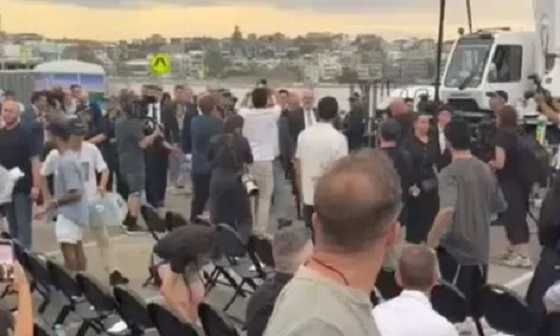
Australian PM booed at Bondi vigil as crowd screams “shame!”

Mortgaging Canada’s energy future — the hidden costs of the Carney-Smith pipeline deal
The “Disruptor-in-Chief” places Canada in the crosshairs
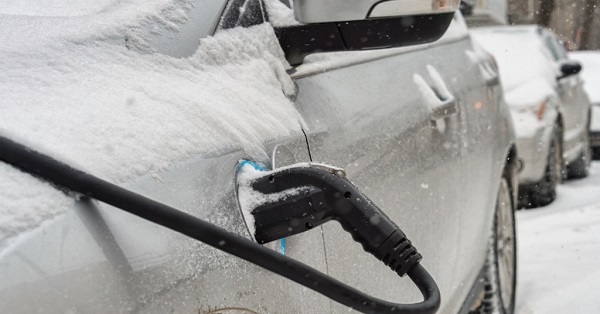
Canada’s EV gamble is starting to backfire
End Supply Management—For the Sake of Canadian Consumers

UK Police Pilot AI System to Track “Suspicious” Driver Journeys
-
 Business1 day ago
“Magnitude cannot be overstated”: Minnesota aid scam may reach $9 billion
-
Censorship Industrial Complex24 hours ago
US Under Secretary of State Slams UK and EU Over Online Speech Regulation, Announces Release of Files on Past Censorship Efforts
-
 Haultain Research2 hours ago
Sweden Fixed What Canada Won’t Even Name
-
 Business1 day ago
Largest fraud in US history? Independent Journalist visits numerous daycare centres with no children, revealing massive scam
-
 Business2 days ago
Socialism vs. Capitalism
-
 Business2 hours ago
What Do Loyalty Rewards Programs Cost Us?
-
 Energy2 days ago
Canada’s debate on energy levelled up in 2025
-
 Daily Caller2 days ago
Is Ukraine Peace Deal Doomed Before Zelenskyy And Trump Even Meet At Mar-A-Lago?