
Uncategorized
Man charged in mail-bomb plot is a Florida Trump supporter


WASHINGTON — Federal authorities have captured a Florida man with a criminal history and a

Justice Department officials on Friday announced five federal charges against Cesar Sayoc, 56, of Aventura, Florida, and revealed that DNA and a fingerprint found on an envelope package helped them identify the suspect after a five-day, coast-to-coast investigation. Even as he was arrested and charged, investigators scrutinized new suspicious packages believed to be tied to his plot.
FBI officials did not disclose a motive, although Attorney General Jeff Sessions suggested politics may have played a role, noting Sayoc appeared to be a “partisan.” Those who saw him in the
Sayoc’s social media profiles portray a deeply disaffected conservative who trafficked in online conspiracy theories, parody accounts and name-calling. He called a Florida school shooting survivor a “fake
An amateur body builder and former stripper who once spent time on probation for a bomb threat charge, Sayoc first registered as a Republican voter just ahead of the March 2016 Republican primary and quickly identified himself as a proud Trump supporter, tweeting and posting on Facebook videos that appear to show him at Trump rallies.
He appeared to be to living in his van, showering on the beach or at a local fitness
Sayoc’s arrest Friday was a major breakthrough in the nationwide manhunt following the discovery of explosive devices — none of which detonated — addressed to prominent Democrats and other frequent targets of conservative ire, including former President Barack Obama, former
The mail bombs, coming barely a week before major midterm elections, sparked a heated national conversation about the hard-edged political climate and Trump’s role in fanning the flames. The president as branded the media the “enemy of the people” and hurled harsh, personal insults at others targeted in the plot.
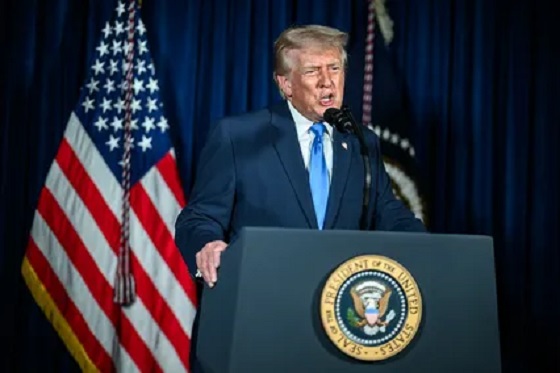
Shortly after Sayoc was detained, Trump declared that “we must never allow political violence to take root in America” and that Americans “must unify.”
Speaking later to reporters Friday evening before leaving for a political rally in North Carolina, said he knows Sayoc supported him but that he himself “bears no blame.” Hours earlier Trump had complained via tweet that “this ‘bomb’ stuff” was taking attention away from the upcoming election and that critics were wrongly blaming him.
FBI and police officials worked swiftly to untangle clues this week as the packages mounted, sometimes several in the same day.
The big break came when a fingerprint found on one of the packages, intended for California Rep. Maxine Waters, matched a fingerprint of Sayoc’s on file with Florida authorities. A DNA sample from a device intended for Obama similarly matched the suspect’s DNA, the FBI said.
An additional clue: Misspellings from his online posts matched mistakes found on the packages, according to an 11-page criminal complaint that included the formal charges of threatening former presidents and transporting explosives across state lines.
Some packages included photographs of the intended recipients marked with a red “x,” the FBI said. The packages contained timers and batteries, but were not rigged to explode upon opening. Officials were uncertain whether the devices were poorly designed or never intended to cause physical harm.
Authorities noted that they included “energetic material.” A footnote to the charging document said such explosive material “gives off heat and energy through a rapid exothermic reaction when initiated by heat, shock or friction.”
“These are not hoax devices,” FBI Director Chris Wray said.
Sayoc was arrested near an auto parts store in Plantation, Florida, north of Miami. Across the street, Thomas Fiori, a former federal law enforcement officer, said he saw about 50 armed officers swarm a man standing outside a white van. They ordered him to the ground, Fiori said, and he did not resist.
“He had that look of, ‘I’m done, I surrender,'” Fiori said.
Sayoc appears to have been living on the margins, regularly running into trouble with the law and struggling to make ends meet. He was repeatedly arrested for theft in the 1990s, faced felony charges of possession of anabolic steroids in 2004 and was convicted of grand theft in 2014. In 2002, he served a year of probation for a felony charge of threatening to throw or place a bomb.
His lawyer in that case said the charge stemmed from a heated conversation with a Florida utility representative.
Ronald Lowy, a Miami attorney, said Sayoc showed no ability at the time to back up his threat with any bomb-making expertise.
Sayoc had $4,175 in personal property and more than $21,000 in debts when filed for bankruptcy in 2012. “Debtor lives with mother, owns no furniture,” his lawyer indicated in a property list.
He had been an amateur body builder. More recently he was seen at an LA Fitness in Aventura, regularly showering at the gym but not working out, said Edgar Lopez, 48, a therapist who works out at the gym.
Marc Weiss saw Sayoc nearly every morning at 6 a.m. for the last four or five months
“I’ve seen the guy maybe 80 times and I never said a word to him because I had a feeling he was a little off,” said Weiss, a 56-year-old building superintendent who has lived in the
Sayoc’s political awakening appears to have coincided with Trump’s rise. He registered to vote in Florida in March 2016 and has voted early since, records show.
Documents released Friday by the Broward County Sheriff’s Office show Sayoc reported in May 2015 that more than $40,000 in goods were stolen from his van and an attached trailer, including 11 pieces of Donald Trump-brand clothing valued at $7,150. Specifics are not included, but Trump has a line of suits, shirts, ties and accessories.
The report shows detectives were never able to confirm whether the theft actually happened, and no arrests were made.
Most of those targeted this week were past or present U.S. officials, but packages also were sent to actor Robert De Niro and billionaire George Soros. The bombs have been sent across the country — from New York, Delaware and Washington, D.C., to Florida and California, where Waters was targeted. They bore the return address of Florida Rep. Debbie Wasserman Schultz, the former chairwoman of the Democratic National Committee.
___
Associated Press writers Laurie Kellman, Ken Thomas, Jill Colvin, Michael Biesecker, Stephen Braun and Chad Day in Washington; Terry Spencer, Kelli Kennedy and Curt Anderson in Florida; Jim Mustian, Deepti Hajela, Tom Hays and Michael R. Sisak in New York and Raphael Satter in Paris contributed to this report.
___
For the AP’s complete coverage of the mail-bomb scare: https://apnews.com/PipeBombAttacks
Michael Balsamo, Eric Tucker And Colleen Long, The Associated Press

Uncategorized
Mortgaging Canada’s energy future — the hidden costs of the Carney-Smith pipeline deal


Much of the commentary on the Carney-Smith pipeline Memorandum of Understanding (MOU) has focused on the question of whether or not the proposed pipeline will ever get built.
That’s an important topic, and one that deserves to be examined — whether, as John Robson, of the indispensable Climate Discussion Nexus, predicted, “opposition from the government of British Columbia and aboriginal groups, and the skittishness of the oil industry about investing in a major project in Canada, will kill [the pipeline] dead.”
But I’m going to ask a different question: Would it even be worth building this pipeline on the terms Ottawa is forcing on Alberta? If you squint, the MOU might look like a victory on paper. Ottawa suspends the oil and gas emissions cap, proposes an exemption from the West Coast tanker ban, and lays the groundwork for the construction of one (though only one) million barrels per day pipeline to tidewater.
But in return, Alberta must agree to jack its industrial carbon tax up from $95 to $130 per tonne at a minimum, while committing to tens of billions in carbon capture, utilization, and storage (CCUS) spending, including the $16.5 billion Pathways Alliance megaproject.
Here’s the part none of the project’s boosters seem to want to mention: those concessions will make the production of Canadian hydrocarbon energy significantly more expensive.
As economist Jack Mintz has explained, the industrial carbon tax hike alone adds more than $5 USD per barrel of Canadian crude to marginal production costs — the costs that matter when companies decide whether to invest in new production. Layer on the CCUS requirements and you get another $1.20–$3 per barrel for mining projects and $3.60–$4.80 for steam-assisted operations.
While roughly 62% of the capital cost of carbon capture is to be covered by taxpayers — another problem with the agreement, I might add — the remainder is covered by the industry, and thus, eventually, consumers.
Total damage: somewhere between $6.40 and $10 US per barrel. Perhaps more.
“Ultimately,” the Fraser Institute explains, “this will widen the competitiveness gap between Alberta and many other jurisdictions, such as the United States,” that don’t hamstring their energy producers in this way. Producers in Texas and Oklahoma, not to mention Saudi Arabia, Venezuela, or Russia, aren’t paying a dime in equivalent carbon taxes or mandatory CCUS bills. They’re not so masochistic.
American refiners won’t pay a “low-carbon premium” for Canadian crude. They’ll just buy cheaper oil or ramp up their own production.
In short, a shiny new pipe is worthless if the extra cost makes barrels of our oil so expensive that no one will want them.
And that doesn’t even touch on the problem for the domestic market, where the higher production cost will be passed onto Canadian consumers in the form of higher gas and diesel prices, home heating costs, and an elevated cost of everyday goods, like groceries.
Either way, Canadians lose.
So, concludes Mintz, “The big problem for a new oil pipeline isn’t getting BC or First Nation acceptance. Rather, it’s smothering the industry’s competitiveness by layering on carbon pricing and decarbonization costs that most competing countries don’t charge.” Meanwhile, lurking underneath this whole discussion is the MOU’s ultimate Achilles’ heel: net-zero.
The MOU proudly declares that “Canada and Alberta remain committed to achieving Net-Zero greenhouse gas emissions by 2050.” As Vaclav Smil documented in a recent study of Net-Zero, global fossil-fuel use has risen 55% since the 1997 Kyoto agreement, despite trillions spent on subsidies and regulations. Fossil fuels still supply 82% of the world’s energy.
With these numbers in mind, the idea that Canada can unilaterally decarbonize its largest export industry in 25 years is delusional.
This deal doesn’t secure Canada’s energy future. It mortgages it. We are trading market access for self-inflicted costs that will shrink production, scare off capital, and cut into the profitability of any potential pipeline. Affordable energy, good jobs, and national prosperity shouldn’t require surrendering to net-zero fantasy.If Ottawa were serious about making Canada an energy superpower, it would scrap the anti-resource laws outright, kill the carbon taxes, and let our world-class oil and gas compete on merit. Instead, we’ve been handed a backroom MOU which, for the cost of one pipeline — if that! — guarantees higher costs today and smothers the industry that is the backbone of the Canadian economy.
This MOU isn’t salvation. It’s a prescription for Canadian decline.


The cost of the bureaucracy increased by $6 billion last year, according to newly released numbers in Public Accounts disclosures. The Canadian Taxpayers Federation is calling on Prime Minister Mark Carney to immediately shrink the bureaucracy.
“The Public Accounts show the cost of the federal bureaucracy is out of control,” said Franco Terrazzano, CTF Federal Director. “Tinkering around the edges won’t cut it, Carney needs to take urgent action to shrink the bloated federal bureaucracy.”
The federal bureaucracy cost taxpayers $71.4 billion in 2024-25, according to the Public Accounts. The cost of the federal bureaucracy increased by $6 billion, or more than nine per cent, over the last year.
The federal bureaucracy cost taxpayers $39.6 billion in 2015-16, according to the Public Accounts. That means the cost of the federal bureaucracy increased 80 per cent over the last 10 years. The government added 99,000 extra bureaucrats between 2015-16 and 2024-25.
Half of Canadians say federal services have gotten worse since 2016, despite the massive increase in the federal bureaucracy, according to a Leger poll.
Not only has the size of the bureaucracy increased, the cost of consultants, contractors and outsourcing has increased as well. The government spent $23.1 billion on “professional and special services” last year, according to the Public Accounts. That’s an 11 per cent increase over the previous year. The government’s spending on professional and special services more than doubled since 2015-16.
“Taxpayers should not be paying way more for in-house government bureaucrats and way more for outside help,” Terrazzano said. “Mere promises to find minor savings in the federal bureaucracy won’t fix Canada’s finances.
“Taxpayers need Carney to take urgent action and significantly cut the number of bureaucrats now.”
Table: Cost of bureaucracy and professional and special services, Public Accounts
| Year | Bureaucracy | Professional and special services |
|
$71,369,677,000 |
$23,145,218,000 |
|
|
$65,326,643,000 |
$20,771,477,000 |
|
|
$56,467,851,000 |
$18,591,373,000 |
|
|
$60,676,243,000 |
$17,511,078,000 |
|
|
$52,984,272,000 |
$14,720,455,000 |
|
|
$46,349,166,000 |
$13,334,341,000 |
|
|
$46,131,628,000 |
$12,940,395,000 |
|
|
$45,262,821,000 |
$12,950,619,000 |
|
|
$38,909,594,000 |
$11,910,257,000 |
|
|
$39,616,656,000 |
$11,082,974,000 |


Canadian gov’t considers sharing census data on gender-confused children

Residential school burials controversy continues to fuel wave of church arsons, new data suggests
Canada’s sudden rediscovery of energy ambition has been greeted with a familiar charge: hypocrisy
Paris Climate Deal Now Decade-Old Disaster
Why is Canada paying for dairy ‘losses’ during a boom?

Alberta’s huge oil sands reserves dwarf U.S. shale
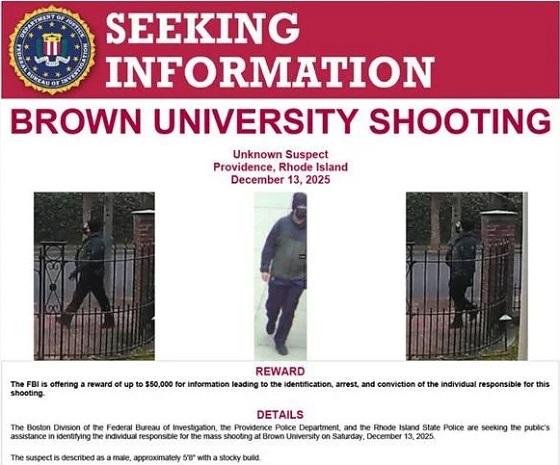
Brown University shooter dead of apparent self-inflicted gunshot wound
-
 Health2 days ago
FDA warns ‘breast binder’ manufacturers to stop marketing to gender-confused girls
-
 Agriculture2 days ago
Supply Management Is Making Your Christmas Dinner More Expensive
-
 International2 days ago
2025: The Year The Narrative Changed
-
 Business1 day ago
There’s No Bias at CBC News, You Say? Well, OK…
-
Uncategorized23 hours ago
Mortgaging Canada’s energy future — the hidden costs of the Carney-Smith pipeline deal
-
 Daily Caller2 days ago
Trump Reportedly Escalates Pressure On Venezuela With Another Oil Tanker Seizure
-
 International23 hours ago
Australian PM booed at Bondi vigil as crowd screams “shame!”
-
 Opinion1 day ago
Religion on trial: what could happen if Canada passes its new hate speech legislation