
National
Liberal MP calls for review of Trudeau’s leadership: ‘Every leader has a best-before date’

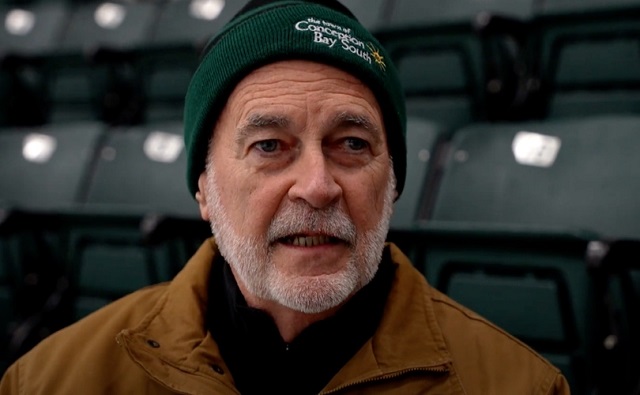

Ken McDonald, MP
From LifeSiteNews

” at least give people the opportunity to have their say “
Liberal Member of Parliament (MP) Ken McDonald is calling for a review of Prime Minister Justin Trudeau’s leadership.
In a January 24 interview with the Canadian Broadcasting Corporation (CBC), McDonald, a Newfoundland MP, argued that Canadians should be given an opportunity to replace Trudeau as leader of the Liberal Party.
“Every leader, every party has a best-before date. Our best-before date is here,” he declared.
McDonald observed that Trudeau managed to lead the Liberal Party to victory in 2015. However, he also noted that Trudeau has since disappointed Canadians.
“As a party, let’s clear the air, and if people are still intent on having the leader we have now, fine. But at least give people the opportunity to have their say in what they think [of] the direction the party is going,” he said.
Trudeau seems to have already attempted to regain popularity in Atlantic Canada by pausing the collection of the carbon tax on home heating oil for three years.
However, the exemption has led to increased dislike for Trudeau nationwide as it primarily benefits the Liberal-held Atlantic provinces, leaving other provinces literally out in the cold as they heat their homes with clean-burning natural gas, a fuel that will not be exempted from the carbon tax.
Following this, five Canadian premiers from coast to coast banded together to demand Trudeau drop the carbon tax on home heating bills for all provinces, saying his policy of giving one region a tax break over another has caused “divisions.”
In recent months, Trudeau’s popularity with Canadians has plummeted, with polls revealing that most Canadians think that he should step down before the next election.
McDonald is not the only member of the Liberal Party to condemn Trudeau’s leadership. In November, Liberal Senator Percy Downe wrote that the Liberal party needs to look for another leader.
Recent polling shows that support for Pierre Poilievre’s Conservative Party is hitting positive levels not seen since the early days of former Prime Minister Stephen Harper. Indeed, a Federal @338Canada model has the “Outcome Odds” for a Conservative majority government at 95 percent.
Digging a little deeper, a recent Leger poll shows the Conservatives taking some 211 seats, a gain of 90 seats (well over the majority of 170 needed) with the Trudeau Liberals losing 90 seats. They would win only 70 if an election were held today.
Earlier this week, Trudeau’s reputation took another blow: the Federal Court ruled that his use of the Emergencies Act in response to the 2022 Freedom Convoy was “not justified” and a violation of Charter rights. Notably, the ruling came from a Liberal appointed judge.
During the convoy, Trudeau had disparaged unvaccinated Canadians, saying those opposing his measures were of a “small, fringe minority” who held “unacceptable views” and did not “represent the views of Canadians who have been there for each other.”
In response to the ruling, Conservative Party leader Pierre Poilievre called for Trudeau to be ‘fired.’ He argued that the current Prime Minister “caused the crisis by dividing people. Then he violated Charter rights to illegally suppress citizens.”
“As PM, I will unite our country for freedom,” he promised.

International
Poilievre, Carney show support for Maduro capture as NDP’s interim leader denounces it

From LifeSiteNews
Conservative Party leader Pierre Poilievre happily welcomed the capture of Venezuelan dictator Nicolás Maduro by the United States on Saturday and Canadian Prime Minister Mark Carney seemed to approve 0as well.
In a statement posted to X over the weekend, Poilievre, whose wife is from Venezuela, thanked U.S. President Donald Trump for the capture of Maduro.
“Congratulations to President Trump on successfully arresting narco-terrorist and socialist dictator Nicolas Maduro, who should live out his days in prison,” Poilievre wrote.
Poilievre said that the “legitimate winner of the most recent Venezuelan elections, Edmundo González,” should take office, along with the courageous hero and voice of the Venezuelan people, María Corina Machado.”
“Down with socialism. Long live freedom,” he added.
As for Carney, in a social media statement Saturday, he noted how Canada had imposed sanctions on Maduro’s “brutally oppressive and criminal regime — unequivocally condemning his grave breaches of international peace and security, gross and systematic human rights violations, and corruption.”
“Canada has not recognized the illegitimate regime of Maduro since it stole the 2018 election,” he wrote.
“The Canadian government therefore welcomes the opportunity for freedom, democracy, peace, and prosperity for the Venezuelan people.”
As reported by LifeSiteNews, on January 3, U.S. special forces captured Maduro and flew him out of Venezuela in a sophisticated military operation. Maduro’s wife, Cilia Flores, was captured as well, and both were taken to New York, where they have been charged with drug trafficking.
While Canada’s two main political parties celebrated Maduro’s capture, the interim leader of the socialist New Democratic Party condemned actions by the Trump administration.
Don Davies said on social media that the “attack on Venezuela is neither an act of self defence nor does it have UN Security Council authorization.”
“It is therefore totally illegal and a breach of the UN covenants the US has agreed to uphold as a Member State,” he claimed.
He also said, “The U.S. can have no credibility upholding international law and the rights of nations when it blatantly violates those principles itself.”
U.S. Attorney General Pam Bondi’s indictment of Maduro’s regime accuses it of working to transport “thousands of tons of cocaine to the United States” and says that he “partnered with some of the most violent and prolific drug traffickers and narco-terrorists in the world” to flood the U.S. with the deadly drug.
Trump has said that the United States will now have access to oil that belongs to them, and that the United States will “run” Venezuela temporarily to provide for a “safe transition.”
As for Maduro, he rose to power in 2013 after the death of far-left president Hugo Chávez.
Venezuelan special forces committed more than 5,000 extrajudicial killings in 2018 alone, according to a United Nations report.
The Maduro regime was also responsible for jailing thousands of protesters and other people classified as political opponents and frequently tortured and abused prisoners, human rights groups have attested.
Also, the Maduro regime has engaged in anti-Catholic persecutions. In December, Venezuelan authorities blocked Cardinal Baltazar Porras, the 81-year-old former archbishop of Caracas, from boarding a flight out of the country, detaining him, confiscating his Venezuelan passport, and rejecting his Vatican passport.
Under Maduro’s leadership, Venezuela has suffered a catastrophic economic collapse due to his and Chavez’s socialist policies, including price controls, massive public spending, and the nationalization of major industries.


Canadians were told freezing bank accounts was “necessary.” We were told sending billions overseas without a vote was “solidarity.” And now we’re told that Chrystia Freeland the architect of some of the most aggressive financial overreach in modern Canadian history advising a foreign government on economic policy is “normal.” It isn’t. It’s a closed circle of power rewarding itself, while ordinary Canadians are expected to forget what was done to them and quietly foot the bill.
I don’t believe in coincidences in politics and I don’t believe in “honourary” appointments when billions of dollars and unchecked power are involved. So when Chrystia Freeland, the same woman who helped freeze Canadians’ bank accounts, torched public trust, and oversaw economic decisions that hollowed out this country is suddenly appointed as an economic adviser to Ukraine, Canadians should stop and ask a very uncomfortable question.
Kelsi Sheren is a reader-supported publication.
To receive new posts and support my work, consider becoming a free or paid subscriber.
Who exactly is Chrystia serving? Because it doesn’t look like us and doesn’t feel like us at all. I’m going to make something very clear and spell it out for Canadians… this is the same elite just moved to a different country.
Chrystia Freeland did not leave politics because she failed. She didn’t resign because she was rejected. She exited after years of consolidating power at the highest levels of government and immediately landed an advisory role with a foreign head of state.
That is not a fall from grace. That is a lateral move inside the same elite ecosystem.
Multiple Canadian outlets have now confirmed that Freeland has been named an economic adviser to Ukrainian President Zelenskyy. This is not symbolic. This is not charity. This is about economic reconstruction, international financing, sanctions, and the movement of billions of dollars, much of it, if not all of it is Western taxpayer money.
Including ours.
Has everyone forgotten what this women did to Canadians?? Before anyone starts calling this “statesmanship,” let’s remember the record.
Chrystia Freeland was a central figure during one of the most dangerous moments in modern Canadian governance: the normalization of financial punishment against citizens.
Under her watch, the federal government froze bank accounts without criminal charges, without due process, and without judicial oversight. Whatever your view of the Freedom Convoy, that precedent should have terrified you and if it doesn’t you need to wake up.
Once a government proves it can financially erase you for dissent, it never unlearns that lesson.
She also presided over years of reckless spending, inflationary pressure, and policies that pushed Canadians into a cost-of-living crisis while telling them everything was fine. Housing exploded. Food prices surged. Small businesses collapsed.
And now — suddenly — she’s being handed influence over another country’s economic future? The money no one voted on is now gone with no recourse and she knows it.
Canada has already sent billions of dollars to Ukraine, including roughly $2.5 billion tied to frozen Russian assets — without any direct vote from Canadians and with minimal parliamentary scrutiny.
Let that sit for a minute.
Our government helped set a precedent where foreign sovereign assets are frozen, leveraged, and redirected — and now one of the architects of that approach is advising the very government receiving the funds.
You don’t need to be a lawyer to understand how rotten that looks. At minimum, this is a conflict of interest. At worst, it’s a closed-loop system where the same political actors make the rules, move the money, and then step into advisory roles on the receiving end.
That’s not democracy. That’s managed power. People will say, “Ukraine needs help rebuilding.” Fine. That’s not the argument. The argument is who decides, who benefits, and who is accountable.
Chrystia Freeland still carries enormous influence inside Canada’s political and financial institutions. Her appointment creates a pipeline — informal, opaque, and unaccountable between Canadian decision-makers and a foreign government dependent on Western funds.
If an average Canadian MP took a paid or unpaid advisory role with a foreign government, alarms would be ringing, but when it’s Chrystia Freeland, we’re told it’s noble. Necessary. Above criticism.
That’s how corruption survives. Not through secrecy, but through normalization.
Canadians are always last, here’s the pattern Canadians are starting to see clearly, I hope. Canadians are being forced to tighten their belts. Canadians lose purchasing power on almost everything and Canadians are told to accept less and the sad part is Canadians are good with this.
Meanwhile, political elites move effortlessly between governments, NGOs, global institutions, and advisory boards. All it is, is different flags. Same class of people.
The people who suffered under Freeland’s economic policies don’t get to resign into prestige. They get debt. They get anxiety. They get silence.
She gets influence.
In case your wondering, this isn’t really about Ukraine, this is not an attack on Ukraine or its people. This is about Canadian democracy, accountability, and the dangerous precedent being set when unelected influence replaces public consent.
If Canadians are expected to fund wars, reconstruction, and foreign policy projects — then Canadians deserve transparency, debate, and representation.
Instead, we’re getting appointments behind closed doors and press releases that assume we won’t ask questions.
That era is long over.
Chrystia Freeland didn’t disappear. She didn’t retreat. She repositioned.
If Canadians don’t start calling this what it is — elite continuity without consent — then we shouldn’t be surprised when the same tactics used against citizens at home are exported abroad.
Power always practices somewhere first.
KELSI SHEREN
– – – – – – – – – – – –
One Time Donation! – Paypal – https://paypal.me/
Buy me a coffee! – https://buymeacoffee.com/
Let’s connect!
Youtube – https://www.youtube.com/@
Instagram: https://www.instagram.com/
Substack: https://substack.com/@
TikTok – https://x.com/KelsiBurns

The Canadian Energy Centre’s biggest stories of 2025

Minneapolis day care filmed empty suddenly fills with kids

Resurfaced Video Shows How Somali Scammers Used Day Care Centers To Scam State

Dark clouds loom over Canada’s economy in 2026

The U.S. Just Removed a Dictator and Canada is Collateral Damage

Ottawa Is Still Dodging The China Interference Threat

The Real Reason Canada’s Health Care System Is Failing
-
 Opinion2 days ago
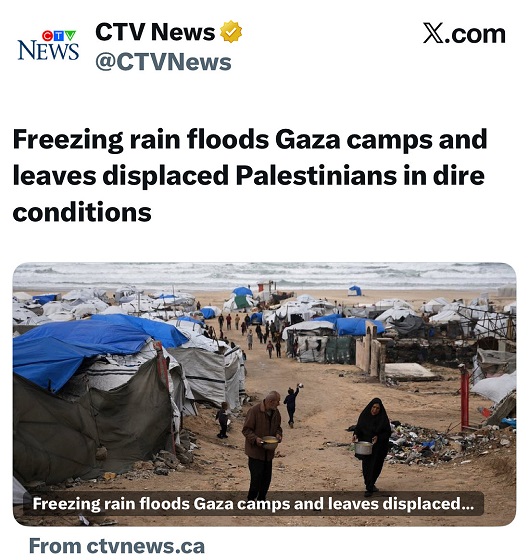
Hell freezes over, CTV’s fabrication of fake news and our 2026 forecast is still searching for sunshine
-
 Frontier Centre for Public Policy15 hours ago
Is Canada still worth the sacrifice for immigrants?
-
 Environment13 hours ago
Left-wing terrorists sabotage German power plant, causing massive power outage
-
 Alberta12 hours ago
Trump’s Venezuela Geopolitical Earthquake Shakes up Canada’s Plans as a “Net Zero” Energy Superpower
-
 Energy12 hours ago
Trump’s Venezuela Move: A $17 Trillion Reset of Global Geopolitics and a Pivotal Shift in US Energy Strategy
-
 COVID-192 days ago
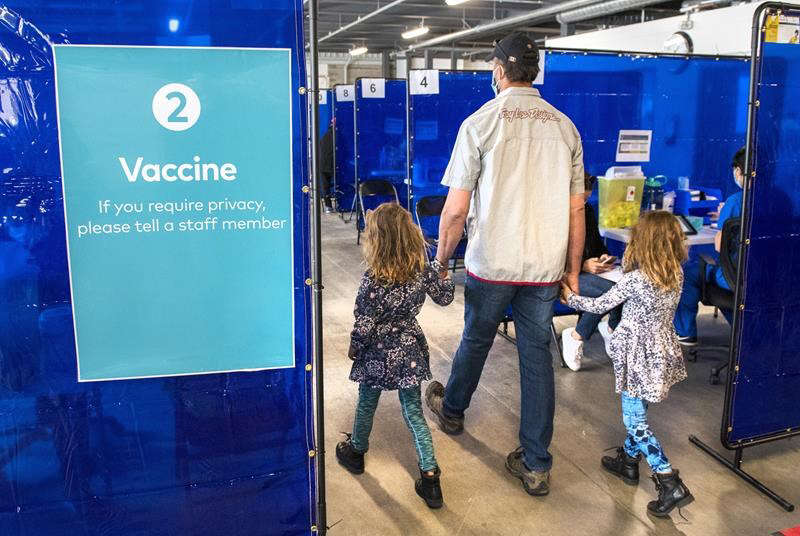
A new study proves, yet again, that the mRNA Covid jabs should NEVER have been approved for young people.
-
 Energy12 hours ago
The global math: Why exporting Canadian energy is a climate win
-
 International1 day ago
“History in the making”: Venezuelans in Florida flood streets after Maduro’s capture