
Media
Liberal-appointed senator brags about getting media to censor political opponent’s op-ed

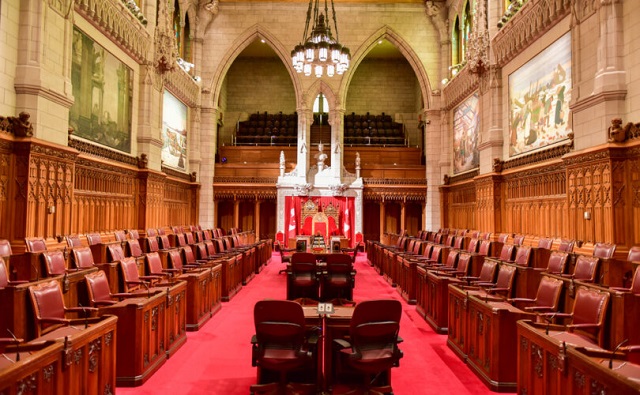

From LifeSiteNews

Ontario Senator Lucie Moncion, who was appointed by Trudeau in 2016, told the Senate she was able to get a August 21 piece published by Senator Donald Plett, who serves as the Opposition Senate leader, edited from its original form.
A Canadian Senator who was appointed by Prime Minister Justin Trudeau boasted to her colleagues that she was able to successfully get edits made to a commentary piece published by her political rival in a well-read newspaper.
Ontario Senator Lucie Moncion, who was appointed by Trudeau in 2016 and is a former banker, recently told the Senate that she was able to get a August 21 piece published by Senator Donald Plett, who serves as the Opposition Senate leader, edited from its original form.
The incident prompted Plett to state that Canada now has a “Senate communications police.”
Plett, who is a Conservative Senator, wrote a piece in the Ottawa weekly newspaper the Hill Times titled, “Trudeau’s Experimental Senate Changes Are Turning Out To Be A Dud.”
As per Blacklock’s Reporter, Moncion took issue with what was written in Plett’s piece, telling Senators, “Inaccurate information was presented,” and that they had to “remain vigilant.”
According to Moncion, who serves as chair of the Senate committee on internal economy, she was able to get edits made to Plett’s piece. She had members of her staff make the revisions to Plett’s commentary, which included complaints about overspending in the Senate.
Moncion claimed that “[o]nce a newspaper has the facts it is free to change an article, remove it or leave it as is,” adding, “I repeat: The newspaper is free to make corrections.”
“In a democracy, it is essential to ensure information that is disseminated about our institutions is true in order to avoid contributing even passively to the spread of misinformation and disinformation that characterize our media landscape,” she said.
Senators were told that the corrections made to Plett’s piece were not due to libel, or misstatement, but rather because of a technical aspect, according to Moncion.
The Hill Times is one of Canada’s most heavily subsidized weekly newspapers, getting over $1 million in the last 18 months from grants, subsidies and sole-sourced government contracts.
Censored Senator blasts edits, says Canada now has a ‘Senate communications police’
Plett was not too pleased with the changes made to his commentary, telling his fellow Senators that the Liberals wanted to “minimize” the actual cost increases made in the Senate since Trudeau took power in 2015.
“They wanted to change the meaning of the text, trying to minimize the increase in Senate expenses since Justin Trudeau took power,” he said.
“This is outrageous. We now have a Senate communications police that will not only ‘fact-check’ what senators say or write outside the chamber, but they will also, in secret, change how you present your thoughts.”
According to Plett, the Liberal government has a pattern of “doing anything to silence dissent and opposition.”
Other Conservative Senators expressed their disgust with the fact Plett’s piece was seemingly force-edited by a Liberal-appointed Senator.
“This should concern each and every one of us,” said Senator Leo Housakos.
Housakos observed that there can be disagreement on public opinion as well as what is written in op-eds, but Senators “don’t have the right to instruct my staff to call any news outlet in the country to edit anything you say.”
This is not the first time the Hill Times has been caught editing its news pieces. In 2020, it admitted that it had deleted a column critical of then Governor General Julie Payette, at the request of an unnamed official.
When it comes to government officials trying to influence people’s opinions via the media, LifeSiteNews recently reported on how disclosed records revealed that the Canada Revenue Agency (CRA) spent over a quarter of a million dollars tasking employees to create “news” reports, some of which were published by Canadian media.
Trudeau has pumped billions into propping up the mostly state-funded Canadian Broadcasting Corporation (CBC) as well as large payouts for legacy media outlets ahead of the 2025 federal election. In total, the subsidies are expected to cost taxpayers $129 million over the next five years.
Despite the interplay of the state in media, Trudeau has claimed that Canadians must continue subsidizing the CBC and others to “protect our democracy.”


Vice President JD Vance is giving public credit to a YouTube journalist for doing what he says legacy media and elite institutions have failed to do: follow the money in Minnesota. In a post on X, Vance praised independent reporter Nick Shirley for digging into alleged fraud networks tied to the state, saying Shirley “has done far more useful journalism than any of the winners of the 2024 Pulitzer prizes.” The comment was a direct response to a video Shirley shared online documenting what he described as widespread fraud, with Shirley claiming his team identified more than $110 million in suspicious activity in a single day while confronting facilities allegedly receiving millions in public funds.
Shirley’s reporting has been circulating widely among conservatives, with commentators amplifying clips of him visiting supposed daycare and education centers that appeared inactive despite receiving massive federal aid. Conservative media personality Benny Johnson said Shirley had exposed more than $100 million in Minnesota Somali-linked fraud routed through fake daycare and healthcare fronts, adding to the pressure on state leadership. The issue gained further traction after Tom Emmer, Minnesota’s top House Republican, demanded answers from Gov. Tim Walz following a viral clip showing Shirley confronting workers at an alleged daycare in South Minneapolis. Shirley reported the center, called the “Quality Learning Center,” showed no visible activity despite claims it served up to 99 children, and even misspelled “learning” on its signage. As Shirley approached, a woman inside was heard shouting “Don’t open up,” while incorrectly accusing him of being an ICE agent.
🚨 Here is the full 42 minutes of my crew and I exposing Minnesota fraud, this might be my most important work yet. We uncovered over $110,000,000 in ONE day. Like it and share it around like wildfire! Its time to hold these corrupt politicians and fraudsters accountable
We ALL… pic.twitter.com/E3Penx2o7a
— Nick shirley (@nickshirleyy) December 26, 2025
The controversy builds on earlier reporting from City Journal, which published a November investigation citing federal counterterrorism sources who said millions of dollars siphoned through Minnesota fraud schemes had been sent overseas, with some of the money allegedly ending up in the hands of Al-Shabaab. One confidential source quoted in the report bluntly claimed, “The largest funder of Al-Shabaab is the Minnesota taxpayer.” Since that report, the scrutiny has widened inside the Trump administration. Treasury Secretary Scott Bessent has announced that the Treasury Department is examining whether Minnesota taxpayer funds were diverted to terrorist-linked groups, while Education Secretary Linda McMahon has publicly called on Walz to resign amid separate allegations of large-scale education fraud within the state’s college system.
Taken together, the attention from Vance, congressional Republicans, and multiple federal agencies has elevated Shirley’s reporting from viral internet content to a flashpoint in a broader debate over fraud, accountability, and the role of independent journalists. For the vice president, the message was clear: real accountability sometimes comes not from prize committees or press rooms, but from outsiders willing to ask uncomfortable questions and stand in front of locked doors with a camera rolling.
Censorship Industrial Complex
US Under Secretary of State Slams UK and EU Over Online Speech Regulation, Announces Release of Files on Past Censorship Efforts


Sarah Rogers’ comments draw a new line in the sand between America’s First Amendment and Europe’s tightening grip on online speech.
|
|


Ottawa-Alberta agreement may produce oligopoly in the oilsands

Warning Canada: China’s Economic Miracle Was Built on Mass Displacement

‘The electric story is over’
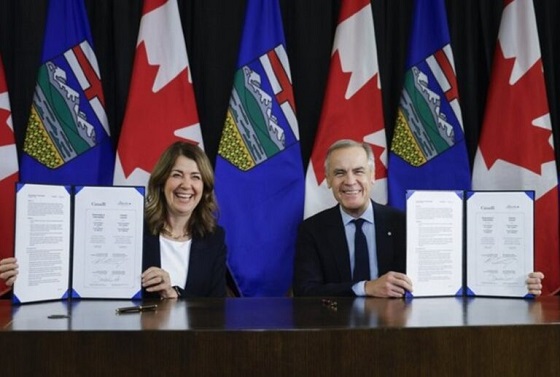
The Top News Stories That Shaped Canadian Energy in 2025 and Will Continue to Shape Canadian Energy in 2026

The Climate Argument Against Livestock Doesn’t Add Up
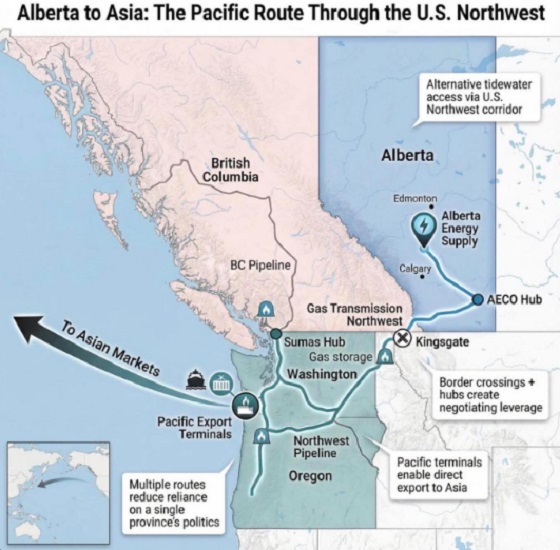
What are the odds of a pipeline through the American Pacific Northwest

Calgary’s new city council votes to ban foreign flags at government buildings
-
 Haultain Research2 days ago
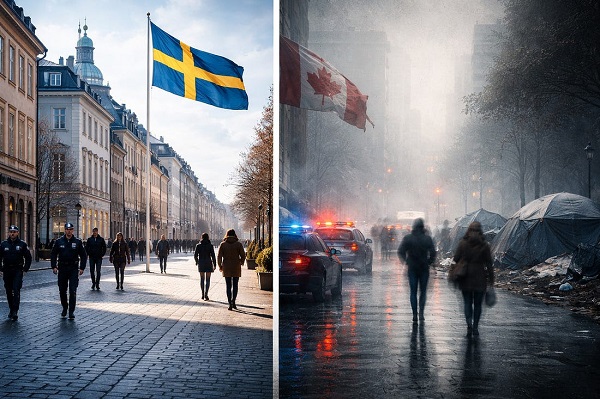
Sweden Fixed What Canada Won’t Even Name
-
 Business2 days ago
What Do Loyalty Rewards Programs Cost Us?
-
 Business1 day ago
Land use will be British Columbia’s biggest issue in 2026
-
 Digital ID20 hours ago
The Global Push for Government Mandated Digital IDs And Why You Should Worry
-
 Business18 hours ago
Feds pull the plug on small business grants to Minnesota after massive fraud reports
-
 Business7 hours ago
DOOR TO DOOR: Feds descend on Minneapolis day cares tied to massive fraud
-
 Bruce Dowbiggin7 hours ago
In Contentious Canada Reality Is Still Six Degrees Of Hockey
-
 Business6 hours ago
Canada needs serious tax cuts in 2026