
Brownstone Institute
Governor Andrew Cuomo: From Hero to Goofball in One Seasonal Virus

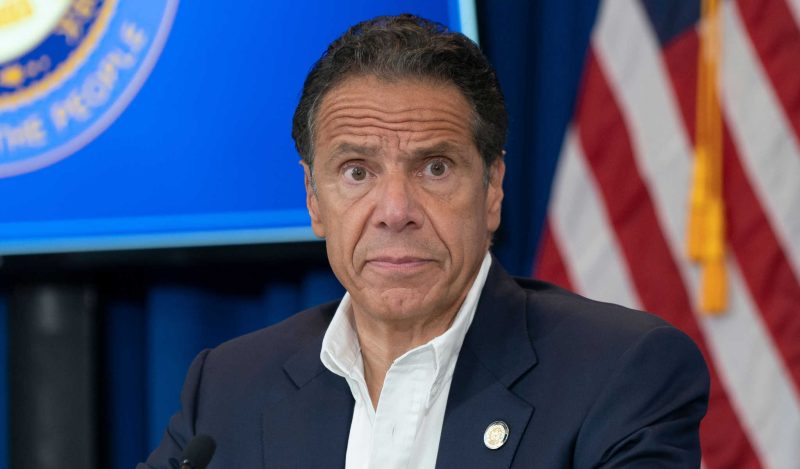


Oh joy, another book by a hero of lockdowns! This time it is from Andrew Cuomo, who rode the disease-panic wave to the heights during the confusion of Spring 2020 before falling to the depths a year later. The adoring crowds, the fawning media, the enthralled masses all went away in a seeming flash, entirely due to some alleged untoward romantic gestures about which some complained.
Cuomo accomplished the deed and then was thrown to the dogs. He went from angel to devil practically overnight. One day he was saving New York from Covid – surely he will soon be president! – and the next he was waking up with nothing to do but look over his royalty checks.
Let us see what he has to say in his memoir. The book was written when he was at the height of his fame, but then withdrawn by the publisher when he crashed to the ground. But as it happens, there are contracts and advances and royalties at stake, so here we are now: American Crisis: Leadership Lessons from the COVID-19 Pandemic. The tone is confident, aggressive, sure-footed, and completely wrong.
We know for sure that he will not admit to having abused his power, personally or politically. He will not say that he had any part in wrecking New York, its commercial culture, its citizens’ sense of self-worth, or its religious freedoms. He will nowhere say that he went too far. He will not admit that he was a craven media tool or that he followed the mania in order to position himself for higher office. He will say none of that, any more than the rest of them have said that.
What does he say? Well, the book is more self-effacing than I expected, even disarming. He tells a good story concerning his personal life and struggles. It seems even sincere, and readers can connect with his professional rise then fall then rise again…and his subsequent fall again. His ideology is on display to the max: a progressive who believes strongly in government in its ideal but is always disappointed in its practice.
But the book is also strange for what it takes for granted, namely that locking down is the proper path to deal with infectious disease. Viruses in all times and places arrive, infect some portion of the population depending on prevalence, bear responsibility for the death of others, and eventually become endemic, which is to say, something we live with. This one was no different in any of its properties. What made this one different was its politicization and the casual but universally held view that life itself had to be fundamentally disrupted by government because of it.
Cuomo himself sneaks this presumption in from the start:
An airborne virus was one of the nightmare scenarios envisioned as a terrorist plot. It is easy to create chaos and overwhelm society with fear when people are afraid to breathe the air. There would be no good news with this virus and no good outcome. Schools and businesses would be closed. The economy would suffer. People would die. Nothing we could do would be enough. There was no possibility for victory, and even FDR and Churchill had at least the possibility of a successful outcome.
Really? No good outcome at all? Failure was baked in? Also, what is this passing mention of schools and businesses being forced to close? That did not happen in South Dakota, Sweden, Nicaragua, or Belarus. Why this concession to massive coercion when such had never been done in past pandemics? Where does this come from? And why did the governor just toss that in there? Why did he never rethink in the midst of his most egregious actions?
Keep in mind that he put this book to bed in the fall of 2020, just before his resignation following his call to open up New York. Here he writes that he defeated the virus. “New York State, a microcosm of the nation, has shown a path forward. We have seen government mobilize to handle the crisis. We have seen Americans come together in a sense of unity to do the impossible. We have seen how the virus is confronted and defeated.”
Remarkable. Consider the following two charts.


What these charts show is what one might have expected from any new virus of this sort with this risk profile. It killed. Then it infected more. Then 99.8% of those infected shook it off and obtained an upgraded immune system, no thanks to the vaccine that stopped neither infection nor spread. Then life got back to normal. Every bit of this trajectory was easily predictable regardless of what government did or did not do.
The virus did not need Cuomo to battle it: the human immune system does the hard work and governments are mere spectators. Public health knew that for decades until suddenly they did not. The temptation to be a hero was too great for vast numbers of people holding public office, Cuomo among them.
What government did was wreck much more than was necessary in the name of doing something. What’s worse is that the things government did reversed the higher-level knowledge that the one group that needed protection from the virus was the vulnerable population, in this case, the elderly and infirm.
Cuomo, on the other hand, signed an order, replicated in many other states, to force nursing homes to accept Covid patients in the extra rooms. No choice. They had to. This led to tens of thousands of unnecessary deaths. More on that in a moment.
On lockdowns, Cuomo simply bakes into the prose the idea that they had to happen. They began in New Rochelle, NY.
“No one was ready to accept that they needed to change how they were living…. As we saw in Westchester that day, local parochial concerns would butt up against major, wide-ranging changes that had to occur in order to combat the virus. As we were instituting this lockdown on New Rochelle, one Democratic assemblywoman who represented Westchester came to my office demanding a meeting; then she simply sat in the second row at a press conference and scowled at me.”
And that’s it: lockdown is the whole scheme. He never doubts it, never even argues for it.
The day after our first COVID case, the legislature passed the law giving the governor emergency powers to handle the crisis. If the legislature had not passed the law, I would not have had the power to do what I would soon do. There would be no executive order closing businesses or schools, no order requiring masks or social distancing. … The law was smart, and it has proven successful.
Now, let’s just jump ahead to the great nursing home scandal. I was curious what Cuomo had to say. I will just quote him.
By early spring, Republicans needed an offense to distract from the narrative of their botched federal response—and they needed it badly. So they decided to attack Democratic governors and blame them for nursing home deaths…. The Trump forces had a simple line: “Thousands died in nursing homes.” It was true. But they needed to add a conspiracy, which was that they died because of a bad state policy that “mandated and directed” that the nursing homes accept COVID-positive people, and these COVID-positive people were the cause of the spread of the disease in the nursing homes. It was a lie. New York State never demanded or directed that any nursing home accept a COVID-positive patient.”
That’s fascinating because I’m almost sure that I saw such an order. I look at the New York State website and it has been taken down. I found it on the Internet Archive. It is on New York State letterhead.

It reads as follows:
COVID-19 has been detected in multiple communities throughout New York State. There is an urgent need to expand hospital capacity in New York State to be able to meet the demand for patients with COVID-19 requiring acute care. As a result, this directive is being issued to clarify expectations for nursing homes (NHs) receiving residents returning from hospitalization and for NHs accepting new admissions…. No resident shall be denied re-admission or admission to the NH solely based on a confirmed or suspected diagnosis of COVID-19. NHs are prohibited from requiring a hospitalized resident who is determined medically stable to be tested for COVID-19 prior to admission or readmission.
Oh. So it wasn’t a lie after all. And anyone can check this. Read the above. That certainly sounds like New York State directed nursing homes to accept Covid-positive patients. Denying that he did this amounts to pettifoggery over terms. The import was perfectly obvious. Why not just admit that he made a mistake?
I’m tempted to end this review there. But it actually gets worse. At one point, Cuomo writes that his heroics actually worked and that this is obvious. He is or was a completely unrepentant lockdower:
States like Arizona, Florida, and Texas that followed Trump’s demands to reopen quickly saw increased infection rates and needed to close their economies back down—reopening only to re-close. As a result, the financial markets were distressed with the volatility in these states. This stood in stark contrast to New York, where as of this writing 75 percent of our economy is open and our infection rate has been consistently 1 percent or below for nearly three months and among the lowest in the nation. It is incomprehensible that people still support Trump’s disproven theories. The states that most closely followed Trump’s “guidance” were doing the worst.
Look again at the charts above. The virus was only getting started when he turned in this text. He wrote those words during a seasonal downturn. Infections were still coming and coming in wave after wave. New York fared as bad as any state, certainly far worse than Florida or other open states. Meanwhile, New York drove residents out, and the state is in far worse economic condition than most.
And yet here he is taking credit for an intelligent and hands-on approach that wrecked the lives, liberties, and property of residents of the state, who, to this day, have yet to regain their composure. He did this. He became famous and beloved for it. And to this day, based on this book, he still believes that he was right.
Cuomo can’t imagine – truly – that he might have done anything wrong except perhaps communicated more clearly. In truth, governments could have forced everyone to paint their faces bright blue and wear frying pans for shoes and it would not have changed the pandemic outcome from what it was going to be. The virus never cared. But don’t tell that to Cuomo: the upshot of his book is that he saved New York. Nothing will convince him otherwise.
In short, don’t read this book looking for an apology. These politicians all panicked, as John Tamny argued from the beginning. No matter the policy, the pandemic was going to recede into memory, as it has. No matter how badly this class of politicians performed, somehow they all managed to claim to have done the right thing, and to earn royalties on their ghost-written accounts of their genius.
Even given everything, the book is not all bad. His personal stories are self effacing and engaging. He is a real person with a real life, with choices to make, risks to take, difficulties to face, family struggles, and so on. He was free to engage life to its fullest in 2020, unlike the 20 million people he locked down and robbed of all such opportunities. He believed that it was the right thing to do because Fauci was saying that it was. It was not in fact the right thing to do.
I would like to end by echoing Cuomo’s tribute to those who were shoved out in front to face the virus while the laptoppers languished at home in hiding. He is exactly right to say the following:
The heroes who made this happen were the working families of New York. When we were in our moment of need, we called on the blue-collar New Yorkers to show up for everyone. We needed them to come to work and risk their health so that so many of us could stay safely at home. These are the people who have received the fewest rewards from society but from whom we now asked the most.
These are the people who would have been most justified in refusing our call. They were not the rich and the well-off. They were not the highly paid. They have not been given anything more than they deserved. They had no obligation to risk their health and the health of their families. But they did it simply because “it was the right thing to do.” But for some that is enough. For some that is everything.
These heroes are the people who live in places like Queens, where I grew up. These are the people working hard to better themselves and their families. These are parents concerned first and foremost with protecting their families, but who still showed up every day as nurses, National Guard members, train operators, bus drivers, hospital workers, police officers, grocery store employees, food delivery drivers. They are Puerto Ricans, Haitians, African Americans, Dominicans, Asians, Guatemalans. These are the immigrants who love America, who make America, and who will fight for it.
These are the heroes of this battle. When COVID began, I felt it was unfair to call on them to carry such a heavy burden. I feared I would put them in harm’s way. But we didn’t have an option if society was to function. We needed food, hospitals, and electricity to stay alive.
All through this difficult endeavor there was never a moment when these people refused to show up or leveraged more benefits for themselves. At the beginning of a battle no one knows who will actually survive. Courage is determined by the willingness to enter the field. No one knew that when we started, the infection rate among our essential workers would be no higher than the general community infection rate. They have my undying admiration and the gratitude of every true New Yorker.
We can only say to that: Amen! These people do deserve deep gratitude. They also deserve a government that will never again conscript them to go to work for the professional class in order that the well-to-do can keep clean and free of pathogens. That the people Cuomo rightly celebrates were so treated is a violation of the social contract, and now have every reason to be bitter. And don’t you love the comment that “We needed food, hospitals, and electricity to stay alive?” Who exactly is “we” here?
We know. We know all too well.
Author


From the Brownstone Institute
Every morning, hundreds of millions of people perform a socially approved ritual. They line up for coffee. They joke about not being functional without caffeine. They openly acknowledge dependence and even celebrate it. No one calls this addiction degenerate. It is framed as productivity, taste, wellness—sometimes even virtue.
Now imagine the same professional discreetly using a nicotine pouch before a meeting. The reaction is very different. This is treated as a vice, something vaguely shameful, associated with weakness, poor judgment, or public health risk.
From a scientific perspective, this distinction makes little sense.
Caffeine and nicotine are both mild psychoactive stimulants. Both are plant-derived alkaloids. Both increase alertness and concentration. Both produce dependence. Neither is a carcinogen. Neither causes the diseases historically associated with smoking. Yet one has become the world’s most acceptable addiction, while the other remains morally polluted even in its safest, non-combustible forms.
This divergence has almost nothing to do with biology. It has everything to do with history, class, marketing, and a failure of modern public health to distinguish molecules from mechanisms.
Two Stimulants, One Misunderstanding
Nicotine acts on nicotinic acetylcholine receptors, mimicking a neurotransmitter the brain already uses to regulate attention and learning. At low doses, it improves focus and mood. At higher doses, it causes nausea and dizziness—self-limiting effects that discourage excess. Nicotine is not carcinogenic and does not cause lung disease.
Caffeine works differently, blocking adenosine receptors that signal fatigue. The result is wakefulness and alertness. Like nicotine, caffeine indirectly affects dopamine, which is why people rely on it daily. Like nicotine, it produces tolerance and withdrawal. Headaches, fatigue, and irritability are routine among regular users who skip their morning dose.
Pharmacologically, these substances are peers.
The major difference in health outcomes does not come from the molecules themselves but from how they have been delivered.
Combustion Was the Killer
Smoking kills because burning organic material produces thousands of toxic compounds—tar, carbon monoxide, polycyclic aromatic hydrocarbons, and other carcinogens. Nicotine is present in cigarette smoke, but it is not what causes cancer or emphysema. Combustion is.
When nicotine is delivered without combustion—through patches, gum, snus, pouches, or vaping—the toxic burden drops dramatically. This is one of the most robust findings in modern tobacco research.
And yet nicotine continues to be treated as if it were the source of smoking’s harm.
This confusion has shaped decades of policy.
How Nicotine Lost Its Reputation
For centuries, nicotine was not stigmatized. Indigenous cultures across the Americas used tobacco in religious, medicinal, and diplomatic rituals. In early modern Europe, physicians prescribed it. Pipes, cigars, and snuff were associated with contemplation and leisure.
The collapse came with industrialization.
The cigarette-rolling machine of the late 19th century transformed nicotine into a mass-market product optimized for rapid pulmonary delivery. Addiction intensified, exposure multiplied, and combustion damage accumulated invisibly for decades. When epidemiology finally linked smoking to lung cancer and heart disease in the mid-20th century, the backlash was inevitable.
But the blame was assigned crudely. Nicotine—the named psychoactive component—became the symbol of the harm, even though the damage came from smoke.
Once that association formed, it hardened into dogma.
How Caffeine Escaped
Caffeine followed a very different cultural path. Coffee and tea entered global life through institutions of respectability. Coffeehouses in the Ottoman Empire and Europe became centers of commerce and debate. Tea was woven into domestic ritual, empire, and gentility.
Crucially, caffeine was never bound to a lethal delivery system. No one inhaled burning coffee leaves. There was no delayed epidemic waiting to be discovered.
As industrial capitalism expanded, caffeine became a productivity tool. Coffee breaks were institutionalized. Tea fueled factory schedules and office routines. By the 20th century, caffeine was no longer seen as a drug at all but as a necessity of modern life.
Its downsides—dependence, sleep disruption, anxiety—were normalized or joked about. In recent decades, branding completed the transformation. Coffee became lifestyle. The stimulant disappeared behind aesthetics and identity.
The Class Divide in Addiction
The difference between caffeine and nicotine is not just historical. It is social.
Caffeine use is public, aesthetic, and professionally coded. Carrying a coffee cup signals busyness, productivity, and belonging in the middle class. Nicotine use—even in clean, low-risk forms—is discreet. It is not aestheticized. It is associated with coping rather than ambition.
Addictions favored by elites are rebranded as habits or wellness tools. Addictions associated with stress, manual labor, or marginal populations are framed as moral failings. This is why caffeine is indulgence and nicotine is degeneracy, even when the physiological effects are similar.
Where Public Health Went Wrong
Public health messaging relies on simplification. “Smoking kills” was effective and true. But over time, simplification hardened into distortion.
“Smoking kills” became “Nicotine is addictive,” which slid into “Nicotine is harmful,” and eventually into claims that there is “No safe level.” Dose, delivery, and comparative risk disappeared from the conversation.
Institutions now struggle to reverse course. Admitting that nicotine is not the primary harm agent would require acknowledging decades of misleading communication. It would require distinguishing adult use from youth use. It would require nuance.
Bureaucracies are bad at nuance.
So nicotine remains frozen at its worst historical moment: the age of the cigarette.
Why This Matters
This is not an academic debate. Millions of smokers could dramatically reduce their health risks by switching to non-combustion nicotine products. Countries that have allowed this—most notably Sweden—have seen smoking rates and tobacco-related mortality collapse. Countries that stigmatize or ban these alternatives preserve cigarette dominance.
At the same time, caffeine consumption continues to rise, including among adolescents, with little moral panic. Energy drinks are aggressively marketed. Sleep disruption and anxiety are treated as lifestyle issues, not public health emergencies.
The asymmetry is revealing.
Coffee as the Model Addiction
Caffeine succeeded culturally because it aligned with power. It supported work, not resistance. It fit office life. It could be branded as refinement. It never challenged institutional authority.
Nicotine, especially when used by working-class populations, became associated with stress relief, nonconformity, and failure to comply. That symbolism persisted long after the smoke could be removed.
Addictions are not judged by chemistry. They are judged by who uses them and whether they fit prevailing moral narratives.
Coffee passed the test. Nicotine did not.
The Core Error
The central mistake is confusing a molecule with a method. Nicotine did not cause the smoking epidemic. Combustion did. Once that distinction is restored, much of modern tobacco policy looks incoherent. Low-risk behaviors are treated as moral threats, while higher-risk behaviors are tolerated because they are culturally embedded.
This is not science. It is politics dressed up as health.
A Final Thought
If we applied the standards used against nicotine to caffeine, coffee would be regulated like a controlled substance. If we applied the standards used for caffeine to nicotine, pouches and vaping would be treated as unremarkable adult choices.
The rational approach is obvious: evaluate substances based on dose, delivery, and actual harm. Stop moralizing chemistry. Stop pretending that all addictions are equal. Nicotine is not harmless. Neither is caffeine. But both are far safer than the stories told about them.
This essay only scratches the surface. The strange moral history of nicotine, caffeine, and acceptable addiction exposes a much larger problem: modern institutions have forgotten how to reason about risk.
Author

From the Brownstone Institute
I recently purchased Aaron Siri’s new book Vaccines, Amen. As I flipped though the pages, I noticed a section devoted to his now-famous deposition of Dr Stanley Plotkin, the “godfather” of vaccines.
I’d seen viral clips circulating on social media, but I had never taken the time to read the full transcript — until now.
Siri’s interrogation was methodical and unflinching…a masterclass in extracting uncomfortable truths.
A Legal Showdown
In January 2018, Dr Stanley Plotkin, a towering figure in immunology and co-developer of the rubella vaccine, was deposed under oath in Pennsylvania by attorney Aaron Siri.
The case stemmed from a custody dispute in Michigan, where divorced parents disagreed over whether their daughter should be vaccinated. Plotkin had agreed to testify in support of vaccination on behalf of the father.
What followed over the next nine hours, captured in a 400-page transcript, was extraordinary.
Plotkin’s testimony revealed ethical blind spots, scientific hubris, and a troubling indifference to vaccine safety data.
He mocked religious objectors, defended experiments on mentally disabled children, and dismissed glaring weaknesses in vaccine surveillance systems.
A System Built on Conflicts
From the outset, Plotkin admitted to a web of industry entanglements.
He confirmed receiving payments from Merck, Sanofi, GSK, Pfizer, and several biotech firms. These were not occasional consultancies but long-standing financial relationships with the very manufacturers of the vaccines he promoted.
Plotkin appeared taken aback when Siri questioned his financial windfall from royalties on products like RotaTeq, and expressed surprise at the “tone” of the deposition.
Siri pressed on: “You didn’t anticipate that your financial dealings with those companies would be relevant?”
Plotkin replied: “I guess, no, I did not perceive that that was relevant to my opinion as to whether a child should receive vaccines.”
The man entrusted with shaping national vaccine policy had a direct financial stake in its expansion, yet he brushed it aside as irrelevant.
Contempt for Religious Dissent
Siri questioned Plotkin on his past statements, including one in which he described vaccine critics as “religious zealots who believe that the will of God includes death and disease.”
Siri asked whether he stood by that statement. Plotkin replied emphatically, “I absolutely do.”
Plotkin was not interested in ethical pluralism or accommodating divergent moral frameworks. For him, public health was a war, and religious objectors were the enemy.
He also admitted to using human foetal cells in vaccine production — specifically WI-38, a cell line derived from an aborted foetus at three months’ gestation.
Siri asked if Plotkin had authored papers involving dozens of abortions for tissue collection. Plotkin shrugged: “I don’t remember the exact number…but quite a few.”
Plotkin regarded this as a scientific necessity, though for many people — including Catholics and Orthodox Jews — it remains a profound moral concern.
Rather than acknowledging such sensitivities, Plotkin dismissed them outright, rejecting the idea that faith-based values should influence public health policy.
That kind of absolutism, where scientific aims override moral boundaries, has since drawn criticism from ethicists and public health leaders alike.
As NIH director Jay Bhattacharya later observed during his 2025 Senate confirmation hearing, such absolutism erodes trust.
“In public health, we need to make sure the products of science are ethically acceptable to everybody,” he said. “Having alternatives that are not ethically conflicted with foetal cell lines is not just an ethical issue — it’s a public health issue.”
Safety Assumed, Not Proven
When the discussion turned to safety, Siri asked, “Are you aware of any study that compares vaccinated children to completely unvaccinated children?”
Plotkin replied that he was “not aware of well-controlled studies.”
Asked why no placebo-controlled trials had been conducted on routine childhood vaccines such as hepatitis B, Plotkin said such trials would be “ethically difficult.”
That rationale, Siri noted, creates a scientific blind spot. If trials are deemed too unethical to conduct, then gold-standard safety data — the kind required for other pharmaceuticals — simply do not exist for the full childhood vaccine schedule.
Siri pointed to one example: Merck’s hepatitis B vaccine, administered to newborns. The company had only monitored participants for adverse events for five days after injection.
Plotkin didn’t dispute it. “Five days is certainly short for follow-up,” he admitted, but claimed that “most serious events” would occur within that time frame.
Siri challenged the idea that such a narrow window could capture meaningful safety data — especially when autoimmune or neurodevelopmental effects could take weeks or months to emerge.
Siri pushed on. He asked Plotkin if the DTaP and Tdap vaccines — for diphtheria, tetanus and pertussis — could cause autism.
“I feel confident they do not,” Plotkin replied.
But when shown the Institute of Medicine’s 2011 report, which found the evidence “inadequate to accept or reject” a causal link between DTaP and autism, Plotkin countered, “Yes, but the point is that there were no studies showing that it does cause autism.”
In that moment, Plotkin embraced a fallacy: treating the absence of evidence as evidence of absence.
“You’re making assumptions, Dr Plotkin,” Siri challenged. “It would be a bit premature to make the unequivocal, sweeping statement that vaccines do not cause autism, correct?”
Plotkin relented. “As a scientist, I would say that I do not have evidence one way or the other.”
The MMR
The deposition also exposed the fragile foundations of the measles, mumps, and rubella (MMR) vaccine.
When Siri asked for evidence of randomised, placebo-controlled trials conducted before MMR’s licensing, Plotkin pushed back: “To say that it hasn’t been tested is absolute nonsense,” he said, claiming it had been studied “extensively.”
Pressed to cite a specific trial, Plotkin couldn’t name one. Instead, he gestured to his own 1,800-page textbook: “You can find them in this book, if you wish.”
Siri replied that he wanted an actual peer-reviewed study, not a reference to Plotkin’s own book. “So you’re not willing to provide them?” he asked. “You want us to just take your word for it?”
Plotkin became visibly frustrated.
Eventually, he conceded there wasn’t a single randomised, placebo-controlled trial. “I don’t remember there being a control group for the studies, I’m recalling,” he said.
The exchange foreshadowed a broader shift in public discourse, highlighting long-standing concerns that some combination vaccines were effectively grandfathered into the schedule without adequate safety testing.
In September this year, President Trump called for the MMR vaccine to be broken up into three separate injections.
The proposal echoed a view that Andrew Wakefield had voiced decades earlier — namely, that combining all three viruses into a single shot might pose greater risk than spacing them out.
Wakefield was vilified and struck from the medical register. But now, that same question — once branded as dangerous misinformation — is set to be re-examined by the CDC’s new vaccine advisory committee, chaired by Martin Kulldorff.
The Aluminium Adjuvant Blind Spot
Siri next turned to aluminium adjuvants — the immune-activating agents used in many childhood vaccines.
When asked whether studies had compared animals injected with aluminium to those given saline, Plotkin conceded that research on their safety was limited.
Siri pressed further, asking if aluminium injected into the body could travel to the brain. Plotkin replied, “I have not seen such studies, no, or not read such studies.”
When presented with a series of papers showing that aluminium can migrate to the brain, Plotkin admitted he had not studied the issue himself, acknowledging that there were experiments “suggesting that that is possible.”
Asked whether aluminium might disrupt neurological development in children, Plotkin stated, “I’m not aware that there is evidence that aluminum disrupts the developmental processes in susceptible children.”
Taken together, these exchanges revealed a striking gap in the evidence base.
Compounds such as aluminium hydroxide and aluminium phosphate have been injected into babies for decades, yet no rigorous studies have ever evaluated their neurotoxicity against an inert placebo.
This issue returned to the spotlight in September 2025, when President Trump pledged to remove aluminium from vaccines, and world-leading researcher Dr Christopher Exley renewed calls for its complete reassessment.
A Broken Safety Net
Siri then turned to the reliability of the Vaccine Adverse Event Reporting System (VAERS) — the primary mechanism for collecting reports of vaccine-related injuries in the United States.
Did Plotkin believe most adverse events were captured in this database?
“I think…probably most are reported,” he replied.
But Siri showed him a government-commissioned study by Harvard Pilgrim, which found that fewer than 1% of vaccine adverse events are reported to VAERS.
“Yes,” Plotkin said, backtracking. “I don’t really put much faith into the VAERS system…”
Yet this is the same database officials routinely cite to claim that “vaccines are safe.”
Ironically, Plotkin himself recently co-authored a provocative editorial in the New England Journal of Medicine, conceding that vaccine safety monitoring remains grossly “inadequate.”
Experimenting on the Vulnerable
Perhaps the most chilling part of the deposition concerned Plotkin’s history of human experimentation.
“Have you ever used orphans to study an experimental vaccine?” Siri asked.
“Yes,” Plotkin replied.
“Have you ever used the mentally handicapped to study an experimental vaccine?” Siri asked.
“I don’t recollect…I wouldn’t deny that I may have done so,” Plotkin replied.
Siri cited a study conducted by Plotkin in which he had administered experimental rubella vaccines to institutionalised children who were “mentally retarded.”
Plotkin stated flippantly, “Okay well, in that case…that’s what I did.”
There was no apology, no sign of ethical reflection — just matter-of-fact acceptance.
Siri wasn’t done.
He asked if Plotkin had argued that it was better to test on those “who are human in form but not in social potential” rather than on healthy children.
Plotkin admitted to writing it.
Siri established that Plotkin had also conducted vaccine research on the babies of imprisoned mothers, and on colonised African populations.
Plotkin appeared to suggest that the scientific value of such studies outweighed the ethical lapses—an attitude that many would interpret as the classic ‘ends justify the means’ rationale.
But that logic fails the most basic test of informed consent. Siri asked whether consent had been obtained in these cases.
“I don’t remember…but I assume it was,” Plotkin said.
Assume?
This was post-Nuremberg research. And the leading vaccine developer in America couldn’t say for sure whether he had properly informed the people he experimented on.
In any other field of medicine, such lapses would be disqualifying.
A Casual Dismissal of Parental Rights
Plotkin’s indifference to experimenting on disabled children didn’t stop there.
Siri asked whether someone who declined a vaccine due to concerns about missing safety data should be labelled “anti-vax.”
Plotkin replied, “If they refused to be vaccinated themselves or refused to have their children vaccinated, I would call them an anti-vaccination person, yes.”
Plotkin was less concerned about adults making that choice for themselves, but he had no tolerance for parents making those choices for their own children.
“The situation for children is quite different,” said Plotkin, “because one is making a decision for somebody else and also making a decision that has important implications for public health.”
In Plotkin’s view, the state held greater authority than parents over a child’s medical decisions — even when the science was uncertain.
The Enabling of Figures Like Plotkin
The Plotkin deposition stands as a case study in how conflicts of interest, ideology, and deference to authority have corroded the scientific foundations of public health.
Plotkin is no fringe figure. He is celebrated, honoured, and revered. Yet he promotes vaccines that have never undergone true placebo-controlled testing, shrugs off the failures of post-market surveillance, and admits to experimenting on vulnerable populations.
This is not conjecture or conspiracy — it is sworn testimony from the man who helped build the modern vaccine program.
Now, as Health Secretary Robert F. Kennedy, Jr. reopens long-dismissed questions about aluminium adjuvants and the absence of long-term safety studies, Plotkin’s once-untouchable legacy is beginning to fray.
Republished from the author’s Substack


Remembering Afghanistan and the sacrifices of our military families
New Poll Shows Ontarians See Oil & Gas as Key to Jobs, Economy, and Trade

How to talk about housing at the holiday dinner table

Alberta Next Panel calls for less Ottawa—and it could pay off

“Magnitude cannot be overstated”: Minnesota aid scam may reach $9 billion

Largest fraud in US history? Independent Journalist visits numerous daycare centres with no children, revealing massive scam

US Under Secretary of State Slams UK and EU Over Online Speech Regulation, Announces Release of Files on Past Censorship Efforts
-
 Bruce Dowbiggin2 days ago
In Contentious Canada Reality Is Still Six Degrees Of Hockey
-
 Alberta1 day ago
The Canadian Energy Centre’s biggest stories of 2025
-
 Business2 days ago
Canada needs serious tax cuts in 2026
-
 Business1 day ago
Ottawa Is Still Dodging The China Interference Threat
-
 Business1 day ago
Minneapolis day care filmed empty suddenly fills with kids
-
 Business1 day ago
Disclosures reveal Minnesota politician’s husband’s companies surged thousands-fold amid Somali fraud crisis
-
 Business1 day ago
Resurfaced Video Shows How Somali Scammers Used Day Care Centers To Scam State
-
 Business2 days ago
DOOR TO DOOR: Feds descend on Minneapolis day cares tied to massive fraud