
Uncategorized
Eiffel Tower to be closed as Paris braces for more protests


PARIS — France was mobilizing tens of thousands of police officers and closing landmarks including the Eiffel Tower and the Louvre as authorities warned that anti-government protests on Saturday could be even more violent than the ones that have crippled the country for weeks.

“According to the information we have, some radicalized and rebellious people will try to get mobilized tomorrow,” Interior minister Christophe Castaner told a press conference on Friday. “Some ultra-violent people want to take part.”
Authorities say 8,000 police will fan out across Paris, equipped with a dozen barricade-busting
“These vehicles can be very useful to protect buildings,” said Stanislas Gaudon, the head of police union Alliance. “And in case they set up barricades, we can quickly clear out the space and let our units progress.”
At the height of the festive shopping season, many Paris store owners were boarding up their shop fronts and have said they will remain shut Saturday for fear they may be in the line of any unrest between protesters and police.
Meanwhile, Paris police, fearing protesters could turn street furniture and construction site material into makeshift weapons, were removing all the glass containers, railings and building machines set up in high-risk areas including the world-renowned Champs-Elysees avenue, which would normally be packed with tourists and shoppers on a Saturday in early December.
The Nicolas wine chain, one of the biggest retailers in the country,
“It’s with an immense sadness that we’ll see our city partially brought to a halt, but your safety is our priority,” Paris mayor Anne Hidalgo said. “Take care of Paris on Saturday because Paris belongs to all the French people.”
Across the country some 89,000 police will be mobilized, up from 65,000 last weekend when more than 130 people were injured and over 400 were arrested as protests degenerated into the worst street violence to hit Paris in decades.
Authorities also have cancelled six French league soccer matches around the country.
Since the unrest began on Nov. 17 in reaction to a sharp increase in diesel taxes, four people have been killed in accidents.
The protesters are collectively referred to as the “yellow vest” movement, in reference to the fluorescent safety outfit French motorists keep in their cars.
Amid the unrest, some of the protesters, French union officials and prominent politicians across the political spectrum have urged calm especially as French President Emmanuel Macron agreed to abandon the fuel tax hike that triggered the movement. However, protesters’ demands have now expanded to other issues hurting French workers, retirees and students.
Students opposing an education reform protested again Friday, a day after footage widely shared on social media showing the arrest of high school students protesting outside Paris prompted an outcry. Trade unions and far-left parties have lashed out at perceived police brutality.
The images, filmed Thursday at Mantes-la-Jolie, showed a group of students on their knees with their hands behind their head. They are being watched over by armed police officers whose faces are hidden by ski masks.
Interior minister Christophe Castaner said that 151 people were arrested in the small town, adding that some of them carried weapons. He said none of the students were injured.
The rioting has also had an economic impact at the height of the holiday shopping season. Rampaging groups last weekend threw cobblestones through Paris storefronts and looted valuables in some of the city’s richest
The national Federation of French markets said that Christmas markets have been “strongly impacted” and that its members registered “an average fall of their estimated figures between 30 and 40
In addition to the closure of the Eiffel Tower, many shops and museums across France, including the Louvre, Orsay Museum and the Grand Palais, will keep their doors shut on Saturday for safety reasons.
“We need to protect culture sites in Paris but also everywhere in France,” Culture Minister Franck Riester told RTL radio.
Samuel Petrequin, The Associated Press

Uncategorized
Mortgaging Canada’s energy future — the hidden costs of the Carney-Smith pipeline deal


Much of the commentary on the Carney-Smith pipeline Memorandum of Understanding (MOU) has focused on the question of whether or not the proposed pipeline will ever get built.
That’s an important topic, and one that deserves to be examined — whether, as John Robson, of the indispensable Climate Discussion Nexus, predicted, “opposition from the government of British Columbia and aboriginal groups, and the skittishness of the oil industry about investing in a major project in Canada, will kill [the pipeline] dead.”
But I’m going to ask a different question: Would it even be worth building this pipeline on the terms Ottawa is forcing on Alberta? If you squint, the MOU might look like a victory on paper. Ottawa suspends the oil and gas emissions cap, proposes an exemption from the West Coast tanker ban, and lays the groundwork for the construction of one (though only one) million barrels per day pipeline to tidewater.
But in return, Alberta must agree to jack its industrial carbon tax up from $95 to $130 per tonne at a minimum, while committing to tens of billions in carbon capture, utilization, and storage (CCUS) spending, including the $16.5 billion Pathways Alliance megaproject.
Here’s the part none of the project’s boosters seem to want to mention: those concessions will make the production of Canadian hydrocarbon energy significantly more expensive.
As economist Jack Mintz has explained, the industrial carbon tax hike alone adds more than $5 USD per barrel of Canadian crude to marginal production costs — the costs that matter when companies decide whether to invest in new production. Layer on the CCUS requirements and you get another $1.20–$3 per barrel for mining projects and $3.60–$4.80 for steam-assisted operations.
While roughly 62% of the capital cost of carbon capture is to be covered by taxpayers — another problem with the agreement, I might add — the remainder is covered by the industry, and thus, eventually, consumers.
Total damage: somewhere between $6.40 and $10 US per barrel. Perhaps more.
“Ultimately,” the Fraser Institute explains, “this will widen the competitiveness gap between Alberta and many other jurisdictions, such as the United States,” that don’t hamstring their energy producers in this way. Producers in Texas and Oklahoma, not to mention Saudi Arabia, Venezuela, or Russia, aren’t paying a dime in equivalent carbon taxes or mandatory CCUS bills. They’re not so masochistic.
American refiners won’t pay a “low-carbon premium” for Canadian crude. They’ll just buy cheaper oil or ramp up their own production.
In short, a shiny new pipe is worthless if the extra cost makes barrels of our oil so expensive that no one will want them.
And that doesn’t even touch on the problem for the domestic market, where the higher production cost will be passed onto Canadian consumers in the form of higher gas and diesel prices, home heating costs, and an elevated cost of everyday goods, like groceries.
Either way, Canadians lose.
So, concludes Mintz, “The big problem for a new oil pipeline isn’t getting BC or First Nation acceptance. Rather, it’s smothering the industry’s competitiveness by layering on carbon pricing and decarbonization costs that most competing countries don’t charge.” Meanwhile, lurking underneath this whole discussion is the MOU’s ultimate Achilles’ heel: net-zero.
The MOU proudly declares that “Canada and Alberta remain committed to achieving Net-Zero greenhouse gas emissions by 2050.” As Vaclav Smil documented in a recent study of Net-Zero, global fossil-fuel use has risen 55% since the 1997 Kyoto agreement, despite trillions spent on subsidies and regulations. Fossil fuels still supply 82% of the world’s energy.
With these numbers in mind, the idea that Canada can unilaterally decarbonize its largest export industry in 25 years is delusional.
This deal doesn’t secure Canada’s energy future. It mortgages it. We are trading market access for self-inflicted costs that will shrink production, scare off capital, and cut into the profitability of any potential pipeline. Affordable energy, good jobs, and national prosperity shouldn’t require surrendering to net-zero fantasy.If Ottawa were serious about making Canada an energy superpower, it would scrap the anti-resource laws outright, kill the carbon taxes, and let our world-class oil and gas compete on merit. Instead, we’ve been handed a backroom MOU which, for the cost of one pipeline — if that! — guarantees higher costs today and smothers the industry that is the backbone of the Canadian economy.
This MOU isn’t salvation. It’s a prescription for Canadian decline.

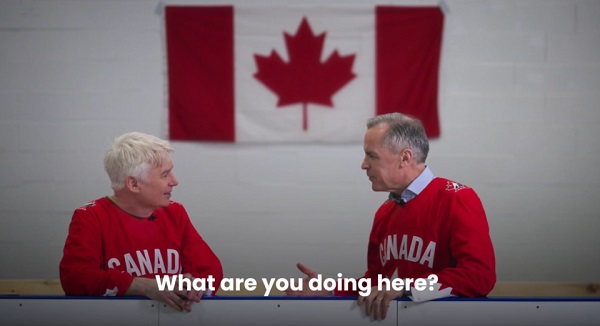

The cost of the bureaucracy increased by $6 billion last year, according to newly released numbers in Public Accounts disclosures. The Canadian Taxpayers Federation is calling on Prime Minister Mark Carney to immediately shrink the bureaucracy.
“The Public Accounts show the cost of the federal bureaucracy is out of control,” said Franco Terrazzano, CTF Federal Director. “Tinkering around the edges won’t cut it, Carney needs to take urgent action to shrink the bloated federal bureaucracy.”
The federal bureaucracy cost taxpayers $71.4 billion in 2024-25, according to the Public Accounts. The cost of the federal bureaucracy increased by $6 billion, or more than nine per cent, over the last year.
The federal bureaucracy cost taxpayers $39.6 billion in 2015-16, according to the Public Accounts. That means the cost of the federal bureaucracy increased 80 per cent over the last 10 years. The government added 99,000 extra bureaucrats between 2015-16 and 2024-25.
Half of Canadians say federal services have gotten worse since 2016, despite the massive increase in the federal bureaucracy, according to a Leger poll.
Not only has the size of the bureaucracy increased, the cost of consultants, contractors and outsourcing has increased as well. The government spent $23.1 billion on “professional and special services” last year, according to the Public Accounts. That’s an 11 per cent increase over the previous year. The government’s spending on professional and special services more than doubled since 2015-16.
“Taxpayers should not be paying way more for in-house government bureaucrats and way more for outside help,” Terrazzano said. “Mere promises to find minor savings in the federal bureaucracy won’t fix Canada’s finances.
“Taxpayers need Carney to take urgent action and significantly cut the number of bureaucrats now.”
Table: Cost of bureaucracy and professional and special services, Public Accounts
| Year | Bureaucracy | Professional and special services |
|
$71,369,677,000 |
$23,145,218,000 |
|
|
$65,326,643,000 |
$20,771,477,000 |
|
|
$56,467,851,000 |
$18,591,373,000 |
|
|
$60,676,243,000 |
$17,511,078,000 |
|
|
$52,984,272,000 |
$14,720,455,000 |
|
|
$46,349,166,000 |
$13,334,341,000 |
|
|
$46,131,628,000 |
$12,940,395,000 |
|
|
$45,262,821,000 |
$12,950,619,000 |
|
|
$38,909,594,000 |
$11,910,257,000 |
|
|
$39,616,656,000 |
$11,082,974,000 |


Brown University shooter dead of apparent self-inflicted gunshot wound

Alberta’s new diagnostic policy appears to meet standard for Canada Health Act compliance
RFK Jr reversing Biden-era policies on gender transition care for minors
Geopolitics no longer drives oil prices the way it used to
Ex-FDA Commissioners Against Higher Vaccine Standards Took $6 Million From COVID Vaccine Makers

Carney Floor Crossing Raises Counterintelligence Questions aimed at China, Former Senior Mountie Argues

Canadian university censors free speech advocate who spoke out against Indigenous ‘mass grave’ hoax
-
 Business2 days ago
Some Of The Wackiest Things Featured In Rand Paul’s New Report Alleging $1,639,135,969,608 In Gov’t Waste
-
 Energy2 days ago
‘The electric story is over’
-
 International1 day ago
$2.6 million raised for man who wrestled shotgun from Bondi Beach terrorist
-
 Alberta2 days ago
A Christmas wish list for health-care reform
-
Alberta1 day ago
Ottawa-Alberta agreement may produce oligopoly in the oilsands
-
 Energy1 day ago
Western Canada’s supply chain for Santa Claus
-
 Energy1 day ago
The Top News Stories That Shaped Canadian Energy in 2025 and Will Continue to Shape Canadian Energy in 2026
-
 armed forces7 hours ago
Remembering Afghanistan and the sacrifices of our military families