
COVID-19
College drops charges against Alberta doctor who granted Covid vaccine exemptions



News release from the Justice Centre for Constitutional Freedoms
The Justice Centre is pleased to announce that the College of Physicians and Surgeons of Alberta (CPSA) has dropped charges of professional misconduct against Dr. Michal Princ. The charges arose from Dr. Princ granting Covid vaccine exemptions to his patients. As a result, a five-day disciplinary hearing scheduled to commence on March 8, 2024, has been cancelled.Dr. Princ is a family medicine physician with 49 years of experience. He received his medical degree in 1975 while living in his native Czechoslovakia, then under communist rule. He left his homeland and began his medical practice in Canada in 1989.On April 5, 2023, Dr. Princ was accused of failing to follow vaccine exemption requirements that were imposed on medical doctors by the CPSA, Alberta Health Services and Alberta’s Chief Medical Officer of Health.On January 10, 2024, the CPSA withdrew its charges against Dr. Princ because the relevant health order (Chief Medical Officer of Health Order 43-2021) in relation to which he was charged was likely invalid, based on the 2023 Alberta Court of King’s Bench ruling in Ingram v. Alberta, by which the Court invalidated health orders. The Justice Centre provided lawyers for the Ingram action, which was one of the first constitutional challenges to lockdown measures commenced in Canada.Health Order 43-2021 was issued by Alberta’s (then) Chief Medical Officer of Health, Dr. Deena Hinshaw, on September 18, 2021. In the Ingram v. Alberta trial, Dr. Hinshaw testified that the health Orders that violated Charter rights and freedoms were effectively issued by the provincial cabinet, not by her. Court of King’s Bench Justice Barbara Romaine found this to be contrary to the Public Health Act and ruled that health orders must come from the Chief Medical Officer of Health in order to be valid.After the court released its ruling in Ingram, the Justice Centre submitted a legislative proposal to the Alberta government to amend the Public Health Act so that it would align with the constitutional principle of democratic accountability. Alberta’s Minister of Justice tabled a Bill in November 2023 that would, consistent with Justice Centre recommendations, put public health decision-making authority in the hands of elected officials rather than leaving unaccountable health officials with near-absolute power.The Legislative Assembly has since changed the Public Health Act to require that all public health orders be issued by cabinet, and not by the Chief Medical Officer of Health, in an attempt to ensure democratic oversight and accountability as required by Canada’s Constitution.The requirements imposed on doctors by the CPSA, AHS and the Chief Medical Officer of Health, while sometimes described as mere “guidance,” were strict and inflexible. For example, it was not clear that any condition would entitle a patient to an exemption, and this uncertainty was reflected in the “guidance” provided to medical doctors. According to the CPSA’s Exemption Requests: Patient FAQ, under Alberta’s vaccine mandate, “There are virtually no medical conditions that universally warrant a complete exemption.” (emphasis added) Meanwhile, according to the CPSA’s Guidance for physicians: Requests for COVID-19 vaccination exemptions, “There are no medical conditions that would universally warrant a complete exemption from initial COVID-19 vaccine.” (emphasis added)One of the primary resources provided was Alberta Health Services’ COVID-19 Scientific Advisory Group Rapid Brief. The closest that guidance comes to permitting any exemption is in the case of a severe allergic reaction to a Covid injection. “However…even among those deemed as being ‘highly allergic,’ only 0.7% had a severe allergic reaction to the vaccine administered under medical supervision.” Generally, in the very rare situations in which doctors had any latitude, only deferrals could be entertained, not permanent exemptions. Even patients who suffered myocarditis or pericarditis from a Covid injection were only entitled to a deferral “until more evidence is available.”“This mandatory ‘Guidance for physicians’ that was imposed by the College of Physicians and Surgeons of Alberta resulted in an unknown number of Albertans getting pressured, coerced or manipulated into receiving an injection that they did not consent to voluntarily,” stated John Carpay, President of the Justice Centre.Many Albertans were injected with the Covid vaccine because refusing this medical treatment would have resulted in loss of employment. Many college and university students were injected because a failure to receive the vaccine would have resulted in suspension or expulsion from university. Many teenagers and young adults, a demographic not threatened by Covid, went ahead with the injection only because they wanted to continue participating in sports and recreation. Many Albertans and other Canadians were fired for refusing to get injected with a substance for which no long-term safety data exists. They were then unable to collect Employment Insurance.“The College of Physicians and Surgeons of Alberta violated the ethical principle of informed and voluntary consent for medical treatment, by threatening medical doctors with the loss of their license if they exercised their independent clinical judgment about the safety and efficacy of new vaccines for which no long-term safety data existed,” continued President John Carpay.According to the Patient FAQ, doctors would “only offer an exemption based on the latest medical evidence from authorities like Alberta Health, Alberta Health Services, the National Advisory Council on Immunization and the Centers for Disease Control and Prevention.” The Brief, however, was not an actual scientific analysis, but rather a “grey literature” survey of what others were doing and recommending.Glenn Blackett, co-counsel for Dr. Princ, observed, “One thing we found most alarming about all of this guidance was the degree to which the basic medical ethical principle of informed consent was simply ignored. How did health professionals in Alberta recommending or administering vaccines obtain informed consent where patients were subject to the coercive pressure of vaccine mandates? The CPSA told doctors how to participate in and, effectively, help enforce the vaccine mandate program, which consisted of rejecting all or ‘virtually’ all exemption requests. But it seems the CPSA entirely failed to grapple with the resulting ethical dilemmas.”AHS’s Rapid Brief says, “This review of current guidelines considers medical exemptions and does not address human rights, religious or other possible non-medical reasons for seeking vaccine exemptions.” The CPSA’s own general standards of practice include the doctrine of informed consent. The CPSA standards include the commonsense observation that, for informed consent to exist, a patient must be free of “undue influence, duress or coercion.”

The “vaccine mandates” in Alberta and across Canada effectively turned millions of Canadians into second-class citizens who were prevented from participating in sports, enjoying restaurants, leaving and re-entering Canada, visiting their elderly parents in nursing homes, continuing their university education, and keeping their jobs. “These kinds of draconian restrictions on personal freedoms surely constituted ‘undue influence, duress or coercion,’ negating informed consent. Yet in the ‘Rapid Brief’ document of Alberta Health Services, informed consent is only mentioned once, when recommending vaccination to women ‘who are pregnant, breastfeeding, or planning to become pregnant,’ or to people with a history of allergies. Perhaps even more troubling is the CPSA’s COVID-19 Vaccine: Questions and answers for the public and healthcare practitioners, which encourages doctors advising vaccine-hesitant patients to employ ‘motivational interviewing’ techniques-when I read that, a shiver ran up my spine,” continues Blackett.Lawyer Andre Memauri, co-counsel for Dr. Princ, stated, “our client was ethically motivated by the sacrosanct and longstanding principle of ‘do no harm.’ We are pleased the CPSA has withdrawn charges, although we wish the charges had been withdrawn to protect professional independence, not based on the Ingram ruling. The relationship of trust between each physician and his or her patients must be brought back to the forefront of medical practice.”


From LifeSiteNews
A judge ruled that the Ontario Court of Justice is already ‘satisfied’ with Chris Barber’s sentence and taking away his very livelihood would be ‘disproportionate.’
A Canadian judge has dismissed a demand from Canadian government lawyers to seize Freedom Convoy leader Chris Barber’s “Big Red” semi-truck.
On Friday, Ontario Court of Justice Judge Heather Perkins-McVey denied the Crown’s application seeking to forfeit Barber’s truck.
She ruled that the court is already “satisfied” with Barber’s sentence and taking away his very livelihood would be “disproportionate.”
“This truck is my livelihood,” said Barber in a press release sent to LifeSiteNews.
“Trying to permanently seize it for peacefully protesting was wrong, and I’m relieved the court refused to allow that to happen,” he added.
Criminal defense lawyer Marwa Racha Younes was welcoming of the ruling as well, stating, “We find it was the right decision in the circumstances and are happy with the outcome.”
John Carpay, president of the Justice Centre for Constitutional Freedoms (JCCF), said the decision is “good news for all Canadians who cherish their Charter freedom to assemble peacefully.”
READ: Freedom Convoy protester appeals after judge dismissed challenge to frozen bank accounts
“Asset forfeiture is an extraordinary power, and it must not be used to punish Canadians for participating in peaceful protest,” he added in the press release.
As reported recently by LifeSiteNews, the Canadian government claimed that Barber’s truck is an “offence-related property” relating to his involvement in the 2022 protests against Canada’s COVID mandates.
At this time, the court ruling ends any forfeiture proceedings for the time being, however Barber will continue to try and appeal his criminal conviction and house arrest sentence.
Barber’s truck, a 2004 Kenworth long-haul he uses for business, was a focal point in the 2022 protests. He drove it to Ottawa, where it was parked for an extended period of time, but he complied when officials asked him to move it.
On October 7, 2025, after a long trial, Ontario Court Justice Perkins-McVey sentenced Barber and Tamara Lich, the other Freedom Convoy leader, to 18 months’ house arrest. They had been declared guilty of mischief for their roles as leaders of the 2022 protest against COVID mandates, and as social media influencers.
Lich and Barber have filed appeals of their own against their house arrest sentences, arguing that the trial judge did not correctly apply the law on their mischief charges.
Government lawyers for the Crown have filed an appeal of the acquittals of Lich and Barber on intimidation charges.
The pair’s convictions came after a nearly two-year trial despite the nonviolent nature of the popular movement.

From LifeSiteNews
Protestor Evan Blackman’s legal team argues Trudeau’s Emergencies Act-based bank account freezes were punitive state action tied directly to protest participation.
A Freedom Convoy protester whose bank accounts were frozen by the Canadian government says a judge erred after his ruling did not consider the fact that the funds were frozen under the Emergencies Act, as grounds for a stay of proceedings.
In a press release sent out earlier this week, the Justice Centre for Constitutional Freedoms (JCCF) said that Freedom Convoy protestor Evan Blackman will challenge a court ruling in his criminal case via an appeal with the Ontario Superior Court of Justice.
“This case raises serious questions about how peaceful protest is treated in Canada and about the lasting consequences of the federal government’s unlawful use of the Emergencies Act,” noted constitutional lawyer Chris Fleury. “The freezing of protestors’ bank accounts was part of a coordinated effort to suppress dissent, and courts ought to be willing to scrutinize that conduct.”
Blackman was arrested on February 18, 2022, during the police crackdown on Freedom Convoy protests against COVID restrictions, which was authorized by the Emergencies Act (EA). The EA was put in place by former Prime Minister Justin Trudeau’s Liberal government, which claimed the protests were violent, despite no evidence that this was the case.
Blackman’s three bank accounts with TD Bank were frozen due to his participation in the Freedom Convoy, following a directive ordered by Trudeau.
As reported by LifeSiteNews, in November of this year, Blackman was convicted at his retrial even though he had been acquitted at his original trial. In 2023, Blackman’s “mischief” and “obstructing police” charges were dismissed by a judge due to lack of evidence and the “poor memory of a cop regarding key details of the alleged criminal offences.”
His retrial resulted in Blackman getting a conditional discharge along with 12 months’ probation and 122 hours of community service, along with a $200 victim fine surcharge.
After this, Blackman’s application for a stay of proceedings was dismissed by the court. He had hoped to have his stay of proceedings, under section 24(1) of the Charter of Rights and Freedoms, allowed. However, the judge ruled that the freezing of his bank accounts was legally not related to his arrest, and because of this, the stay of proceedings lacked standing.
The JCCF disagreed with this ruling, noting, it “stands in contrast to a Federal Court decision finding that the government’s invocation of the Emergencies Act was unreasonable and violated Canadians’ Charter rights, including those targeted by the financial measures used against Freedom Convoy protestors.”
As of press time, a hearing date has not been scheduled.
In 2024, Federal Court Justice Richard Mosley ruled that Trudeau was “not justified” in invoking the Emergencies Act.
In early 2022, the Freedom Convoy saw thousands of Canadians from coast to coast come to Ottawa to demand an end to COVID mandates in all forms. Despite the peaceful nature of the protest, Trudeau’s federal government enacted the EA in mid-February.
After the protesters were cleared out, which was achieved through the freezing of bank accounts of those involved without a court order as well as the physical removal and arrest of demonstrators, Trudeau revoked the EA on February 23, 2022.

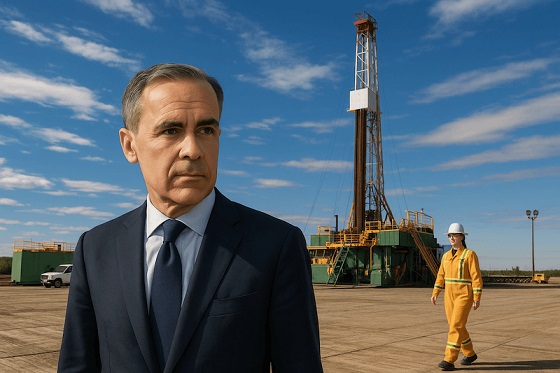
Canada’s sudden rediscovery of energy ambition has been greeted with a familiar charge: hypocrisy

Chinese Billionaire Tried To Build US-Born Baby Empire As Overseas Elites Turn To American Surrogates

Terror in Australia: 12 killed after gunmen open fire on Hanukkah celebration

Paris Climate Deal Now Decade-Old Disaster
Major tax changes in 2026: Report

Canadian gov’t considers sharing census data on gender-confused children
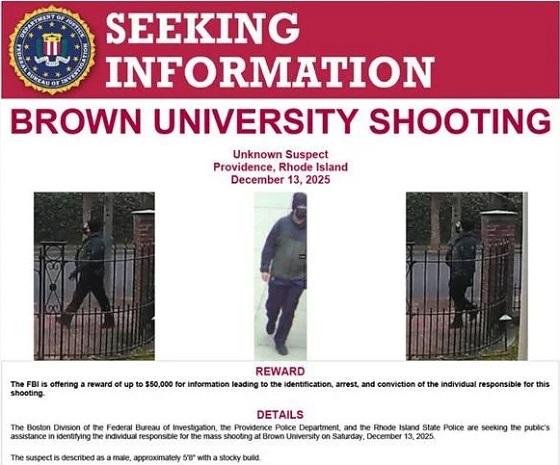
Brown University shooter dead of apparent self-inflicted gunshot wound
-
 Health2 days ago
RFK Jr reversing Biden-era policies on gender transition care for minors
-
 Business1 day ago
Geopolitics no longer drives oil prices the way it used to
-
 Business1 day ago
Argentina’s Milei delivers results free-market critics said wouldn’t work
-
 Alberta2 days ago
Alberta’s new diagnostic policy appears to meet standard for Canada Health Act compliance
-
 Censorship Industrial Complex2 days ago
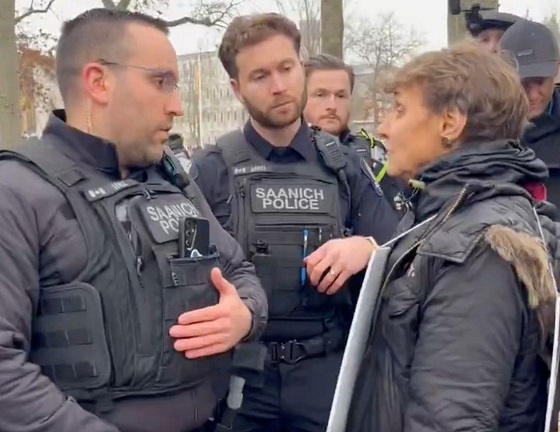
Canadian university censors free speech advocate who spoke out against Indigenous ‘mass grave’ hoax
-
 Business1 day ago
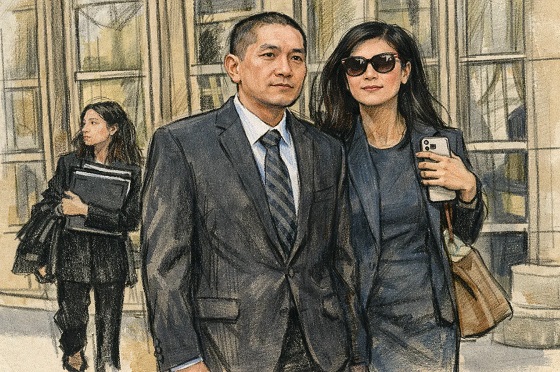
Deadlocked Jury Zeroes In on Alleged US$40 Million PPE Fraud in Linda Sun PRC Influence Case
-
 Daily Caller2 days ago
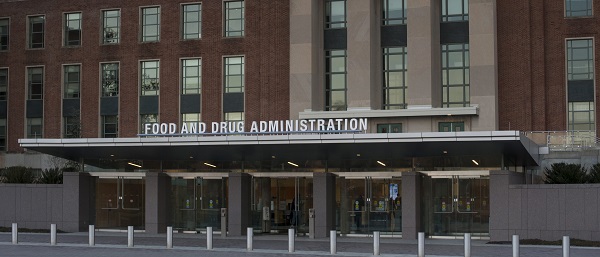
Ex-FDA Commissioners Against Higher Vaccine Standards Took $6 Million From COVID Vaccine Makers
-
COVID-192 days ago
Freedom Convoy protester appeals after judge dismissed challenge to frozen bank accounts