
National
Canadian PM Mark Carney to call snap election for April 28: report


From LifeSiteNews

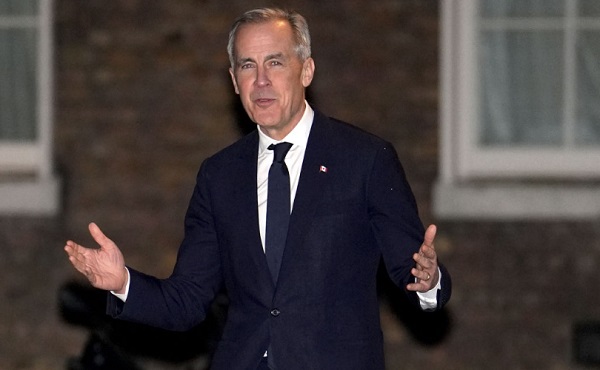
Canadian Prime Minister Mark Carney will call a snap election for April 28, according to inside sources.
On April 28, Canadians will head to the polls in a snap election called by newly appointed Prime Minister Mark Carney, according to an inside source speaking anonymously to the Associated Press.
“The official says Carney will go to the governor-general on Sunday and request to dissolve Parliament,” the report said.
The election call comes as Canada is in a trade war with the United States, a move which has resulted in an unexpected comeback for the Liberal Party.
Conservative Party leader Pierre Poilievre has yet to respond to the election rumors.
Carney’s rumored election call comes after he recently attempted to gain favor with Canadians by dropping the infamous carbon tax to zero percent. Critics are calling the move nothing more than a political ploy.
Carney, whose ties to globalist groups have had Poilievre call him the World Economic Forum’s “golden boy,” has a history of promoting anti-life and anti-family agendas, including abortion and LGBT-related efforts.
Just recently, Carney criticized U.S. President Donald Trump for targeting woke ideology, and has vowed to promote “inclusiveness” in Canada.
Carney also said last week that he is willing to use all government powers, including “emergency powers,” to enforce his energy plan if elected prime minister.

Censorship Industrial Complex
Canadian university censors free speech advocate who spoke out against Indigenous ‘mass grave’ hoax

From LifeSiteNews
Dr. Frances Widdowson was arrested and given a ticket at the University of Victoria campus after trying to engage in conversation about ‘the disputed claims of unmarked graves in Kamloops.’
A Canadian academic who spoke out against claims there are mass unmarked graves of kids on former Indigenous residential schools, and who was arrested on a university campus as a result for trespassing, is fighting back with the help of a top constitutional group.
Dr. Frances Widdowson was arrested and given a ticket on December 2, 2025, at the University of Victoria (UVic) campus after trying to engage in conversation about “the disputed claims of unmarked graves in Kamloops,” noted the Justice Centre for Constitutional Freedoms (JCCF) in a recent news release.
According to the JCCF, Widdowson was trying to initiate a “good faith” conversation with people on campus, along with the leader of OneBC provincial party, Dallas Brodi.
“My arrest at the University of Victoria is an indication of an institution that is completely unmoored from its academic purpose,” said Widdowson in a statement made available to LifeSiteNews.
She added that the “institution” has been “perpetuating the falsehood” of the remains of 215 children “being confirmed at Kamloops since 2021, and is intent on censoring any correction of this claim.”
“This should be of concern for everyone who believes that universities should be places of open inquiry and critical thinking, not propaganda and indoctrination,” she added.
UVic had the day before Widdowson’s arrest warned on its website that those in favor of free speech were “not permitted to attend UVic property for the purpose of speaking publicly.”
Despite the warning, Widdowson, when she came to campus, was met with some “100 aggressive protesters assembled where she intended to speak at Petch Fountain,” noted the JCCF.
The protesters consisted of self-identified Communists, along with Antifa-aligned people and Hamas supporters.
When Widdowson was confronted by university security, along with local police, she was served with a trespass notice.
“When she declined to leave, she was arrested, detained for about two hours, and charged under British Columbia’s Trespass Act—an offence punishable by fines up to $2,000 or up to six months’ imprisonment,” said the JCCF.
According to Constitutional lawyer Glenn Blackett, UVic actions are shameful, as it “receives hundreds of millions of taxpayer dollars annually while it facilitates the arrest of Canadians attempting to engage in free inquiry on campus.”
Widdowson’s legal team, with the help of the JCCF, will be defending her ticket to protect her “Charter-protected freedoms of expression and peaceful assembly.”
Widdowson served as a tenured professor at Mount Royal University in Calgary, Alberta, before she was fired over criticism of her views on identity politics and Indigenous policy, notes the JCCF. She was vindicated, however, as an arbitrator later found her termination was wrongful.
In 2021 and 2022, the mainstream media ran with inflammatory and dubious claims that hundreds of children were buried and disregarded by Catholic priests and nuns who ran some Canadian residential schools. The reality is, after four years, there have been no mass graves discovered at residential schools.
However, as the claims went unfounded, over 120 churches, most of them Catholic and many of them on Indigenous lands that serve the local population, have been burned to the ground, vandalized, or defiled in Canada since the spring of 2021.
Last year, retired Manitoba judge Brian Giesbrecht said Canadians are being “deliberately deceived by their own government” after blasting the former Trudeau government for “actively pursuing” a policy that blames the Catholic Church for the unfounded “deaths and secret burials” of Indigenous children.
As reported by LifeSiteNews, new private members’ Bill C-254, “An Act To Amend The Criminal Code” introduced by New Democrat MP Leah Gazan, looks to give jail time to people who engage in so-called “Denialism.” The bill would look to jail those who question the media and government narrative surrounding Canada’s “Indian Residential School system” that there are mass graves despite no evidence to support this claim.


For those not familiar with hunting seasons in Canada it may come as a surprise that the nation has a year-round hunting season. That would be the targeting of Conservative leader Pierre Poilievre by the massed army of Liberals, their bots and the richly endowed media pack. Forget he’s never held power. He’s to blame for the ills in Canadian society.
It has been a good hunt. After floor-crossing by dissident CPC, the Liberals are one seat from the majority that Canadian voters denied them in the spring. (They’ll likely get the majority soon.) MPs who a day earlier were at Conservative Xmas parties suddenly sang the praises of Carney. MPs in ridings targeted by the Chinese suddenly joined Team Elbow Up.
All the while the media corps landed blows from their perch. Robert Benzie: “I know that Premier [Danielle] Smith is very unhappy privately with Pierre Poilievre because she thinks that [MOU motion] is undermining this [pipeline] project.” The nadir of the media dog pile was formerly eminent scribe Robert Fife who sniped, “Conservatives persist with cute legislative tricks, while the government tries to run a country.” Run a country. That’s rich.
From his lips to Liberal brains, however. “.@CBCNews and @AlJazeeraWorld viewers consider themselves uniquely informed, says @ElectionsCan_E report. The two TV networks were named by self-described “informed” voters when asked where they got their news. “
It is, seemingly, a great time to be a Liberal. Or not. While Operation Poilievre was gathering steam for Xmas polling revealed that Liberals and Conservatives remain locked in a tie, and Canadians continue to express ambivalence about the country’s direction, mixed feelings about their leaders, and sharp divides by generation, region, and policy concern. These generational discrepancies continue to be buried.

As was the case in the spring, the Liberals are supported only by the Boomer generation that swallowed Elbows Up nostalgia like a fat man on a donut. The under 60s demo at every level shows the current Carney agenda is a loser for them. In the segment of house-rich Boomers the Libs lead 50-31 over CPC. But in every other category it’s “how can I get out of here faster?”
The 45-59 demo it’s 46-36 Conservatives; 30-44 it’s a whopping 48-31 CPC; 18-29 it’s 40-39 CPC. A healthy chunk of Liberal supporting from the collapse of NDP vote. Where they used to poll in the 20s, the highest demo shows 11 percent support. Otherwise Poilievere would be PM.
Meanwhile, research now finds that 54 percent of Canadians say the growing number of newcomers to the country threatens our traditional customs and values— an increase of sixteen points since 2020. Over the same period, the share of Canadians who say immigration strengthens our society fell thirteen points to 35%
In short, the Carney Circus of marrying Canada to China and the EU is a card trick that will be exposed shortly. But where do we see the Ottawa press corps attention to this impending demographic snow plow? As we wrote in March “It’s not hard to see the (under 60s) looking at the Mike Myers obsession with a long-gone Canada and saying let’s get out of here.
Recently former TVOntario host Steve Pakin attended two convocations. The first at the former Ryerson University, (switched to Toronto Metropolitan University in a fit of settler colonizer guilt.) The second at Queens University, traditionally one of the elite schools in the nation. Here’s what he saw.
“At the end of the (TMU) convocation, when Charles Falzon, on his final day as dean of TMU’s Creative School, asked students to stand and sing the national anthem, many refused. They remained seated. Then, when the singing began, it was abundantly noticeable that almost none of the students sang along. And it wasn’t because they didn’t know the words, which were projected on a big screen. The unhappy looks on their faces clearly indicated a different, more political, explanation.
“I asked some of the TMU staff about it after the ceremony was over, and they confirmed what I saw happens all the time at convocations. Then I texted the president of another Ontario university who agreed: this is a common phenomenon among this generation at post-secondary institutions.”
At Queens, where Canadian flags were almost non-existent, O Canada was sung, but the message of unrest was clear: “Convocation sends a message of social stability,” Queen’s principal Patrick Deane began in his speech. “It is a ceremony shaped in history. You should value your connection to the past, but question that inheritance. Focus on the kind of society you’d like to inhabit.”
You can bet Deane is not telling them to question climate change and trans rights. As Paikin observes, “if we fail to create a more perfect union, we shouldn’t be surprised when a vast swath of young people don’t sing our anthem the way so many of the rest of us do.” So why are the best and brightest so reluctant to see as future in becoming the new professional class that runs society?
In the Free Press River Page searched the source of their discontent. “If the Great Recession, Covid-19, and the spectre of an artificial intelligence-assisted ‘white collar bloodbath’ has taught the professional class anything, it is that their credentials cannot save them. This insecurity, compounded by the outrageous cost of living in many large cities, has pushed the PMC’s anxieties to the breaking point.

“Add that to the triumph of identity politics in professional class institutions like universities, corporate C-suites, non-governmental organizations, and media—itself a byproduct of inter-elite competition as many have observed—and what you have is the modern left.
“… they’ve already come to the baffling conclusion that there’s no difference between class struggle and child sex changes. More to the point, the socialist mantra “From each according to his ability, to each according to his need” has only ever stood the test of time in Anabaptist sects. It requires a religious devotion to self-sacrifice that is not characteristic of this anxious and hyper-competitive class—as many actual socialists have spent the last decade warning.”
The tsunami over immigration has caused severe dislocations— as PM Steven Harper predicted in the 2015 election debate. He was shouted down by the dopey dauphin Justin Trudeau who opened the sluice gates to every kind of progressive nonsense. Which is now evident.
Like all people addicted, CDN Boomers don’t want the truth. They want performance theatre, T-shirts and hockey games. They blame Trump for their predicament, caught between grim realities. Will they take the 12 steps? Or will their kids have to tell them the facts as they escort them to the home?” We’re now seeing the likely answer to that question everywhere in Canadian society.
Bruce Dowbiggin @dowbboy is the editor of Not The Public Broadcaster A two-time winner of the Gemini Award as Canada’s top television sports broadcaster, his 2025 book Deal With It: The Trades That Stunned The NHL And Changed hockey is now available on Amazon. Inexact Science: The Six Most Compelling Draft Years In NHL History, his previous book with his son Evan, was voted the seventh-best professional hockey book of all time by bookauthority.org . His new poetry collection In Other Words is available via brucedowbigginbooks.ca and on Kindle books

The Recall Trap: 21 Alberta MLA’s face recall petitions

‘There Will Be Very Serious Retaliation’: Two American Servicemen, Interpreter Killed In Syrian Attack
Tyler Robinson shows no remorse in first court appearance for Kirk assassination

US Notes 2.5 million illegals out and counting
Inflation Reduction Act, Green New Deal Causing America’s Energy Crisis
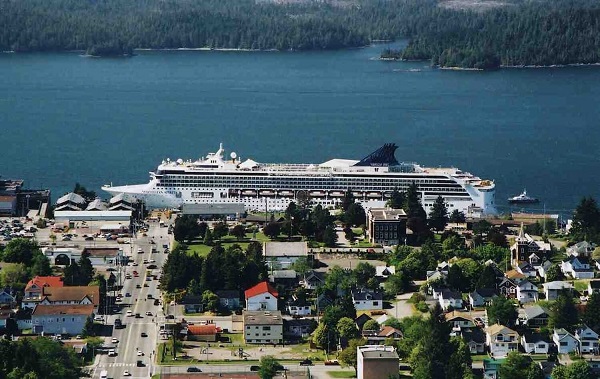
Canada’s future prosperity runs through the northwest coast

Politicians should be honest about environmental pros and cons of electric vehicles
-
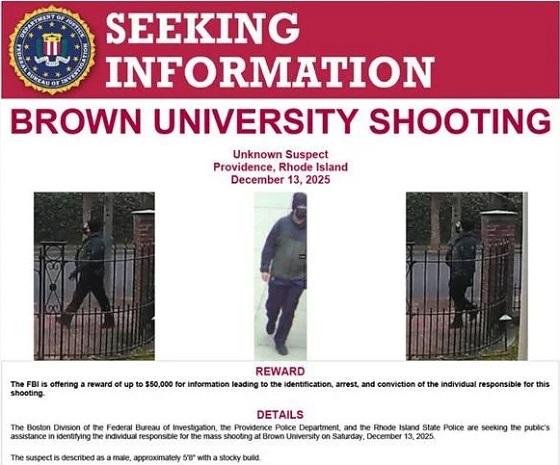 Crime19 hours ago
Brown University shooter dead of apparent self-inflicted gunshot wound
-
 Business1 day ago
Canada Hits the Brakes on Population
-
 Crime2 days ago
Bondi Beach Survivor Says Cops Prevented Her From Fighting Back Against Terrorists
-
 International2 days ago
House Rejects Bipartisan Attempt To Block Trump From Using Military Force Against Venezuela
-
 Automotive2 days ago
Ford’s EV Fiasco Fallout Hits Hard
-
 Frontier Centre for Public Policy1 day ago
Canada Lets Child-Porn Offenders Off Easy While Targeting Bible Believers
-
 Agriculture1 day ago
Why is Canada paying for dairy ‘losses’ during a boom?
-
 International2 days ago
TOTAL AND COMPLETE BLOCKADE: Trump cuts off Venezuela’s oil lifeline