
Agriculture
Canadian innovation beats EU precaution in agriculture sustainability



From the MacDonald Laurier Institute
By Stuart Smyth
Canada should learn from, not follow, the EU’s agriculture policy errors
The world needs a lot of food to feed eight billion hungry mouths. Even though global production for the most important crops – rice, wheat and maize – reached all-time highs last year, inflation, geopolitical interruptions and misguided policy have disrupted our ability to make food abundant and affordable for everyone.
Crop breeding, more efficient fertilizer and chemical use, and investments in farming equipment and technology offer tried and true strategies for increasing production while enhancing sustainability and reducing GHG emissions.
The European Union is rejecting these proven strategies through policies that dramatically reduce fertilizer and chemical use and ban modern crop breeding technologies. Regrettably, Canada’s federal government is looking at the European approach as a model for its emissions reduction plans. Canadians must reject the ideologically driven, counterproductive policies pursued in the European Union and must insist on science and outcome-driven policies to promote a strong, sustainable agricultural sector that can help satisfy the world’s growing needs.
Innovation is fundamental to modern societies and economies. Governments constantly encourage innovation and enact policies to incentivize investment into the research and development required to bring new products and processes to market. In recent years, environmental sustainability has been a primary concern and Canadian agriculture has been at the forefront of sustainable innovation. Fundamentally, sustainability in agriculture means maximizing efficiency: producing more pounds of crop per acre of land for each pound of input (seed, fertilizer, pesticides, labour) applied.
Prior to the widespread adoption of modern crop technologies, all crop and food production was done through what are now known as organic production practices. With organic production the only way to produce more food is to use more land. However, beginning in 1960, food production became decoupled from increased land use, increasing by 390% while using only 10% more land. Innovations in crop breeding technologies such as GM crops (genetically modified), fertilizer and chemical use, and farm industrialization have all contributed to this increasingly sustainable food production.
This increase in productivity has allowed the world’s population to flourish from just 3 billion people in 1960 to 8 billion today. Although the global agricultural sector is a significant source of greenhouse gases, total emissions have remained flat since 2000 even as production increased, and the sector’s share of global emissions has declined.
Despite this incredible success story, modern agriculture is often viewed with suspicion, particularly in the European Union. They have incorporated precaution-based regulations which dramatically reduce fertilizer and chemical use and ban modern crop breeding technologies. Presently they are proposing to triple organic production, from 8% of current land to 25%, by 2030, as part of what’s known as their “Farm to Fork” strategy to reduce agricultural GHG emissions.

Inevitably, the strategy will not necessarily reduce emissions but will certainly reduce production. Declines are expected: -26% in cereals, -27% in oilseeds, -10% for fruits and vegetables, -14% of beef and -9% of dairy. All of these production decreases will contribute to even higher food prices in the EU, which has been experiencing double digit inflation increases for most of the past year.
By contrast, Canada allows all plant breeding technologies to be used in the development of new varieties, and fertilizer and chemical use is based upon risk appropriate, science-based regulations. The benefits of this approach are unambiguous.
In Saskatchewan, only 3% of crop land requires tillage – mechanical turning of the soil to control for weeds and pests and prepare for seeding. In the European Union, 74% of crop land requires it. Removing tillage from land management practices not only reduces soil erosion and increases moisture conservation; it also reduces the amount of carbon released and increases the sequestration of carbon through continuous crop production. 90% of Saskatchewan farmers indicate that efficient weed control provided by the use of glyphosate increased sustainability in their practices, and 73% said production of herbicide tolerant canola, which is predominantly GM, did.
An assessment of EU agricultural GHG emissions concluded that had genetically modified crops been adopted there in a timely fashion, total EU agricultural GHG emissions would have been reduced by 7.5%. This amounts to 33 million metric tonnes of carbon dioxide per year. At any rate, their reduced yields have left them heavily dependent on imports of GM livestock feed from Brazil and Argentina.
Comparing sustainable agricultural production between the EU and Canada reveals two very different situations. The EU has rejected GM crops due to politics and precaution and as a result still heavily relies on tillage. Canadian farmers have enthusiastically adopted GM crops, virtually eliminating tillage. The EU is proposing additional precaution-based regulations that will further reduce crop and food production. Canadian farmers have demonstrated the ability to produce more food with fewer inputs, while the EU is poised to produce less, with more land requirements.
Opposing paths have been selected in the EU and Canada. The evidence to date confirms that it is Canadian agricultural production that is increasingly sustainable. The government must learn the right lessons from Europe’s mistakes when adopting strategies for reducing emissions from our agricultural sector. Canada should continue to improve sustainability through innovation. Canada should not follow Europe’s failed attempts to reduce emissions by producing less food.
Stuart J. Smyth is Professor & Agri-Food Innovation & Sustainability Enhancement Chair at the University of Saskatchewan.


From the Fraser Institute
By Annika Segelhorst and Elmira Aliakbari
Canadians care about the environment and breathing clean air. In 2023, the share of Canadians concerned about the state of outdoor air quality was 7 in 10, according to survey results from Abacus Data. Yet Canada outperforms most comparable high-income countries on air quality, suggesting a gap between public perception and empirical reality. Overall, Canada ranks 8th for air quality among 31 high-income countries, according to our recent study published by the Fraser Institute.
A key determinant of air quality is the presence of tiny solid particles and liquid droplets floating in the air, known as particulates. The smallest of these particles, known as fine particulate matter, are especially hazardous, as they can penetrate deep into a person’s lungs, enter the blood stream and harm our health.
Exposure to fine particulate matter stems from both natural and human sources. Natural events such as wildfires, dust storms and volcanic eruptions can release particles into the air that can travel thousands of kilometres. Other sources of particulate pollution originate from human activities such as the combustion of fossil fuels in automobiles and during industrial processes.
The World Health Organization (WHO) and the Canadian Council of Ministers of the Environment (CCME) publish air quality guidelines related to health, which we used to measure and rank 31 high-income countries on air quality.
Using data from 2022 (the latest year of consistently available data), our study assessed air quality based on three measures related to particulate pollution: (1) average exposure, (2) share of the population at risk, and (3) estimated health impacts.
The first measure, average exposure, reflects the average level of outdoor particle pollution people are exposed to over a year. Among 31 high-income countries, Canadians had the 5th-lowest average exposure to particulate pollution.
Next, the study considered the proportion of each country’s population that experienced an annual average level of fine particle pollution greater than the WHO’s air quality guideline. Only 2 per cent of Canadians were exposed to fine particle pollution levels exceeding the WHO guideline for annual exposure, ranking 9th of 31 countries. In other words, 98 per cent of Canadians were not exposed to fine particulate pollution levels exceeding health guidelines.
Finally, the study reviewed estimates of illness and mortality associated with fine particle pollution in each country. Canada had the fifth-lowest estimated death and illness burden due to fine particle pollution.
Taken together, the results show that Canada stands out as a global leader on clean air, ranking 8th overall for air quality among high-income countries.

Canada’s record underscores both the progress made in achieving cleaner air and the quality of life our clean air supports.

Annika Segelhorst
Junior Economist

Elmira Aliakbari

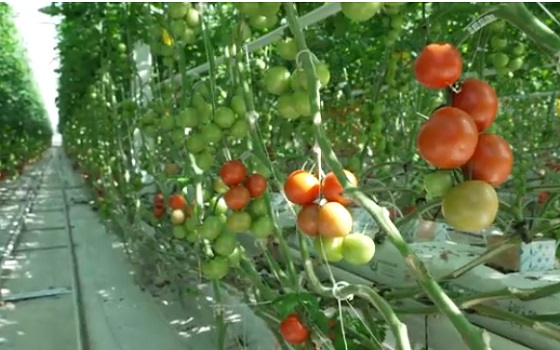
A new program funded by the Sustainable Canadian Agricultural Partnership will accelerate expansion in Alberta greenhouses and vertical farms.
Albertans want to keep their hard-earned money in the province and support producers by choosing locally grown, high-quality produce. The new three-year, $10-milllion Growing Greenhouses program aims to stimulate industry growth and provide fresh fruit and vegetables to Albertans throughout the year.
“Everything our ministry does is about ensuring Albertans have secure access to safe, high-quality food. We are continually working to build resilience and sustainability into our food production systems, increase opportunities for producers and processors, create jobs and feed Albertans. This new program will fund technologies that increase food production and improve energy efficiency.”
“Through this investment, we’re supporting Alberta’s growers and ensuring Canadians have access to fresh, locally-grown fruits and vegetables on grocery shelves year-round. This program strengthens local communities, drives innovation, and creates new opportunities for agricultural entrepreneurs, reinforcing Canada’s food system and economy.”
The Growing Greenhouses program supports the controlled environment agriculture sector with new construction or expansion improvements to existing greenhouses and vertical farms that produce food at a commercial scale. It also aligns with Alberta’s Buy Local initiative launched this year as consumers will be able to purchase more local produce all year-round.
The program was created in alignment with the needs identified by the greenhouse sector, with a goal to reduce seasonal import reliance entering fall, which increases fruit and vegetable prices.
“This program is a game-changer for Alberta’s greenhouse sector. By investing in expansion and innovation, we can grow more fresh produce year-round, reduce reliance on imports, and strengthen food security for Albertans. Our growers are ready to meet the demand with sustainable, locally grown vegetables and fruits, and this support ensures we can do so while creating new jobs and opportunities in communities across the province. We are very grateful to the Governments of Canada and Alberta for this investment in our sector and for working collaboratively with us.”
Sustainable Canadian Agricultural Partnership (Sustainable CAP)
Sustainable CAP is a five-year, $3.5-billion investment by federal, provincial and territorial governments to strengthen competitiveness, innovation and resiliency in Canada’s agriculture, agri-food and agri-based products sector. This includes $1 billion in federal programs and activities and $2.5 billion that is cost-shared 60 per cent federally and 40 per cent provincially/territorially for programs that are designed and delivered by provinces and territories.
Quick facts
- Alberta’s greenhouse sector ranks fourth in Canada:
- 195 greenhouses produce $145 million in produce and 60 per cent of them operate year-round.
- Greenhouse food production is growing by 6.2 per cent annually.
- Alberta imports $349 million in fresh produce annually.
- The program supports sector growth by investing in renewable and efficient energy systems, advanced lighting systems, energy-saving construction, and automation and robotics systems.
Related information


Wayne Gretzky’s Terrible, Awful Week.. And Soccer/ Football.

Western Campuses Help Build China’s Digital Dragnet With U.S. Tax Funds, Study Warns

Surgery Denied. Death Approved.
US podcaster Glenn Beck extends a lifeline to a Saskatchewan woman waiting for MAiD
-
Bruce Dowbiggin6 hours ago
Wayne Gretzky’s Terrible, Awful Week.. And Soccer/ Football.
-
espionage9 hours ago
Western Campuses Help Build China’s Digital Dragnet With U.S. Tax Funds, Study Warns
-
Agriculture5 hours ago
Canada’s air quality among the best in the world
-
 Business7 hours ago
Canada invests $34 million in Chinese drones now considered to be ‘high security risks’
-
 Economy8 hours ago
Affordable housing out of reach everywhere in Canada
-
 Fraser Institute2 days ago
Claims about ‘unmarked graves’ don’t withstand scrutiny
-
 Bruce Dowbiggin2 days ago
Carney Hears A Who: Here Comes The Grinch
-
 Energy2 days ago
Meet REEF — the massive new export engine Canadians have never heard of