Travel
Todayville Travel: The Long Road to Texas


by Gerry Feehan
You would not want to go on an RV trip with me. Plans are inevitably last minute and unpredictable. An innocuous road sign may result in a quick U-turn – and a two-day detour to places unknown.
In early fall we packed our modest motor home and slowly, circuitously ambled from Red Deer southward toward Texas. While impatient snowbirds zoomed by on the interstate en route to a quick, warm Arizona fix, we meandered the back roads, stopping to smell fall’s decaying flowers.

The road to Texas began circuitously, with a detour through Invermere, BC
Our destination was the Texas Gulf but we ultimately took more time getting there than we spent in the Lone Star state.

There’s always time for fishing!
We had no reservations, just a vague malleable plan that, malleably, seemed to change every day. An open travel agenda often leads to pleasant surprises, particularly if one foregoes the freeway for those tranquil country roads. In every backwater town knowledgeable locals are anxious to share wisdom about local pearls. Preconceived plans may go into the rubbish bin but… c’est la vie.
That’s how we stumbled upon Great Sand Dunes National Park. As usual, we had eyed the map one morning, fired up the RV and started to wander. We were lost, headed down the Arkansas River in south Colorado. It was late afternoon. I pulled over and asked directions from a local lady walking her dog.
“Excuse me,” I enquired apologetically of the woman curbing her canine. “I’m a little displaced. Do you know of any campgrounds near here?”
She looked at me, astounded. “Don’t you know that one of America’s great treasures is right there?” She pointed toward a distant, sandy pile fronting the Sangre de Cristo Mountains: Great Sand Dunes National Park.

Great Sand Dunes National Park


We rolled in just as lengthening shadows crept over the vast dunes in a remarkable, rippling display. We set up camp as a bloodshot sun set on the Sahara-like landscape. Coyotes howling at the moon lullabied us to sleep.
In the morning I stepped out into the crisp mountain air. The sand was now shadowed from the east.
We enjoyed our cup of morning joe as dark images, reversed from the night before, played across the dunes. After breakfast we huffed and puffed a thousand feet to the summit of the sand; then ran, child-like, down to the flat plain.
At the visitor center I told a Park Ranger that we were headed toward Texas and asked if there were any other such magical places along the way.
Have you ever been to Palo Duro Canyon State Park?” she asked, pointing to a map of Texas. Palo Duro was directly in our path to the Gulf. Perfect. That afternoon we descended from a Colorado Rocky Mountain high to the bleak, flat scrubland of west Texas. We stopped for the night at “Happy Plains” RV Park in the sleepy town of Texline. We were the only guests. The proprietress, a lonely retired schoolteacher, was happy to shoot the breeze during check-in:
“You’re from Canada? Well, welcome to Texas. My late husband and I drove through Canada once on our way to Alaska. Very friendly people. What’s the name of that National Park? Barff? Great food there, not too spicy.”

I averted my eyes. Florence yawned in an effort to speed up the check-in process. The old gal continued undeterred:
“But Canada was just a little too clean for me. I’ve never been happier than when we finally got to Alaska and saw all the cars jacked up on blocks. Made me feel I was home again. Don’t get me wrong,” she continued, “there is no reason for you to feel ashamed. In fact I believe there is no reason why we wouldn’t welcome you to join us and make one big country.”
“Good idea,” I responded. “We could call it Canada.”
She looked at me quizzically. It hadn’t occurred to her that Canadians might actually cherish their northern independence, that we might like our clean, polite wasteland and that we enjoyed our bland dishes, even if they were served up in “Barff”.
In the morning we hastily broke camp and tried to sneak out the Happy Plains gate. But there stood the lonely matron, blocking our escape route, a basket in hand. She handed me a fistful of chocolate bars. It was Halloween.


Pronghorns near Texline eye the road warily
“I’m sorry about that nonsense last night,” she said, “sometimes I say silly things. ”Don’t we all, sister.
Late that evening we descended into Palo Duro – the “Grand Canyon” of Texas – near Amarillo. Palo Duro is famous for its spectacular red-rock vistas and endless hiking and biking trails. As usual we arrived without reservation. It was a busy weekend. The ranger greeting us was a mountain of a man. His nametag said simply: “Moose”.
“Geez your lucky,” he said. “We’re full up but just had a late cancellation for one of the finest spots in the park.” I shrugged happily. As I affixed the park pass to the windshield, Moose remarked: “Sometimes it pays to travel by the seat of your pants, last minute like.”
Yup, it does.

Palo Dur0- The Grand Canyon of Texas

Travel during the shoulder season means you have entire vistas to yourself – and great weather!
Gerry Feehan QC practised law in Red Deer for 27 years before starting his second life as a freelance travel writer and photographer. He says that, while being a lawyer is more remunerative than travel writing, it isn’t nearly as much fun. When not on the road, Gerry and his wife Florence live in Red Deer and Kimberley, BC. Todayville is proud to work with Gerry to re-publish some of his most compelling stories from his vast catalogue developed over more than a decade of travel.

THANKS to these great partners for making this series possible.
Kennedy Wealth Management Group



International
America first at the national parks: Trump hits Canadians and other foreign visitors with $100 fee
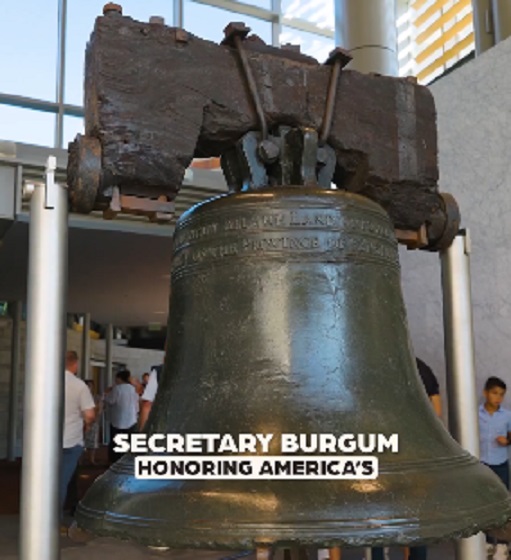

Foreign visitors heading to America’s crown-jewel national parks will soon face a steeper bill, as the Trump administration moves to prioritize U.S. taxpayers who already bankroll the system. The Department of the Interior announced Tuesday that starting in 2026, non-residents will be charged an additional $100 at 11 of the country’s busiest parks — a list that includes the Grand Canyon, Yellowstone, Yosemite, Acadia, Everglades, and other iconic destinations. The change accompanies a sharp increase in the cost of an annual all-parks pass for foreign tourists, which will jump to $250, more than triple the current rate. Americans and permanent residents will continue paying $80.
Interior Secretary Doug Burgum framed the policy as a straightforward matter of fairness. “President Trump’s leadership always puts American families first,” he said, arguing that U.S. households already subsidize the National Park System and deserve affordable access while international tourists contribute “their fair share” to the upkeep and expansion of the park network. It’s a pitch that aligns with Trump’s broader push to restore what he calls a sense of ownership and pride in the country’s natural treasures, and to make sure the burden of maintaining them doesn’t fall solely on American families.
We’re making it easier & more affordable for Americans to experience the beauty & freedom of our public lands!
In 2026, we’re launching:
– America-first pricing 💵
– Digital passes 📱
– Patriotic pass designs 🇺🇸
– Expanded motorcycle access 🏍️
– 5 additional fee-free days 🗓️ pic.twitter.com/a2SvHNBdSP— Secretary Doug Burgum (@SecretaryBurgum) November 25, 2025
The National Park Service recorded nearly 332 million visits in 2024 across its 63 designated national parks — a staggering figure that has placed heavy pressure on trails, facilities, and staff. While some parks charge per-vehicle fees and others by the individual, the $80 “America the Beautiful” pass covers the holder and all passengers or up to four adults. Under the new rules, foreign visitors who purchase the $250 annual pass will avoid the extra $100 at the 11 high-traffic parks, but all other overseas travelers will pay the surcharge at the gate.
The administration says the approach follows a July executive order from President Trump, aimed at preserving parkland “for American families” by ensuring those who don’t support the system through taxes help shoulder the cost of its growing maintenance needs. Burgum’s department also highlighted that U.S. visitors will continue to enjoy “patriotic fee-free days” tied to national observances — including President’s Day, Veterans Day, and Flag Day, which coincides with Trump’s birthday — while foreign visitors will pay full freight.
The move is expected to generate significant revenue from international tourism while reinforcing a message that has become central to Trump’s agenda: America’s natural wonders belong first to the taxpayers who fund them, and protecting access for those families comes before subsidizing the travel of visitors from abroad.
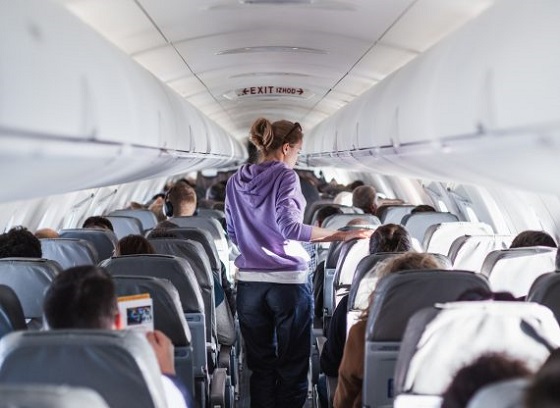

New passenger compensation rules under review could end up harming passengers as well as the country’s aviation sector by forcing airlines to pay for delays and cancellations beyond their control, warns a new report published this morning by the MEI.
“Air travel in Canada is already unaffordable and inaccessible,” says Gabriel Giguère, senior public policy analyst at the MEI. “New rules that force airlines to cover costs they can’t control would only make a bad situation worse.”
Introduced in 2023 by then-Transport Minister Omar Alghabra, the proposed amendment to the Air Passenger Protection Regulations would make airlines liable for compensation in all cases except those deemed “exceptional.” Under the current rules, compensation applies only when the airline is directly responsible for the disruption.
If adopted, the new framework would require Canadian airlines to pay at least $400 per passenger for any “unexceptional” cancellation or delay exceeding three hours, regardless of fault. Moreover, the definition of “exceptional circumstances” remains vague and incomplete, creating regulatory uncertainty.
“A presumed-guilty approach could upend airline operations,” notes Mr. Giguère. “Reversing the burden of proof introduces another layer of bureaucracy and litigation, which are costs that will inevitably be passed on to consumers.”
The Canadian Transportation Agency estimates that these changes would impose over $512 million in additional costs on the industry over ten years, leading to higher ticket prices and potentially reducing regional air service.
Canadians already pay some of the highest airfares in the world, largely due to government-imposed fees. Passengers directly cover the Air Travellers Security Charge—$9.94 per domestic flight and $34.42 per international flight—and indirectly pay airport rent through Airport Improvement Fees included on every ticket.
In 2024 alone, airport authorities remitted a record $494.8 million in rent to the federal government, $75.6 million more than the previous year and 68 per cent higher than a decade earlier.
“This new regulation risks being the final blow to regional air travel,” warns Mr. Giguère. “Routes connecting smaller communities will be the first to disappear as costs rise and they become less profitable.”
For instance, a three-hour and one minute delay on a Montreal–Saguenay flight with 85 passengers would cost an airline roughly $33,000 in compensation. It would take approximately 61 incident-free return flights to recoup that cost.
Regional air service has already declined by 34 per cent since 2019, and the added burden of this proposed regulation could further reduce connectivity within Canada. It would also hurt Canadian airlines’ competitiveness relative to U.S. carriers operating out of airports just south of the border, whose passengers already enjoy lower fares.
“If the federal government truly wants to make air travel more affordable,” says Mr. Giguère, “it should start by cutting its own excessive fees instead of scapegoating airlines for political gain.”
You can read the Economic Note here.
* * *
The MEI is an independent public policy think tank with offices in Montreal, Ottawa, and Calgary. Through its publications, media appearances, and advisory services to policymakers, the MEI stimulates public policy debate and reforms based on sound economics and entrepreneurship.

From Underdog to Top Broodmare

Canadians will soon be versed in massive West Coast LPG mega-project
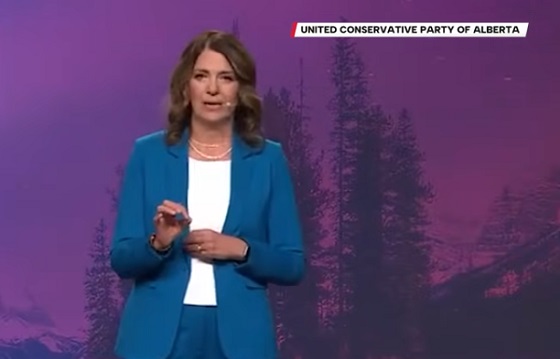
Keynote address of Premier Danielle Smith at 2025 UCP AGM

‘No Critical Thinking’: Parents Sound Alarm As Tech Begins To ‘Replace The Teacher’
-
 Daily Caller16 hours ago
Tech Mogul Gives $6 Billion To 25 Million Kids To Boost Trump Investment Accounts
-
 Business17 hours ago
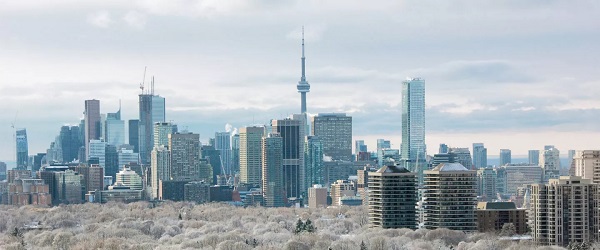
Recent price declines don’t solve Toronto’s housing affordability crisis
-
 National14 hours ago
Canada Needs an Alternative to Carney’s One Man Show
-
 Alberta2 days ago
New era of police accountability
-
 National2 days ago
Media bound to pay the price for selling their freedom to (selectively) offend
-
 C2C Journal2 days ago
Learning the Truth about “Children’s Graves” and Residential Schools is More Important than Ever
-
 armed forces1 day ago
Global Military Industrial Complex Has Never Had It So Good, New Report Finds
-
 Bruce Dowbiggin2 days ago
Sometimes An Ingrate Nation Pt. 2: The Great One Makes His Choice