
Health
RFK Jr on vaccinations in his own words


Historically, independent candidates running in US Presidential elections barely make a dent on the campaign. The independents aren’t just fighting for votes, they’re fighting for any attention from the media and chattering classes they can muster. As they inevitably flame out, they’ll try desperately to make the world pay attention to the one or two issues that drove them to take on the campaign in the first place.
Seemingly, this is where we are today with RFK Jr. On August 23, Robert Kennedy ponders the end of his campaign. In the final hours before he announces his decision, when his campaign arguably has the most attention, RFK decided to use the spotlight to bring attention to the issue he presumably cares about more than anything else.. the pharmaceutical industry.
Anyone paying attention will have heard over and over again that RFK is an “anti-vaxer”. Anti-Vaxer is a slang used by media and opponents to tarnish anyone who doesn’t endorse vaccines entirely. The amount of opposition, their reasons for it, are not important. A broad spectrum of people who range from those slightly suspicious of one or two vaccines, all the way to those who don’t trust any vaccines in the least (are there really any people like this?).. all painted with the same brush. All pushed into a group they likely have little affiliation with.
With the maximum attention focused on the RFK Jr campaign for a few hours, Kennedy took the opportunity to set the record straight regarding his position on all vaccines.
Why should we care? Well it’s being assumed that RFK will drop out of the race and support Donald Trump for President. If Trump wins, he’ll be indebted to RFK for his support and will very likely offer him a role in his cabinet. That role will very likely put RFK Jr in a position to do something about the pharmaceutical industry.
It’s likely any major changes in the way the industry is regulated in the US will have ripple effects around the world.
What might we expect? That will become clearer from watching Kennedy explain exactly what he things of the vaccine industry.
Today I’m going to set the record straight by explaining my exact posture, point-by-point, on what is probably the most controversial issue of my campaign—a medical safety issue that impacts every one of us. If you take a few minutes to listen, I think you might be surprised to… pic.twitter.com/FJucMmUexF
— Robert F. Kennedy Jr (@RobertKennedyJr) August 22, 2024



From the Fraser Institute
By Nadeem Esmail and Mackenzie Moir
It’s an exciting time in Canadian health-care policy. But even the slew of new reforms in Alberta only go part of the way to using all the policy tools employed by high performing universal health-care systems.
For 2026, for the sake of Canadian patients, let’s hope Alberta stays the path on changes to how hospitals are paid and allowing some private purchases of health care, and that other provinces start to catch up.
While Alberta’s new reforms were welcome news this year, it’s clear Canada’s health-care system continued to struggle. Canadians were reminded by our annual comparison of health care systems that they pay for one of the developed world’s most expensive universal health-care systems, yet have some of the fewest physicians and hospital beds, while waiting in some of the longest queues.
And speaking of queues, wait times across Canada for non-emergency care reached the second-highest level ever measured at 28.6 weeks from general practitioner referral to actual treatment. That’s more than triple the wait of the early 1990s despite decades of government promises and spending commitments. Other work found that at least 23,746 patients died while waiting for care, and nearly 1.3 million Canadians left our overcrowded emergency rooms without being treated.
At least one province has shown a genuine willingness to do something about these problems.
The Smith government in Alberta announced early in the year that it would move towards paying hospitals per-patient treated as opposed to a fixed annual budget, a policy approach that Quebec has been working on for years. Albertans will also soon be able purchase, at least in a limited way, some diagnostic and surgical services for themselves, which is again already possible in Quebec. Alberta has also gone a step further by allowing physicians to work in both public and private settings.
While controversial in Canada, these approaches simply mirror what is being done in all of the developed world’s top-performing universal health-care systems. Australia, the Netherlands, Germany and Switzerland all pay their hospitals per patient treated, and allow patients the opportunity to purchase care privately if they wish. They all also have better and faster universally accessible health care than Canada’s provinces provide, while spending a little more (Switzerland) or less (Australia, Germany, the Netherlands) than we do.
While these reforms are clearly a step in the right direction, there’s more to be done.
Even if we include Alberta’s reforms, these countries still do some very important things differently.
Critically, all of these countries expect patients to pay a small amount for their universally accessible services. The reasoning is straightforward: we all spend our own money more carefully than we spend someone else’s, and patients will make more informed decisions about when and where it’s best to access the health-care system when they have to pay a little out of pocket.
The evidence around this policy is clear—with appropriate safeguards to protect the very ill and exemptions for lower-income and other vulnerable populations, the demand for outpatient healthcare services falls, reducing delays and freeing up resources for others.
Charging patients even small amounts for care would of course violate the Canada Health Act, but it would also emulate the approach of 100 per cent of the developed world’s top-performing health-care systems. In this case, violating outdated federal policy means better universal health care for Canadians.
These top-performing countries also see the private sector and innovative entrepreneurs as partners in delivering universal health care. A relationship that is far different from the limited individual contracts some provinces have with private clinics and surgical centres to provide care in Canada. In these other countries, even full-service hospitals are operated by private providers. Importantly, partnering with innovative private providers, even hospitals, to deliver universal health care does not violate the Canada Health Act.
So, while Alberta has made strides this past year moving towards the well-established higher performance policy approach followed elsewhere, the Smith government remains at least a couple steps short of truly adopting a more Australian or European approach for health care. And other provinces have yet to even get to where Alberta will soon be.
Let’s hope in 2026 that Alberta keeps moving towards a truly world class universal health-care experience for patients, and that the other provinces catch up.
From LifeSiteNews
Dr. Marty Makary took aim at the transgender-medical-industrial complex that has exploded in recent years during a recent press conference.
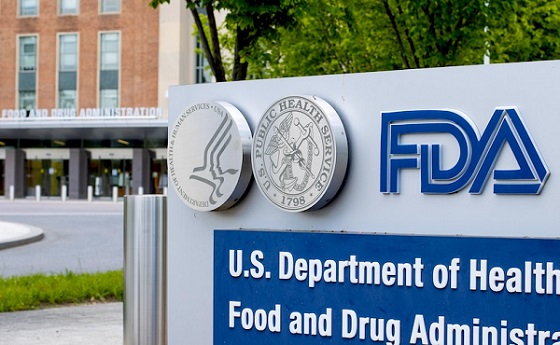
Food and Drug Administration (FDA) commissioner Dr. Marty Makary has sternly warned companies manufacturing “breast binders” to cease marketing and supplying their product to gender-confused girls seeking to make their bodies appear masculine.
“Today the FDA is taking action,” said Makary in a press conference. “We are sending warning letters to 12 manufacturers and retailers for illegal marketing of breast binders for children, for the purposes of treating gender dysphoria.”
“Breast binders are a class one medical device with legitimate medical users, such as being used by women after breast cancer surgery,” but “these binders are not benign,” he cautioned. “Long-term usage has been associated with pain, compromised lung function, and even difficulty breast feeding later in life.”
“The warning letters will formally notify the companies of their significant regulatory violations and require prompt corrective action,” said the FDA head.
.@DrMakaryFDA: “Today the FDA is taking action. We are sending warning letters to 12 manufacturers and retailers for illegal marketing of breast binders for children, for the purposes of treating gender dysphoria.” pic.twitter.com/6JNAy36223
— HHS Rapid Response (@HHSResponse) December 18, 2025
The warning letter addressed to California manufacturer, GenderBender, notes that the company’s website states that “[c]hest binding is the practice of compressing breast mass into a more masculine shape, often done in the LGBTQ community for gender euphoria.”
“Your firm should take prompt action to address any violations identified in this letter. Failure to adequately address this matter may result in regulatory action being initiated by the FDA without further notice. These actions include, but are not limited to, seizure and injunction,” advised the FDA.
During his presentation, Makary took aim at the transgender-medical-industrial complex that has exploded in recent years.
“One of the most barbaric features of a society is the genital mutilation of its children,” observed Makary.
“Pushing transgender ideology in children is predatory, it’s wrong, and it needs to stop,” he declared.
“This ideology is a belief system that some teachers, some pediatricians, and others are selling to children without their parents knowing sometimes, or with a deliberate attempt to remove parents from the decision making,” Makary explained.
To witness society “putting kids on a path of chest binders, drugs, castration, mastectomies, and other procedures is a path that now many kids regret,” he lamented, as he pointed to Chloe Cole, who has reverted to her God-given femininity after undergoing so-called “gender-affirming” surgery as a teen.
Cole is a leading voice for young people who have “detransitioned” after having medically, surgically, and socially attempted to “transition” to a member of the opposite sex.
.@DrMakaryFDA: “Pushing transgender ideology in children is predatory, it's wrong, and it needs to stop.” pic.twitter.com/TXxWNEtNZk
— HHS Rapid Response (@HHSResponse) December 18, 2025


Largest fraud in US history? Independent Journalist visits numerous daycare centres with no children, revealing massive scam
Why Japan wants Western Canadian LNG

“Magnitude cannot be overstated”: Minnesota aid scam may reach $9 billion

Be Careful What You Wish For In 2026: Mark Carney With A Majority
-
 Business19 hours ago
Disclosures reveal Minnesota politician’s husband’s companies surged thousands-fold amid Somali fraud crisis
-
 International2 days ago
China Stages Massive Live-Fire Encirclement Drill Around Taiwan as Washington and Japan Fortify
-
 Energy2 days ago
Rulings could affect energy prices everywhere: Climate activists v. the energy industry in 2026
-
 Digital ID2 days ago
The Global Push for Government Mandated Digital IDs And Why You Should Worry
-
 Business1 day ago
Canada needs serious tax cuts in 2026
-
 Alberta19 hours ago
The Canadian Energy Centre’s biggest stories of 2025
-
 Business1 day ago
DOOR TO DOOR: Feds descend on Minneapolis day cares tied to massive fraud
-
 Business19 hours ago
Resurfaced Video Shows How Somali Scammers Used Day Care Centers To Scam State