
Bruce Dowbiggin
If You Don’t Hear From Me, It’s Because I Don’t Hear From You.


In his memoir, former BMO CEO Tony Comper recalled the press conference to announce a merger between two Japanese automobile corporations. Everything was going swimmingly until someone at the presser asked how long would it be before the two corporate cultures fully merged?
One of the CEOs replied without hesitation. “Forty-three years.”
Forty-three years? Why forty-three years? he was asked.
“Because that’s how long it will be until the executives who made this deal are all dead.”
Yes, there are stubborn business cultures. But there are also political cultures that persist against all efforts to convince them they are deluded. People find it hard to change their ways— particularly when they’ve defended them publicly for years. The New Left’s ironclad resistance to reason and debate is a feature, not a glitch. How to reach them in a friendly, inclusive manner?
Good luck. The Right’s challenge is thinking these people will respond to shame or being corrected. Can’t be done. Won’t be done. They’re like Japanese soldiers fighting WW II on a deserted island 25 years after armistice. They’ll die repeating the Donald Trump Bleach meme to themselves.

Marines help a Japanese soldier from a dugout on Tinian Island during the Fall of Tinian in World War II. He holds a cigarette the Leathernecks used to coax him out. (Photo by © CORBIS/Corbis via Getty Images)
This Gallup poll sheds light on how American (and Canadian) cultures can be blissfully unaware of some huge stories and obsessed by other narratives that fit their mindset. It shows that from 1972-2022 that GOP trust of media has plummeted from 41 percent to under 10 percent, while independents have gone from 53 percent to under 36 percent trust. IOW, their former favourite news sources don’t jive with their everyday reality.
But Democrats in the poll have vaulted from 64 percent to 76 percent in trust of media. Why? One reason probably lies with being told the narratives that please them. That give them comfort. These consumers allow legacy media’s fact checkers to sort out what they should know from “disinformation” without getting their hands dirty with the original story.
How pervasive was the scrubbing? The recent Missouri v. Biden recognized that federal government officials had been interfering with social media companies that digressed from the “accepted” line. An appeals court ordered them to stop. In another case, FBI was bribing reporters and scientists to change their opinions on the origin of the Covid-19 virus, sanitizing stories before they are doled out to the Woke.
“The Science” is supposed to be an ongoing vigorous debate with few settled laws. Yet, most cult scientists refuse debate, preferring to dismiss opponents as conspiracy nuts or— as they did with vaccines— dangers to society. When Al Gore allows himself to be cornered by questions, he rolls his eyes, sighs theatrically and asks his followers how anyone could deny The Science.
Gore’s climate apocalypse culture has morphed within a generation from the few fighting pollution to a global dogma of CO2 poisoning nature . Attempts to talk sense on carbon emission obsession, plastics prohibitions, aversion to the nuclear option, Greta Thunberg beatification have all proven futile in the face of an End Oil Now cult that makes Scientology look like the Boy Scouts.
It was the same for the #RussiaHoax, #FinePeopleHoax, #BleachHoax and now Hillary Clinton’s “real war on truth, facts, and reason”. These liberal road-tested canards persists to this day. Here’s Biden on a rare cogent day this summer repeating the #FinePeople hoax that has been debunked years before. Even the Washington Post has had enough, listing Biden’s Top 100 fabulist claims since becoming POTUS.

The latest cult cleansing is Biden’s patently false denial of any contact with son Hunter Biden’s Shakedown scheme. The denial is awarded first position beside #climateemergency on search engines and nightly newscasts. Famously, 51 former security directors and officials claimed, without evidence, that Hunter’s infamous laptop was Russian disinformation. Case closed, said MSNBC. No wonder so many consumers of legacy media in this echo chamber can blithely claim there is no substance to any of the Hunter stories documented by the competition and chronicled on his own hard drive.
The Canadian equivalent of denial culture came with the magic “cure-all” vaccines. Rather than publicly confront the Truckers Convoy on their refusal to take Covid-19 vaccines (which are now accepted as being flawed ), Trudeau hid in the Rideau Cottage calling truckers “an insult to science”. To make sure they never got a chance to question him he sent the cops after them, arrested them, suspended their civil liberties and finances and subjected them to show trials.
And he was supported by the purchased Canadian media who vilified the protesters— for lack of armed insurrection or rioting— for staying too long in their protest. Many promoted false stories of arson and foreign financing of the convoy. This media Trudeau then tried to reward with Bill C-18— designed to make Meta, Google and other large tech sources pay to prop up failing Canadian media. In response, Meta has blocked all news links in Canada and cancelled existing deals with Canadian news outlets. The blocked links cover both Canadian and foreign news in light of Bill C-18.
And the same newspaper lobby that largely gave him a free pass on declaring a national emergency now wants the $595 million “temporary” bailout to be extended with double the subsidies (seeking government tax credits equal to 35% of labour costs.) The bailout meant to aid transition to digital is now instead a Trudeau lifeline in the Toronto Star’s bankruptcy. In the meantime, writes Michael Geist, “investment in the publishing sector has ground to a halt, Canadians have lost access to news on social media, and small and independent media are particularly hard hit. Avoiding the Canadian outcome is a now a top policy priority in other countries looking at media legislation.”
All this as the federal government prepares an online hate speech law— hate to be defined by themselves.
Many are just hoping that a Liberal loss in the next election will cease the encircling madness. That sanity will prevail. But the Japanese car manufacturers are telling us not to get our hopes too high. Trudeau Nation is quite prepared to got to its grave before ever admitting its copious mistakes.
Sign up today for Not The Public Broadcaster newsletters. Hot takes/ cool slants on sports and current affairs. Have the latest columns delivered to your mail box. Tell your friends to join, too. Always provocative, always independent. https://share.hsforms.com/16edbhhC3TTKg6jAaRyP7rActsj5
Bruce Dowbiggin @dowbboy is the editor of Not The Public Broadcaster A two-time winner of the Gemini Award as Canada’s top television sports broadcaster, he’s a regular contributor to Sirius XM Canada Talks Ch. 167. Inexact Science: The Six Most Compelling Draft Years In NHL History, his new book with his son Evan, was voted the seventh-best professional hockey book of all time by bookauthority.org . His 2004 book Money Players was voted sixth best on the same list, and is available via http://brucedowbigginbooks.ca/book-personalaccount.aspx


“The unifying theme that enables the Liberal party to maintain its hold over Canada is persistent anti-Americanism…I hope Canadians finally mature, acknowledge that we are neither superior nor inferior to the United States, and abandon our collective national inferiority complex.” Conrad Black quotes a friend.
Canadian media have almost always been reflexively anti-American. Fair enough. Abandoned by Britain they needed to push back. But the real fear of being consumed by the rebel colonies to the south has morphed into a fear of Donald Trump reminding Canada that it has been riding first class while paying economy.
Bashing noisy, bumptious America has always been good business if you owned a Canadian newspaper or television/radio network. The performative worship of Canadian leaders who cocked a snook at the Yankees led, in recent times, to the open-mouthed support for the fatuous Trudeaupian line of monarchs. As Ray Davies sang, “each one a dedicated follower of fashion.”
Since Pierre “The Bold” Trudeau succeeded Lester Pearson and ascended to the throne of the Family Compact in 1968, Canadian policy from Viet Nam to Trump has become “What are the Americans doing? Then let’s do the opposite”. Sample of spite: CBS TV pulled a controversial 60 Minutes news story —but it aired in Canada after being leaked by pissed-off CBS employees.
Yes, there was the brief Harper interregnum when Canada actually fought a military campaign alongside the U.S. in Afghanistan. But mostly it was Jean “Golf Balls” Chretien sitting out the Iraq War.
Alas, all good things must end. Or at least pause. People were starting to notice that Justy was a Chinese trusty, his Montreal riding campaign funded by hundreds of Chinese “businessman” from far away. The tragi-comic Trudeuapian succession hit a speed bump with Mark Carney being brought in to domesticate Canada in manner satisfactory to Brookfield and the EU.

But no one is betting the Libs won’t turn to a third generation of Quebec fashionistas— in the form of another Trudeau progeny— when all else fails.
As usual caustic Conrad Black sums up Canada best. With Quebec and Alberta talking separation he quotes a friend on the state of the nation. “What exists instead is a Liberal Party that manages — often quite poorly — the finances of a collection of provinces and territories, while relying on its media apparatus to shape and safeguard its narrative. It resembles a hedge fund supported by an image consulting firm.” (Insert your convict felon/ anglo wannabe reference here.)
There is no doubt that, as 2025 skulks out, the “image-consulting firm” painting rosy pictures of the Laurentian Elite is in for a a challenge. Justin thought using Trump as his pretext could achieve peace by buying up the lads and lasses of the fourth estate. It worked with Covid and the Truckers Convoy as the column writers/ panel hosts dutifully wrote it like he called it (even as the international press chided Trudeau.).
But even those good times didn’t last, forcing the Libs to do a presto-chango before Justin could lead them to a catastrophic defeat in the spring election. Once more, faced with Trump’s aggressive posture toward trade with Canada, the press closed ranks over Elbows Up, portraying CPC leader Pierre Poilievre as Dick Dastardly.
But new polling shows that the burst of enthusiasm for more Liberal pantomime is wearing thin. The new “new” trade deal promised with Trump has dissipated. The threat to private home ownership in B.C. by government’s indigenous land concessions has sent a chill through the middle class. The NDP fainting goats who bought Elbows Up are headed back to Crazytown, likely under Avi Lewis.
Now, at last, the reckoning promised by the Conservatives’ 20-point lead in polling this time last year may be at hand. While the diehards will go their graves mumbling land acknowledgements and 32 pronouns, there is hope that the under 60s— who emphatically support the Tories— will force change.
What change? Tristan Hopper in the National Post suggests that one place to start reforming the jalopy of Canadian government is in the oceans of money lavished on cause-related political leeches. Seeing the Bondi Beach slaughter by ISIS radicals many now question how long before Toronto or Montreal experiences a similar tragedy at the hands of jihadis who are lavishly supported by tax money.
Yes, not all Muslims in the West are terrorists. But almost all terrorists in the West are Muslim. Hate-spewing Hamas groupies from college faculty are regularly allowed major intersections with police protection as they promise to wipe out infidels. Till now it’s been poor form to even mention, let alone criticize, this pantomime.
Withdrawing financial aid to these groups and their academic fellow travellers would immediately rob these brigands of their impact. The cries of despair from cutting the cord would also expose those in the Commons who have coddled these vipers with grants and ministries.
Similar hacking at the slush money aimed at every other form of leftist posing— from trans to indigenous to illegal immigrants— would also mark the end of free money. Of course there will be caterwauling from the Elizabeth May Free Lunch crew. But with the threat of Canada coming apart with Quebec and Alberta/ Saskatchewan headed for the door those usual dissenting voices will be muted.
Only one thing stands in the way of this culling. That is PM Mark Carney coercing one more MP to cross the floor to his party, cementing its majority status for up to four more years. While the At Issue panels slap their flippers in glee at Poilievre’s demise, the rest of the nation will be less enthralled with the new realities of censorship, trade and housing.

As Stephen Punwasi states. “People in Canada can’t afford homes & prices can’t fall because debt was securitized with widespread fraud—so taxpayers will subsidize foreign speculation. It’s like they hired the mayor of Vancouver to run housing. Oh—they did, eh? Kids, run.”
Bruce Dowbiggin @dowbboy is the editor of Not The Public Broadcaster A two-time winner of the Gemini Award as Canada’s top television sports broadcaster, his 2025 book Deal With It: The Trades That Stunned The NHL And Changed Hockey is now available on Amazon. Inexact Science: The Six Most Compelling Draft Years In NHL History, his previous book with his son Evan, was voted the seventh-best professional hockey book of all time by bookauthority.org . His new poetry collection In Other Words is available via brucedowbigginbooks.ca and on Kindle books at https://www.amazon.ca/dp/1069802700

For those not familiar with hunting seasons in Canada it may come as a surprise that the nation has a year-round hunting season. That would be the targeting of Conservative leader Pierre Poilievre by the massed army of Liberals, their bots and the richly endowed media pack. Forget he’s never held power. He’s to blame for the ills in Canadian society.
It has been a good hunt. After floor-crossing by dissident CPC, the Liberals are one seat from the majority that Canadian voters denied them in the spring. (They’ll likely get the majority soon.) MPs who a day earlier were at Conservative Xmas parties suddenly sang the praises of Carney. MPs in ridings targeted by the Chinese suddenly joined Team Elbow Up.
All the while the media corps landed blows from their perch. Robert Benzie: “I know that Premier [Danielle] Smith is very unhappy privately with Pierre Poilievre because she thinks that [MOU motion] is undermining this [pipeline] project.” The nadir of the media dog pile was formerly eminent scribe Robert Fife who sniped, “Conservatives persist with cute legislative tricks, while the government tries to run a country.” Run a country. That’s rich.
From his lips to Liberal brains, however. “.@CBCNews and @AlJazeeraWorld viewers consider themselves uniquely informed, says @ElectionsCan_E report. The two TV networks were named by self-described “informed” voters when asked where they got their news. “
It is, seemingly, a great time to be a Liberal. Or not. While Operation Poilievre was gathering steam for Xmas polling revealed that Liberals and Conservatives remain locked in a tie, and Canadians continue to express ambivalence about the country’s direction, mixed feelings about their leaders, and sharp divides by generation, region, and policy concern. These generational discrepancies continue to be buried.

As was the case in the spring, the Liberals are supported only by the Boomer generation that swallowed Elbows Up nostalgia like a fat man on a donut. The under 60s demo at every level shows the current Carney agenda is a loser for them. In the segment of house-rich Boomers the Libs lead 50-31 over CPC. But in every other category it’s “how can I get out of here faster?”
The 45-59 demo it’s 46-36 Conservatives; 30-44 it’s a whopping 48-31 CPC; 18-29 it’s 40-39 CPC. A healthy chunk of Liberal supporting from the collapse of NDP vote. Where they used to poll in the 20s, the highest demo shows 11 percent support. Otherwise Poilievere would be PM.
Meanwhile, research now finds that 54 percent of Canadians say the growing number of newcomers to the country threatens our traditional customs and values— an increase of sixteen points since 2020. Over the same period, the share of Canadians who say immigration strengthens our society fell thirteen points to 35%
In short, the Carney Circus of marrying Canada to China and the EU is a card trick that will be exposed shortly. But where do we see the Ottawa press corps attention to this impending demographic snow plow? As we wrote in March “It’s not hard to see the (under 60s) looking at the Mike Myers obsession with a long-gone Canada and saying let’s get out of here.
Recently former TVOntario host Steve Pakin attended two convocations. The first at the former Ryerson University, (switched to Toronto Metropolitan University in a fit of settler colonizer guilt.) The second at Queens University, traditionally one of the elite schools in the nation. Here’s what he saw.
“At the end of the (TMU) convocation, when Charles Falzon, on his final day as dean of TMU’s Creative School, asked students to stand and sing the national anthem, many refused. They remained seated. Then, when the singing began, it was abundantly noticeable that almost none of the students sang along. And it wasn’t because they didn’t know the words, which were projected on a big screen. The unhappy looks on their faces clearly indicated a different, more political, explanation.
“I asked some of the TMU staff about it after the ceremony was over, and they confirmed what I saw happens all the time at convocations. Then I texted the president of another Ontario university who agreed: this is a common phenomenon among this generation at post-secondary institutions.”
At Queens, where Canadian flags were almost non-existent, O Canada was sung, but the message of unrest was clear: “Convocation sends a message of social stability,” Queen’s principal Patrick Deane began in his speech. “It is a ceremony shaped in history. You should value your connection to the past, but question that inheritance. Focus on the kind of society you’d like to inhabit.”
You can bet Deane is not telling them to question climate change and trans rights. As Paikin observes, “if we fail to create a more perfect union, we shouldn’t be surprised when a vast swath of young people don’t sing our anthem the way so many of the rest of us do.” So why are the best and brightest so reluctant to see as future in becoming the new professional class that runs society?
In the Free Press River Page searched the source of their discontent. “If the Great Recession, Covid-19, and the spectre of an artificial intelligence-assisted ‘white collar bloodbath’ has taught the professional class anything, it is that their credentials cannot save them. This insecurity, compounded by the outrageous cost of living in many large cities, has pushed the PMC’s anxieties to the breaking point.

“Add that to the triumph of identity politics in professional class institutions like universities, corporate C-suites, non-governmental organizations, and media—itself a byproduct of inter-elite competition as many have observed—and what you have is the modern left.
“… they’ve already come to the baffling conclusion that there’s no difference between class struggle and child sex changes. More to the point, the socialist mantra “From each according to his ability, to each according to his need” has only ever stood the test of time in Anabaptist sects. It requires a religious devotion to self-sacrifice that is not characteristic of this anxious and hyper-competitive class—as many actual socialists have spent the last decade warning.”
The tsunami over immigration has caused severe dislocations— as PM Steven Harper predicted in the 2015 election debate. He was shouted down by the dopey dauphin Justin Trudeau who opened the sluice gates to every kind of progressive nonsense. Which is now evident.
Like all people addicted, CDN Boomers don’t want the truth. They want performance theatre, T-shirts and hockey games. They blame Trump for their predicament, caught between grim realities. Will they take the 12 steps? Or will their kids have to tell them the facts as they escort them to the home?” We’re now seeing the likely answer to that question everywhere in Canadian society.
Bruce Dowbiggin @dowbboy is the editor of Not The Public Broadcaster A two-time winner of the Gemini Award as Canada’s top television sports broadcaster, his 2025 book Deal With It: The Trades That Stunned The NHL And Changed hockey is now available on Amazon. Inexact Science: The Six Most Compelling Draft Years In NHL History, his previous book with his son Evan, was voted the seventh-best professional hockey book of all time by bookauthority.org . His new poetry collection In Other Words is available via brucedowbigginbooks.ca and on Kindle books


Georgia county admits illegally certifying 315k ballots in 2020 presidential election
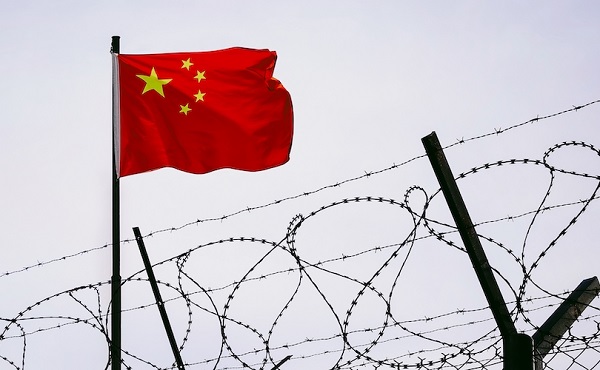
Communist China arrests hundreds of Christians just days before Christmas
Be Careful What You Wish For In 2026: Mark Carney With A Majority

Largest fraud in US history? Independent Journalist visits numerous daycare centres with no children, revealing massive scam
-
Bruce Dowbiggin2 days ago
Be Careful What You Wish For In 2026: Mark Carney With A Majority
-
Business23 hours ago
Largest fraud in US history? Independent Journalist visits numerous daycare centres with no children, revealing massive scam
-
 Energy2 days ago
New Poll Shows Ontarians See Oil & Gas as Key to Jobs, Economy, and Trade
-
 Business1 day ago
“Magnitude cannot be overstated”: Minnesota aid scam may reach $9 billion
-
 Alberta2 days ago
Alberta project would be “the biggest carbon capture and storage project in the world”
-
 Business2 days ago
Socialism vs. Capitalism
-
 Censorship Industrial Complex21 hours ago
US Under Secretary of State Slams UK and EU Over Online Speech Regulation, Announces Release of Files on Past Censorship Efforts
-
 Energy2 days ago
Canada’s debate on energy levelled up in 2025