
National
Trudeau gov’t seeks to delay election by one week, ensuring MPs pass pension threshold

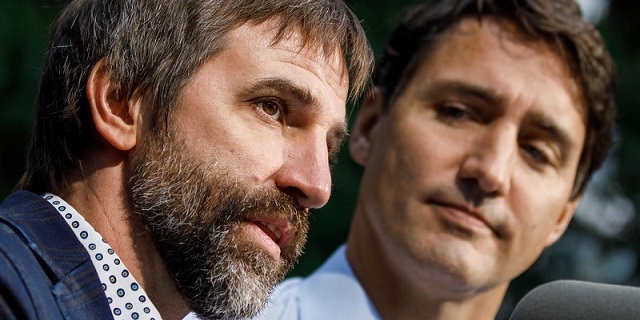
From LifeSiteNews
If the next federal election is delayed from October 20, 2025, to October 27, as the Trudeau government desires, many Liberal and NDP MPs who were elected on October 21, 2019 will just narrowly qualify for a lifetime pension by passing the six-year threshold.
The Liberal government is attempting to delay the federal election in what many see as an attempt to secure pensions for MPs who are projected to lose their seats.
According to election amendments proposed March 20, Prime Minister Justin Trudeau is planning to move the 2025 federal election to a week later than it is currently scheduled, ensuring that a number of Liberal and New Democratic Party (NDP) MPs who are unlikely to be re-elected would receive their pensions by passing the six-year threshold.
“Should a fixed date election be held in 2025, it would be held on Monday October 20th,” the amendment reads.
“However, many communities in Canada will be celebrating Diwali at this time,” it argues. “Therefore, a one-time change to the date is proposed so that the potential election would not conflict with Diwali. Instead, the election would be held the following Monday.”
The federal election is scheduled to take place on October 20, 2025, according to Canada’s Elections Act, which states a general election must be held “on the third Monday of October in the fourth calendar year following polling day for the last general election.”
If the election is held on October 20, many Liberal and NDP MPs who were elected on October 21, 2019 will just narrowly miss the six-year threshold to qualify for a lifetime parliamentary pension.
The proposed amendment would move the federal election to October 27, 2025, allowing the MPs to receive their pensions. Those who would benefit from the delay include Liberal Environment Minister Steven Guilbeault and Treasury Board President Anita Anand.
The one-week delay could cost Canadian taxpayers millions to cover the extra pensions.
In 2021, the Canadian Taxpayers Federation calculated that Liberal MP Adam Vaughan would receive $1.3 million in pension benefits if he reached Canadian life expectancy through the pension plan. Similarly, Conservative MP David Yurdiga was eligible for $1.5 million of lifetime benefits after serving in the House of Commons for seven years.
Notably, the delay would only be of benefit to the Trudeau government if they believe they will lose the next election. Indeed, if Trudeau thought he could win the upcoming election, there would be little reason to delay to ensure his MPs would be given pensions.
The amendments come after months of polling in favour of the Conservative Party under the leadership of Pierre Poilievre.
A recent poll found that 70 percent of Canadians believe country is “broken” as Trudeau focuses on less important issues. Similarly, in January, most Canadians reported that they’re worse off financially since Trudeau took office.
Additionally, a January poll showed that 46 percent of Canadians expressed a desire for the federal election to take place sooner rather than the latest mandated date in the fall of 2025.
Recent polls show that the scandal-plagued government has sent the Liberals into a nosedive with no end in sight. Per a recent LifeSiteNews report, according to polls, were a Canadian federal election held today, Conservatives under Poilievre would win a majority in the House of Commons over Trudeau’s Liberals.


Canadians were told freezing bank accounts was “necessary.” We were told sending billions overseas without a vote was “solidarity.” And now we’re told that Chrystia Freeland the architect of some of the most aggressive financial overreach in modern Canadian history advising a foreign government on economic policy is “normal.” It isn’t. It’s a closed circle of power rewarding itself, while ordinary Canadians are expected to forget what was done to them and quietly foot the bill.
I don’t believe in coincidences in politics and I don’t believe in “honourary” appointments when billions of dollars and unchecked power are involved. So when Chrystia Freeland, the same woman who helped freeze Canadians’ bank accounts, torched public trust, and oversaw economic decisions that hollowed out this country is suddenly appointed as an economic adviser to Ukraine, Canadians should stop and ask a very uncomfortable question.
Kelsi Sheren is a reader-supported publication.
To receive new posts and support my work, consider becoming a free or paid subscriber.
Who exactly is Chrystia serving? Because it doesn’t look like us and doesn’t feel like us at all. I’m going to make something very clear and spell it out for Canadians… this is the same elite just moved to a different country.
Chrystia Freeland did not leave politics because she failed. She didn’t resign because she was rejected. She exited after years of consolidating power at the highest levels of government and immediately landed an advisory role with a foreign head of state.
That is not a fall from grace. That is a lateral move inside the same elite ecosystem.
Multiple Canadian outlets have now confirmed that Freeland has been named an economic adviser to Ukrainian President Zelenskyy. This is not symbolic. This is not charity. This is about economic reconstruction, international financing, sanctions, and the movement of billions of dollars, much of it, if not all of it is Western taxpayer money.
Including ours.
Has everyone forgotten what this women did to Canadians?? Before anyone starts calling this “statesmanship,” let’s remember the record.
Chrystia Freeland was a central figure during one of the most dangerous moments in modern Canadian governance: the normalization of financial punishment against citizens.
Under her watch, the federal government froze bank accounts without criminal charges, without due process, and without judicial oversight. Whatever your view of the Freedom Convoy, that precedent should have terrified you and if it doesn’t you need to wake up.
Once a government proves it can financially erase you for dissent, it never unlearns that lesson.
She also presided over years of reckless spending, inflationary pressure, and policies that pushed Canadians into a cost-of-living crisis while telling them everything was fine. Housing exploded. Food prices surged. Small businesses collapsed.
And now — suddenly — she’s being handed influence over another country’s economic future? The money no one voted on is now gone with no recourse and she knows it.
Canada has already sent billions of dollars to Ukraine, including roughly $2.5 billion tied to frozen Russian assets — without any direct vote from Canadians and with minimal parliamentary scrutiny.
Let that sit for a minute.
Our government helped set a precedent where foreign sovereign assets are frozen, leveraged, and redirected — and now one of the architects of that approach is advising the very government receiving the funds.
You don’t need to be a lawyer to understand how rotten that looks. At minimum, this is a conflict of interest. At worst, it’s a closed-loop system where the same political actors make the rules, move the money, and then step into advisory roles on the receiving end.
That’s not democracy. That’s managed power. People will say, “Ukraine needs help rebuilding.” Fine. That’s not the argument. The argument is who decides, who benefits, and who is accountable.
Chrystia Freeland still carries enormous influence inside Canada’s political and financial institutions. Her appointment creates a pipeline — informal, opaque, and unaccountable between Canadian decision-makers and a foreign government dependent on Western funds.
If an average Canadian MP took a paid or unpaid advisory role with a foreign government, alarms would be ringing, but when it’s Chrystia Freeland, we’re told it’s noble. Necessary. Above criticism.
That’s how corruption survives. Not through secrecy, but through normalization.
Canadians are always last, here’s the pattern Canadians are starting to see clearly, I hope. Canadians are being forced to tighten their belts. Canadians lose purchasing power on almost everything and Canadians are told to accept less and the sad part is Canadians are good with this.
Meanwhile, political elites move effortlessly between governments, NGOs, global institutions, and advisory boards. All it is, is different flags. Same class of people.
The people who suffered under Freeland’s economic policies don’t get to resign into prestige. They get debt. They get anxiety. They get silence.
She gets influence.
In case your wondering, this isn’t really about Ukraine, this is not an attack on Ukraine or its people. This is about Canadian democracy, accountability, and the dangerous precedent being set when unelected influence replaces public consent.
If Canadians are expected to fund wars, reconstruction, and foreign policy projects — then Canadians deserve transparency, debate, and representation.
Instead, we’re getting appointments behind closed doors and press releases that assume we won’t ask questions.
That era is long over.
Chrystia Freeland didn’t disappear. She didn’t retreat. She repositioned.
If Canadians don’t start calling this what it is — elite continuity without consent — then we shouldn’t be surprised when the same tactics used against citizens at home are exported abroad.
Power always practices somewhere first.
KELSI SHEREN
– – – – – – – – – – – –
One Time Donation! – Paypal – https://paypal.me/
Buy me a coffee! – https://buymeacoffee.com/
Let’s connect!
Youtube – https://www.youtube.com/@
Instagram: https://www.instagram.com/
Substack: https://substack.com/@
TikTok – https://x.com/KelsiBurns

From Resource Works
New report finds that displacing coal and foreign gas with Canadian LNG could lower global emissions by 70 megatonnes a year
Canada’s energy policy debate has become trapped in a polarization that feels dangerously disconnected from global reality.
On one side, we have a domestic conversation focused intensely on our own emissions ledger—counting every tonne produced within our borders as a liability. On the other side is the global reality: a world hungry for energy, often turning to the dirtiest sources available to keep the lights on and economies growing.
I’ve long argued that we cannot solve a global problem like climate change by wearing blinders that restrict our view to the 49th parallel. Recently, on the Power Struggle podcast, I sat down with Mark Cameron to discuss the hard data that backs this up.
Cameron is a fellow at the Public Policy Forum and the co-author of a new report Refuel: What Canadian LNG and Oil Exports Could Mean for Global Emissions. The numbers tell a story that might surprise those who view energy exports solely as a climate negative.
Flipping the script on emissions
The central finding of the Refuel report challenges the orthodoxy that “more production equals more pollution.” When we look at the global picture, the opposite appears to be true.
“The headline news is that if Canada was to increase its LNG exports by [47 million tonnes a year] and if we are exporting primarily into Asian markets, there would be a net reduction in emissions of about 40 to 70 megatonnes per year,” Cameron told me.
Let that sink in. By increasing our economic output and shipping more product abroad, we could lower global emissions by an amount roughly equivalent to taking millions of cars off the road.
It comes down to displacement. The energy we export doesn’t vanish into a void; it replaces other, often dirtier, forms of power generation.
“In some of those markets, you’re displacing coal,” Cameron explained. “Coal obviously is about twice the emissions in generating electricity as LNG. So to the extent that you’re displacing coal, you’re getting a clear emissions reduction.”
The Canadian advantage
This isn’t just about the inherent chemistry of gas versus coal. It is also about the specific quality of the gas produced in Western Canada. Not all liquefied natural gas (LNG) is created equal.
Canada’s geography and technology provide a distinct edge over competitors regarding carbon intensity.
“Canadian LNG, because it has cooler temperatures, shorter shipping times to Asia, more electric drive in its production, is actually about 35 per cent lower in emissions than LNG that would be shipped from, say, the U.S. Gulf Coast,” Cameron said.
When we debate blocking a Canadian project, we act as if the alternative is zero consumption. But the alternative is often gas from the Gulf Coast—which requires more energy to cool in the hot southern climate and takes longer to ship—or worse, coal.
Asian markets know this. They are looking for reliability and lower carbon intensity.
“We want to have a certain percentage of LNG, and we want a certain percentage of that coming from Canada because it’s a stable market and it has a particularly low emissions intensity,” Cameron noted.
The reality of substitution
This brings us to the concept of “carbon leakage.” It is a harsh economic reality that if Canada steps out of the market, we don’t save the planet—we simply cede market share to those with lower environmental standards.
“If the LNG is not coming from Canada, it’s going to come from somewhere else,” Cameron said bluntly. “It’s going to come from the U.S. or Qatar or Australia, or it would be displaced by coal or another energy source. So when you look at all those things in balance, it does look like Canadian LNG is a net positive for the climate.”
Progress in the oilsands
While LNG often dominates the “transition fuel” conversation, the report also addresses the oilsands. The narrative there has often ignored massive strides in efficiency.
“That emissions intensity is coming down. It’s come down by about 30 per cent in the last 20 years,” Cameron said.
He pointed to operational fuel switching as a key driver of this progress.
“Canadian oilsands was using petroleum coke, essentially coal, to generate the steam for the oilsands production. That is almost entirely shifted to natural gas.”
The long game
Finally, we must address the timeline. Critics argue that building LNG infrastructure locks us into fossil fuels. But the transition is a decades-long process.
“There is going to be LNG demand,” Cameron said. “We don’t know exactly how much, but there’s going to be LNG demand for the next four or five, six decades.”
Furthermore, natural gas is a fundamental building block of modern civilization, used for fertilizer and chemical production, not just electricity.
“If we can produce the cleanest LNG in the world, we’re actually doing global climate a favour by building those projects,” Cameron added.
If we retreat from the world stage, we aren’t taking the moral high ground; we are merely outsourcing the emissions to countries with a heavier carbon footprint. A Canada that exports more is a Canada that contributes to a cleaner world.
Watch the video on Power Struggle
- Power Struggle audio and transcript
- Mark Cameron on LinkedIn
- Stewart Muir on X
- Stewart Muir on LinkedIn
Power Struggle on social media:

Trump confirms first American land strike against Venezuelan narco networks

The U.S. Just Removed a Dictator and Canada is Collateral Damage
Scathing Indictment Claims Nicolás Maduro Orchestrated Drug-Fueled ‘Culture Of Corruption’ Which Plagued Entire Region

US Justice Department Accusing Maduro’s Inner Circle of a Narco-State Conspiracy
-
Daily Caller2 days ago
Scathing Indictment Claims Nicolás Maduro Orchestrated Drug-Fueled ‘Culture Of Corruption’ Which Plagued Entire Region
-
 Business2 days ago
Virtue-signalling devotion to reconciliation will not end well
-
 Opinion1 day ago
Hell freezes over, CTV’s fabrication of fake news and our 2026 forecast is still searching for sunshine
-
 Daily Caller2 days ago
Trump Says US Going To Run Venezuela After Nabbing Maduro
-
 COVID-191 day ago
A new study proves, yet again, that the mRNA Covid jabs should NEVER have been approved for young people.
-
 Environment6 hours ago
Left-wing terrorists sabotage German power plant, causing massive power outage
-
 Frontier Centre for Public Policy9 hours ago
Is Canada still worth the sacrifice for immigrants?
-
 International1 day ago
“History in the making”: Venezuelans in Florida flood streets after Maduro’s capture