
International
House Committee Pushes for FBI Testimony on Suppressed Hunter Biden Laptop Story

From Reclaim The Net
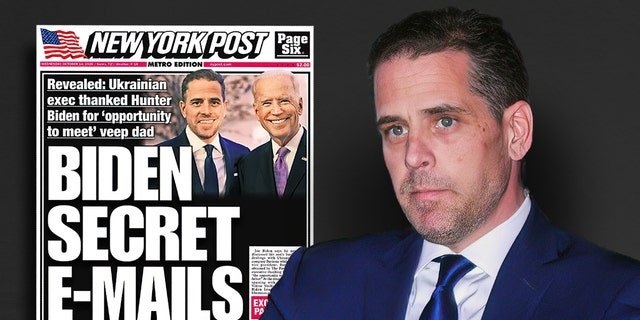
Chairman Jordan penned a letter last Thursday, acquired by The New York Post, in which he requested a verbatim transcript from an anonymous FBI employee. The staff member of the FBI purportedly made significant contributions to the bureau’s initiatives to silence factual information linked to the Biden…
|
The House Judiciary Committee, chaired by Jim Jordan (R-Ohio), has expressed keen interest in gathering testimony from an FBI analyst. This specific analyst previously affirmed the legitimacy of Hunter Biden’s laptop – infamously referred to as the “laptop from hell” – to Twitter moderators, even as the social media platform was suppressing The New York Post’s explosive report concerning the device’s contents.
Chairman Jordan penned a letter last Thursday, acquired by The New York Post, in which he requested a verbatim transcript from an anonymous FBI employee. The staff member of the FBI purportedly made significant contributions to the bureau’s initiatives to silence factual information linked to the Biden family’s alleged wheelings and dealings, which emerged shortly ahead of the hard-fought 2020 presidential election.
A substantial part of the Chairman’s letter conveyed disappointment with the FBI’s decision to disregard direct queries from social media platforms regarding confirmation of the laptop’s authenticity, despite owning the laptop for close to a year and having confirmed its content. This action from the bureau allowed social networks to blunt The New York Post’s breaking news based on the inaccurately perceived notion that it was the byproduct of Russian disinformation.
On the road to the 2020 election, bureau officials held numerous meetings – over 30 in total – with Twitter and other key social media channels. Their primary narrative focused on possible Russian operations aimed at divulging damaging information about the Biden family, especially Hunter Biden’s alleged exploitation of his father’s high-ranking position within his lucrative board membership at the Ukrainian energy corporation, Burisma Holdings.
When an article exposing Hunter Biden’s introduction of a Burisma executive to his then-vice president father surfaced on Twitter on October 14, 2020, it was promptly stifled. This occurred despite an FBI analyst airing the laptop as “real” during a separate call with Facebook, before interruption by a member of the bureau’s General Counsel’s Office.
Other communications clarified that there was no evidence to imply Hunter Biden’s laptop was instigated by Russian misinformation. These disclosures, unfortunately, were left unmentioned in their dealings with Twitter, Facebook, and Google. Due to these strategic omissions, Chairman Jordan pointed out, social media platforms perpetuated stymieing the narrative, leaning on earlier cautions issued by the FBI.
The FBI, atypically reticent, validated the materials on Hunter Biden’s discarded laptop, according to testimony provided to the House. Despite these revelations, service members hailing from within the bureau professed unawareness about its origins.
Parallel to these events, 51 preceding intelligence officials distributed a letter disparaging The New York Post’s coverage of emails secured from Hunter Biden’s laptop; a move triggered by a call between then-advisor to the Biden campaign, Antony Blinken, and ex-CIA Director Michael Morell. They reasoned that the emails bore the hallmarks of a conventional Russian information operation which was used to push for online censorship.
|


From the Daily Caller News Foundation
I’ve written frequently here in recent years about the financial fiasco that has hit Ford Motor Company and other big U.S. carmakers who made the fateful decision to go in whole hog in 2021 to feed at the federal subsidy trough wrought on the U.S. economy by the Joe Biden autopen presidency. It was crony capitalism writ large, federal rent seeking on the grandest scale in U.S. history, and only now are the chickens coming home to roost.
Ford announced on Monday that it will be forced to take $19.5 billion in special charges as its management team embarks on a corporate reorganization in a desperate attempt to unwind the financial carnage caused by its failed strategies and investments in the electric vehicles space since 2022.
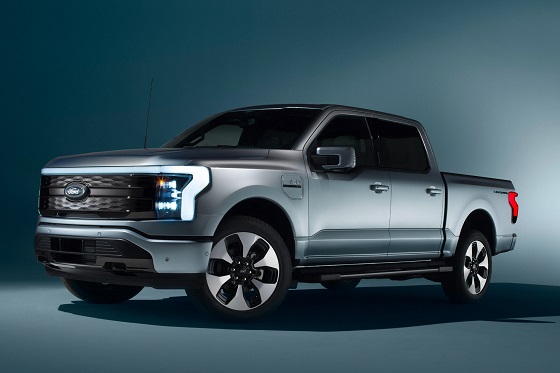
Cancelled is the Ford F-150 Lightning, the full-size electric pickup that few could afford and fewer wanted to buy, along with planned introductions of a second pricey pickup and fully electric vans and commercial vehicles. Ford will apparently keep making its costly Mustang Mach-E EV while adjusting the car’s features and price to try to make it more competitive. There will be a shift to making more hybrid models and introducing new lines of cheaper EVs and what the company calls “extended range electric vehicles,” or EREVs, which attach a gas-fueled generator to recharge the EV batteries while the car is being driven.
Dear Readers:
As a nonprofit, we are dependent on the generosity of our readers.
Please consider making a small donation of any amount here.
Thank you!
“The $50k, $60k, $70k EVs just weren’t selling; We’re following customers to where the market is,” Farley said. “We’re going to build up our whole lineup of hybrids. It’s gonna be better for the company’s profitability, shareholders and a lot of new American jobs. These really expensive $70k electric trucks, as much as I love the product, they didn’t make sense. But an EREV that goes 700 miles on a tank of gas, for 90% of the time is all-electric, that EREV is a better solution for a Lightning than the current all-electric Lightning.”
It all makes sense to Mr. Farley, but one wonders how much longer the company’s investors will tolerate his presence atop the corporate management pyramid if the company’s financial fortunes don’t turn around fast.
To Ford’s and Farley’s credit, the company has, unlike some of its competitors (GM, for example), been quite transparent in publicly revealing the massive losses it has accumulated in its EV projects since 2022. The company has reported its EV enterprise as a separate business unit called Model-E on its financial filings, enabling everyone to witness its somewhat amazing escalating EV-related losses since 2022:
• 2022 – Net loss of $2.2 billion
• 2023 – Net loss of $4.7 billion
• 2024 – Net loss of $5.1 billion
Add in the company’s $3.6 billion in losses recorded across the first three quarters of 2025, and you arrive at a total of $15.6 billion net losses on EV-related projects and processes in less than four calendar years. Add to that the financial carnage detailed in Monday’s announcement and the damage from the company’s financial electric boogaloo escalates to well above $30 billion with Q4 2025’s damage still to be added to the total.
Ford and Farley have benefited from the fact that the company’s lineup of gas-and-diesel powered cars have remained strongly profitable, resulting in overall corporate profits each year despite the huge EV-related losses. It is also fair to point out that all car companies were under heavy pressure from the Biden government to either produce battery electric vehicles or be penalized by onerous federal regulations.
Now, with the Trump administration rescinding Biden’s harsh mandates and canceling the absurdly unattainable fleet mileage requirements, Ford and other companies will be free to make cars Americans actually want to buy. Better late than never, as they say, but the financial fallout from it all is likely just beginning to be made public.
- David Blackmon is an energy writer and consultant based in Texas. He spent 40 years in the oil and gas business, where he specialized in public policy and communications.
International
House Rejects Bipartisan Attempt To Block Trump From Using Military Force Against Venezuela
From the Daily Caller News Foundation
By Adam Pack
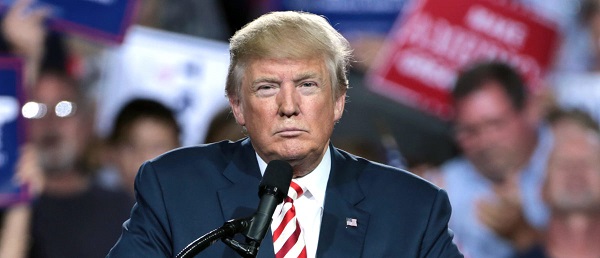
The House of Representatives rejected a bipartisan attempt Wednesday evening to reign in President Donald Trump’s authority to use force against Venezuela.
Lawmakers voted 211 to 213 against a war powers resolution that would have blocked Trump from using military force against Venezuela absent congressional authorization. The failed vote comes a day after Trump designated the Maduro regime as a foreign-terrorist organization and ordered a “total and complete blockade” of all sanctioned oil tankers entering and exiting Venezuela.
Under U.S. law, Congress can restrict the president from using military force against a country or entity without the legislative branch’s explicit approval.
The resolution, sponsored by Democratic Massachusetts Rep. Jim McGovern, attracted the support of two leading anti-foreign intervention voices in the Republican Party, Reps. Marjorie Taylor Greene of Georgia and Thomas Massie of Kentucky. Republican Nebraska Rep. Don Bacon, a retiring, moderate Republican who has frequently criticized Trump, also sponsored the war powers resolution.
Texas Rep. Henry Cuellar was the lone Democratic lawmaker to oppose the resolution checking Trump’s powers. On Dec. 3, Trump pardoned the embattled congressman, who was set to face trial in 2026 on federal bribery charges.
“When war-making power devolves to one person, liberty dissolves,” Massie wrote on X. “Congress needs to vote before the President attempts regime change.”
Republican Florida Rep. Brian Mast, the chairman of the House Foreign Affairs Committee, countered that Trump does not need permission from Congress to execute “precise, limited strikes.”
Trump has ordered the military to rapidly build up its presence in the waters around Venezuela, amounting to more than 15,000 troops. The administration has also been engaged in a months-long campaign against alleged Venezuelan drug vessels in the Caribbean and Pacific, killing nearly 100 reputed traffickers in more than two dozen strikes.
The president told Politico that socialist dictator Nicolás Maduro’s “days are numbered” and has suggested that land strikes on the country could commence soon.
The House also rejected a resolution Wednesday from Democratic New York Rep. Gregory Meeks that would block the president from using force on any “presidentially designated foreign terrorist organization in the Western Hemisphere” unless authorized by Congress. The measure failed 210 to 216.
Senate Majority Leader John Thune voiced approval Wednesday of the escalating pressure campaign against Maduro.
When asked by reporters whether the Trump administration is pursuing regime change in Venezuela, the majority leader said “I don’t know if that’s a publicly stated policy position, but I don’t — I would certainly not have a problem if that was their position. I mean, I think Maduro is a cancer on that continent.”
White House Chief of Staff Susie Wiles clarified Trump’s strategy toward Venezuela in an explosive set of interviews with Vanity Fair published Tuesday.
“He [Trump] wants to keep on blowing boats up until Maduro cries uncle,” Wiles told the outlet. She also conceded that Trump would need approval from Congress for a land war with Venezuela.


Terror in Australia: 12 killed after gunmen open fire on Hanukkah celebration

Death by a thousand clicks – government censorship of Canada’s internet

Hero bystander disarms shooter in Australian terror attack

Inflation Reduction Act, Green New Deal Causing America’s Energy Crisis
-
 Alberta9 hours ago
Danielle Smith slams Skate Canada for stopping events in Alberta over ban on men in women’s sports
-
 Health1 day ago
Saskatchewan woman approved for euthanasia urged to seek medical help in Canada rather than US
-
 Indigenous1 day ago
Residential school burials controversy continues to fuel wave of church arsons, new data suggests
-
 Health1 day ago
Canadian gov’t considers sharing census data on gender-confused children
-
 International1 day ago
FBI didn’t think it had cause to raid Trump but DOJ did it anyway
-
 Energy15 hours ago
Liberals Twisted Themselves Into Pretzels Over Their Own Pipeline MOU
-
 Alberta1 day ago
Canada’s New Green Deal
-
 Business1 day ago
COP30 finally admits what resource workers already knew: prosperity and lower emissions must go hand in hand