
Community
Brittany Lausen receives RDC Foundation Outstanding Student Award



Providing advocacy and leadership for all students
Student leadership and commitment are being celebrated at Red Deer College, as Brittany Lausen is announced as the RDC Foundation Outstanding Student Award recipient for 2021.
The annual award recognizes a student whose actions have significantly enhanced RDC, whether through governance, membership on committees or other meaningful contributions. Lausen was nominated by her peers to receive the honour again this year due to her immense contributions to student leadership at RDC and far beyond.
“It’s very humbling to receive this award, and I am truly grateful for all the opportunities that being a part of the Students’ Association and Red Deer College have provided, allowing me to be as involved as I have been,” Lausen says. “I’m also very grateful to the amazing student leaders who I have gotten to work with over the past six years, since I first became involved with the Education Undergrad Society.”
Lausen’s leadership has evolved and grown during her time at RDC, as she has played a key role on the Students’ Association Executive Team, serving as the VP Community & Wellness in 2018/2019 and as President for the past two years. She has also been on RDC’s Academic Council for three years and has served as a student representative on RDC’s Board of Governors since 2019, in addition to myriad other volunteering, committees and initiatives at the College.
“Red Deer College is fortunate to have Brittany as one of our students, and the RDC Foundation is pleased to provide her with the outstanding student award for 2021,” says Kevin Beattie, RDC Foundation Board Chair. “Her continuing dedication and commitment to her fellow students and to the College exemplifies why she is so deserving of the award. Brittany’s selfless hard work in representing and advocating on behalf of her peers and also the College benefits the entire RDC community. We can think of no better candidate to receive the RDC Foundation Outstanding Student Award.”
In addition to Lausen’s work and leadership at RDC, she has also dedicated time to representing students across the province. Through her role with the Students’ Association, she became part of the Alberta Students’ Executive Council (ASEC), where – as the longest serving student leader in the province – she was unanimously elected to be Chair in June 2020.
For Lausen, it is important to engage in governance at the provincial level to influence policies and affect change for future students. “It’s about what you, as a student leader, can do to make sure that the students who come after you have the best time possible in post-secondary,” she says. “To me, it is so meaningful knowing that the advocacy you do today will potentially impact the lives of future students for years to come.”

Through her province-wide perspective, Lausen also recognized a need for Western Canadian students to be better represented at the federal level. As part of her work with ASEC, she was elected to sit as one of the founding members of the Federal Student Advocacy Alliance. This Alliance, representing ASEC, BC Federation of Students and Sask Polytechnic Students’ Association, allows students from the three western provinces to have a greater voice in advocacy issues at the national level.
From national to local issues, Lausen has tirelessly worked to benefit the student experience. During her most recent term as Students’ Association President, she takes great pride in how the SA Executive and Council advocated for degrees, ensuring that the students of RDC and the people of central Alberta’s voices were heard. Lausen, herself, also had the opportunity to be part of Alberta 2030, the post-secondary review led by the Government of Alberta. She represented students from across Alberta and was able to bring the RDC students’ perspective to the province’s new post secondary strategic direction.
“Brittany has continually demonstrated strong leadership in representing post-secondary students at all levels,” says Dr. Peter Nunoda, RDC President. “In her two years on RDC’s Board of Governors and through her work with the Students’ Association, I have gained a great appreciation for her collaborative approach and also her determination to do what is best for students at RDC and for post-secondary students across the province. During her time at RDC, she gained a strong understanding of governance and student needs, and that has served RDC’s students well for many years.”
Now, as Lausen looks to the future, she is excited to graduate in April 2022 with her Bachelor of Business Administration in General Management, with minors in Finance and Economics, from RDC’s collaborative degree with Mount Royal University. She is currently interning with Amazon and hopes to accept a position with the company pending completion of her degree. She is also looking to continue her educational journey by attaining a Master’s degree, either in Public Policy or Public Administration, which would build on her extensive experience in leadership and governance.
When she reflects on her time at RDC, she is thankful for the privilege to serve students. “I am so grateful to the students of Red Deer College for trusting me for the past three years to be one of their elected representatives,” she says. “It has truly made my time at post-secondary, and it is something I will miss dearly.”
About the RDC Foundation Outstanding Student Award: This scholarship is given to a student who has demonstrated outstanding leadership and commitment through participation in and contribution to Red Deer College. The student may have participated in governance and/or College committees, social or athletic activities while on campus. The scholarship is donated by the Red Deer College Foundation.



From the Fraser Institute
By Jake Fuss and Grady Munro
There would have been 1.5 million more Canadians who donated to charity in 2023—and $755.5 million more in donations—had Canadians given to the same extent they did 10 years prior
According to recent polling, approximately one in five Canadians have skipped paying a bill over the past year so they can buy groceries. As families are increasingly hard-pressed to make ends meet, this undoubtedly means more and more people must seek out food banks, shelters and other charitable organizations to meet their basic necessities.
And each year, Canadians across the country donate their time and money to charities to help those in need—particularly around the holiday season. Yet at a time when the relatively high cost of living means these organizations need more resources, new data published by the Fraser Institute shows that the level of charitable giving in Canada is actually falling.
Specifically, over the last 10 years (2013 to 2023, the latest year of available data) the share of tax-filers who reported donating to charity fell from 21.9 per cent to 16.8 per cent. And while fewer Canadians are donating to charity, they’re also donating a smaller share of their income—during the same 10-year period, the share of aggregate income donated to charity fell from 0.55 per cent to 0.52 per cent.
To put this decline into perspective, consider this: there would have been 1.5 million more Canadians who donated to charity in 2023—and $755.5 million more in donations—had Canadians given to the same extent they did 10 years prior. Simply put, this long-standing decline in charitable giving in Canada ultimately limits the resources available for charities to help those in need.
On the bright side, despite the worrying long-term trends, the share of aggregate income donated to charity recently increased from 0.50 per cent in 2022 to 0.52 per cent in 2023. While this may seem like a marginal improvement, 0.02 per cent of aggregate income for all Canadians in 2023 was $255.7 million.
The provinces also reflect the national trends. From 2013 to 2023, every province saw a decline in the share of tax-filers donating to charity. These declines ranged from 15.4 per cent in Quebec to 31.4 per cent in Prince Edward Island.
Similarly, almost every province recorded a drop in the share of aggregate income donated to charity, with the largest being the 24.7 per cent decline seen in P.E.I. The only province to buck this trend was Alberta, which saw a 3.9 per cent increase in the share of aggregate income donated over the decade.
Just as Canada as a whole saw a recent improvement in the share of aggregate income donated, so too did many of the provinces. Indeed, seven provinces (except Manitoba, Nova Scotia and Newfoundland and Labrador) saw an increase in the share of aggregate income donated to charity from 2022 to 2023, with the largest increases occurring in Saskatchewan (7.9 per cent) and Alberta (6.7 per cent).
Canadians also volunteer their time to help those in need, yet the latest data show that volunteerism is also on the wane. According to Statistics Canada, the share of Canadians who volunteered (both formally and informally) fell by 8 per cent from 2018 to 2023. And the total numbers of hours volunteered (again, both formal and informal) fell by 18 per cent over that same period.
With many Canadians struggling to make ends meet, food banks, shelters and other charitable organizations play a critical role in providing basic necessities to those in need. Yet charitable giving—which provides resources for these charities—has long been on the decline. Hopefully, we’ll see this trend turn around swiftly.


|

|
|

|
|
|



Western Campuses Help Build China’s Digital Dragnet With U.S. Tax Funds, Study Warns
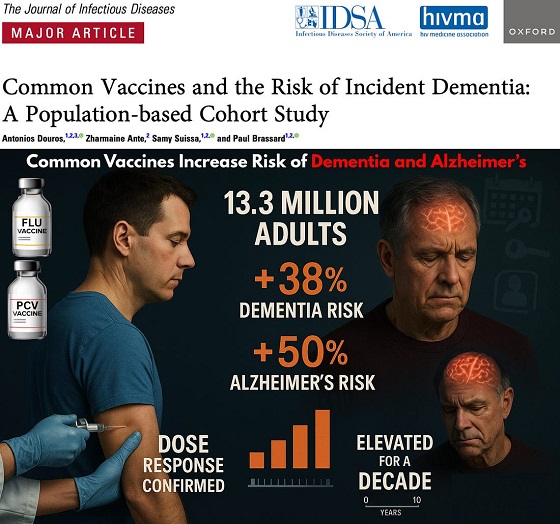
Common Vaccines Linked to 38-50% Increased Risk of Dementia and Alzheimer’s

Trump DOJ seeks to quash Pfizer whistleblower’s lawsuit over COVID shots

Alberta introducing three “all-season resort areas” to provide more summer activities in Alberta’s mountain parks
-
Community2 days ago
Charitable giving on the decline in Canada
-
 Alberta1 day ago
Canada’s New Green Deal
-
 Business1 day ago
Canada’s recent economic growth performance has been awful
-
 armed forces1 day ago
Ottawa’s Newly Released Defence Plan Crosses a Dangerous Line
-
 Alberta1 day ago
Alberta’s huge oil sands reserves dwarf U.S. shale
-
 Health1 day ago
Saskatchewan woman approved for euthanasia urged to seek medical help in Canada rather than US
-
 Business1 day ago
COP30 finally admits what resource workers already knew: prosperity and lower emissions must go hand in hand
-
 Health1 day ago
Canadian gov’t considers sharing census data on gender-confused children