
Community
Berlie’s story: Building Healthy Habits for the Future



Berlie began the Complex Care program following a diagnosis of diabetes in July of last year. After feeling unwell for a time, she performed several tests with her family doctor, as she previously developed diabetes around 2008 when she was pregnant. As it turned out, her diabetes had returned so she began to consider her options: should she start seeing a dietician or invest in diet foods?
Berlie was driven to participate in the Complex Care program as she began thinking about the future. She began to ask questions about what would happen if she didn’t look after herself. Severe diabetes, she recounts, can lead to a loss of eyesight and soreness of the limbs. Were she to become blind, she would be unable to engage in her profession; she works helping people file taxes. Severe diabetes would make it much more difficult to look after her family.
Berlie realized that there would be obstacles if she didn’t look after herself. Compromises and changes needed to be made to be healthy and take control of her diabetes. She worked with her family nurse specifically around food and exercise, routinely working on new suggestions. In the past, he would get frustrated when she would deliberately eat healthy foods, but her blood sugar stayed high. She has learned healthy alternatives to target her blood sugar specifically. On top of this, her nurse encouraged her to start incorporating regular exercise, stressing that consistency is key when forming healthy habits.
A few months out of the program and she is feeling good – her clients ask what she has done. She looks and feels younger, and can engage more with life, as losing weight and treating diabetes has ended up mending other problems. Berlie recalls that she has been trying to lose weight for many years. She recounts consistently weighing in around 135 pounds, now she fluctuates between 116 and 120 pounds. She takes regular walks after supper, aiming for half an hour to an hour. She is more able to go canoeing and biking in the summertime, and she has more energy to be involved with her child – who is now 13 – spending good quality time. To make long-lasting change, she says, you have to work yourself and make a dedicated effort.

She has become more in tune with her body, explaining that: “I will know when my blood sugar is average, I feel I am healthy and feel no side effects. But on the other hand, you know when you are not following the rules because there are consequences.” Between her job and her family, she is busy, but she finds ways to use what she has learned in the Complex Care program to stay accountable and keep her blood sugar manageable.
Bernie recalls that the program was a positive experience, and while she would recommend the Complex Care programs to others in her situation, she wants others to know that while the programming works, people must be consistently motivated in order to change their lifestyles.
“It is important to take care of your body while you have the opportunity,” she says. “Life is not a movie where you can call cut and start from the top. You need to make good use of your one shot.”
Click here to visit the Red Deer Primary Care Centre.



From the Fraser Institute
By Jake Fuss and Grady Munro
There would have been 1.5 million more Canadians who donated to charity in 2023—and $755.5 million more in donations—had Canadians given to the same extent they did 10 years prior
According to recent polling, approximately one in five Canadians have skipped paying a bill over the past year so they can buy groceries. As families are increasingly hard-pressed to make ends meet, this undoubtedly means more and more people must seek out food banks, shelters and other charitable organizations to meet their basic necessities.
And each year, Canadians across the country donate their time and money to charities to help those in need—particularly around the holiday season. Yet at a time when the relatively high cost of living means these organizations need more resources, new data published by the Fraser Institute shows that the level of charitable giving in Canada is actually falling.
Specifically, over the last 10 years (2013 to 2023, the latest year of available data) the share of tax-filers who reported donating to charity fell from 21.9 per cent to 16.8 per cent. And while fewer Canadians are donating to charity, they’re also donating a smaller share of their income—during the same 10-year period, the share of aggregate income donated to charity fell from 0.55 per cent to 0.52 per cent.
To put this decline into perspective, consider this: there would have been 1.5 million more Canadians who donated to charity in 2023—and $755.5 million more in donations—had Canadians given to the same extent they did 10 years prior. Simply put, this long-standing decline in charitable giving in Canada ultimately limits the resources available for charities to help those in need.
On the bright side, despite the worrying long-term trends, the share of aggregate income donated to charity recently increased from 0.50 per cent in 2022 to 0.52 per cent in 2023. While this may seem like a marginal improvement, 0.02 per cent of aggregate income for all Canadians in 2023 was $255.7 million.
The provinces also reflect the national trends. From 2013 to 2023, every province saw a decline in the share of tax-filers donating to charity. These declines ranged from 15.4 per cent in Quebec to 31.4 per cent in Prince Edward Island.
Similarly, almost every province recorded a drop in the share of aggregate income donated to charity, with the largest being the 24.7 per cent decline seen in P.E.I. The only province to buck this trend was Alberta, which saw a 3.9 per cent increase in the share of aggregate income donated over the decade.
Just as Canada as a whole saw a recent improvement in the share of aggregate income donated, so too did many of the provinces. Indeed, seven provinces (except Manitoba, Nova Scotia and Newfoundland and Labrador) saw an increase in the share of aggregate income donated to charity from 2022 to 2023, with the largest increases occurring in Saskatchewan (7.9 per cent) and Alberta (6.7 per cent).
Canadians also volunteer their time to help those in need, yet the latest data show that volunteerism is also on the wane. According to Statistics Canada, the share of Canadians who volunteered (both formally and informally) fell by 8 per cent from 2018 to 2023. And the total numbers of hours volunteered (again, both formal and informal) fell by 18 per cent over that same period.
With many Canadians struggling to make ends meet, food banks, shelters and other charitable organizations play a critical role in providing basic necessities to those in need. Yet charitable giving—which provides resources for these charities—has long been on the decline. Hopefully, we’ll see this trend turn around swiftly.


|

|
|

|
|
|



Death by a thousand clicks – government censorship of Canada’s internet

Chinese Billionaire Tried To Build US-Born Baby Empire As Overseas Elites Turn To American Surrogates
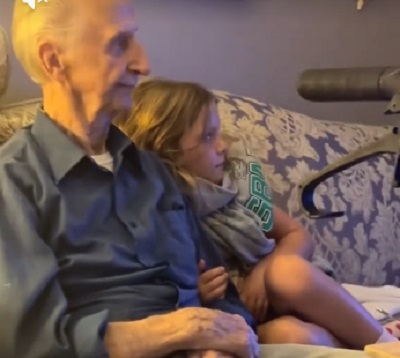
Viral TikTok video shows 7-year-old cuddling great-grandfather before he’s euthanized

Politicians should be honest about environmental pros and cons of electric vehicles
-
 Agriculture1 day ago
Why is Canada paying for dairy ‘losses’ during a boom?
-
 Automotive2 days ago
Ford’s EV Fiasco Fallout Hits Hard
-
 Alberta1 day ago
Alberta’s new diagnostic policy appears to meet standard for Canada Health Act compliance
-
 Alberta15 hours ago
Housing in Calgary and Edmonton remains expensive but more affordable than other cities
-
 Business14 hours ago
State of the Canadian Economy: Number of publicly listed companies in Canada down 32.7% since 2010
-
 Censorship Industrial Complex12 hours ago
Canadian university censors free speech advocate who spoke out against Indigenous ‘mass grave’ hoax
-
 Bruce Dowbiggin16 hours ago
Hunting Poilievre Covers For Upcoming Demographic Collapse After Boomers
-
 Censorship Industrial Complex1 day ago
Top constitutional lawyer warns against Liberal bills that could turn Canada into ‘police state’