
Business
Bad federal policy helps increase airfare in Canada

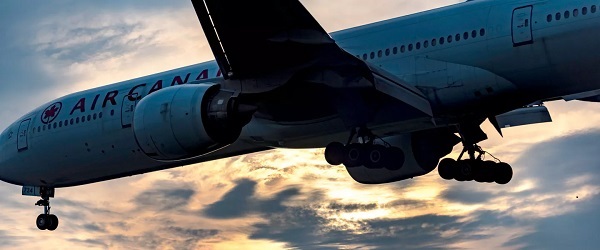

From the Fraser Institute
By Jake Fuss and Alex Whalen
Canadian air travel can be summed up in a few words—poor service, high ticket prices and little choice. And as a federal election looms, Canadians should understand that bad federal policy is to blame.
According to the International Air Transport Association, Canada ranks 101st out of 116 countries for the cost of air travel. And customer complaints against Canadian airlines have grown more than sixfold between fiscal years 2018/19 and 2022/23.
Why are ticket prices so high?
For starters, taxes and fees (imposed by governments and airports) comprise a large portion (25 to 35 per cent) of airfare costs in Canada. For example, “airport improvement” fees average $32.20 per departing passenger at Canada’s largest airports compared to $6.47 in the United States and $16.38 in Australia. For air traffic control (ATC), airlines pay charges based on distance, geography and other factors, and these costs are passed to consumers. In one illustrative example, to fly a Boeing 777 in Canada, airlines must pay an estimated $802 in ATC fees compared to between $192 and $478 in the United States and $493 in Mexico (all figures in Canadian dollars).
Moreover, Canadians pay between $9.46 and $34.42 per ticket in “security” fees, more than Americans (C$7.65) and Australians (C$4.80). Canada’s “landing” fees—charged by the airports based on the weight of the plane—are among the highest in the world and 35 to 75 per cent higher than at U.S. airports.
Our high fees originate in part due to Canada’s flawed airport ownership structure. The federal government owns the land where Canada’s major airports are built, and leases it back to not-for-profit airport authorities that pay rent—up to 12 per cent of airport revenue—to Ottawa. The airports impose fees on passengers to recoup this revenue.

But while fees help increase costs for airfare in Canada, another culprit is the lack of competition among airlines. Crucially, the federal government prevents foreign airlines from operating domestic routes within Canada’s borders, which severely limits choice and competition. While the government allows a foreign airline such as Lufthansa to fly from Frankfurt to Toronto, it prevents Lufthansa from flying passengers from Toronto to another Canadian city. As a result, there’s little competitive pressure for Canadian airlines to lower their prices for air travel within Canada’s borders.
The European Union, in contrast, removed such restrictions for member-states. The result? More competition including from new low-cost carriers such as Ryanair, a 34 per cent decline in ticket prices, more cross-border routes, and greater flight frequencies. The entry of new low-cost carriers alone helped lower airfares by 20 per cent.
Given the sorry state of air travel in Canada, our new study identifies four ways the federal government can improve competitiveness and lower airfare.
First, the government should reduce taxes and fees to be more in line with other countries. Second, the government should negotiate deals with other countries including the United States to allow foreign airlines to operate within Canada in exchange for Canadian airlines operating in those countries, which would help both Canadian consumers and Canadian airlines. Indeed, according to a 2016 report from the federal government, restrictions on foreign airlines increase air travel costs for Canadians and have outlived their usefulness. The report recommended Canada work towards an “open common market for air services” with peer countries. The key is reciprocity—if U.S. airlines, for example, are allowed access to the Canadian domestic air travel market, Canadian airlines must also have access to the U.S. market.
Third, the federal government should follow in the footsteps of Europe, Australia and New Zealand, and sell its remaining interests in airport leases and allow for-profit organizations to own and operate airports in Canada.
Lastly, the government should reduce the regulatory burden on the airline industry while maintaining strong safety standards. On this front, Canada can emulate the successful deregulation effort undertaken in the United States in the late 1970s and 1980s when widespread reform helped produce more competition, more consumer choice, lower fares and safety improvements.
Canadians will likely head to polls sometime this spring. If the next federal government wants to help improve air travel service quality, increase consumer choice and lower airfares, it should reform Canada’s antiquated airline policies.

Jake Fuss
Director, Fiscal Studies, Fraser Institute

Alex Whalen
Director, Atlantic Canada Prosperity, Fraser Institute

Business
Largest fraud in US history? Independent Journalist visits numerous daycare centres with no children, revealing massive scam


A young journalist has uncovered perhaps the largest fraud scheme in US history.
He certainly isn’t a polished reporter with many years of experience, but 23 year old independent journalist Nick Shirley seems to be getting the job done. Shirley has released an incredible video which appears to outline fraud after fraud after fraud in what appears to be a massive taxpayer funded scheme involving up to $9 Billion Dollars.
In one day of traveling around Minneapolis-St. Paul, Shirley appears to uncover over $100 million in fraudulent operations.
🚨 Here is the full 42 minutes of my crew and I exposing Minnesota fraud, this might be my most important work yet. We uncovered over $110,000,000 in ONE day. Like it and share it around like wildfire! Its time to hold these corrupt politicians and fraudsters accountable
We ALL… pic.twitter.com/E3Penx2o7a
— Nick shirley (@nickshirleyy) December 26, 2025
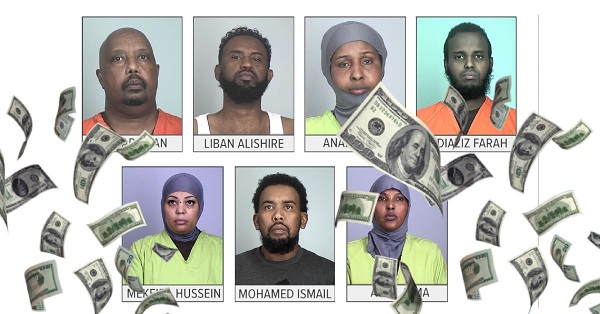

Federal prosecutors say Minnesota’s exploding social-services fraud scandal may now rival nearly the entire economy of Somalia, with as much as $9 billion allegedly stolen from taxpayer-funded programs in what authorities describe as industrial-scale abuse that unfolded largely under the watch of Democrat Gov. Tim Walz. The staggering new estimate is almost nine times higher than the roughly $1 billion figure previously suspected and amounts to about half of the $18 billion in federal funds routed through Minnesota-run social-services programs since 2018, according to prosecutors. “The magnitude cannot be overstated,” First Assistant U.S. Attorney Joe Thompson said Thursday, stressing that investigators are still uncovering massive schemes. “This is not a handful of bad actors. It’s staggering, industrial-scale fraud. Every day we look under a rock and find another $50 million fraud operation.”
Authorities say the alleged theft went far beyond routine overbilling. Dozens of defendants — the vast majority tied to Minnesota’s Somali community — are accused of creating sham businesses and nonprofits that claimed to provide housing assistance, food aid, or health-care services that never existed, then billing state programs backed by federal dollars. Thompson said the opportunity became so lucrative it attracted what he called “fraud tourism,” with out-of-state operators traveling to Minnesota to cash in. Charges announced Thursday against six more people bring the total number of defendants to 92.
BREAKING: First Assistant U.S. Attorney Joe Thompson revealed that 14 state Medicaid programs have cost Minnesota $18 billion since 2018, including more than $3.5 billion in 2024 alone.
Thompson stated, "Now, I'm sure everyone is wondering how much of this $18 billion was… pic.twitter.com/hCNDBuCTYH
— FOX 9 (@FOX9) December 18, 2025
Among the newly charged are Anthony Waddell Jefferson, 37, and Lester Brown, 53, who prosecutors say traveled from Philadelphia to Minnesota after spotting what they believed was easy money in the state’s housing assistance system. The pair allegedly embedded themselves in shelters and affordable-housing networks to pose as legitimate providers, then recruited relatives and associates to fabricate client notes. Prosecutors say they submitted about $3.5 million in false claims to the state’s Housing Stability Services Program for roughly 230 supposed clients.
Other cases show how deeply the alleged fraud penetrated Minnesota’s health-care programs. Abdinajib Hassan Yussuf, 27, is accused of setting up a bogus autism therapy nonprofit that paid parents to enroll children regardless of diagnosis, then billed the state for services never delivered, netting roughly $6 million. Another defendant, Asha Farhan Hassan, 28, allegedly participated in a separate autism scheme that generated $14 million in fraudulent reimbursements, while also pocketing nearly $500,000 through the notorious Feeding Our Future food-aid scandal. “Roughly two dozen Feeding Our Future defendants were getting money from autism clinics,” Thompson said. “That’s how we learned about the autism fraud.”
The broader scandal began to unravel in 2022 when Feeding Our Future collapsed under federal investigation, but prosecutors say only in recent months has the true scope of the alleged theft come into focus. Investigators allege large sums were wired overseas or spent on luxury vehicles and other high-end purchases. The revelations have fueled political fallout in Minnesota and prompted renewed federal scrutiny of immigration-linked fraud as well as criticism of state oversight failures. Walz, who is seeking re-election in 2026 after serving as Kamala Harris’ running mate in 2024, defended his administration Thursday, saying, “We will not tolerate fraud, and we will continue to work with federal partners to ensure fraud is stopped and fraudsters are caught.” Prosecutors, however, made clear the investigation is far from finished — and warned the final tally could climb even higher.


Ottawa’s Newly Released Defence Plan Crosses a Dangerous Line

Hunting Poilievre Covers For Upcoming Demographic Collapse After Boomers

Carney Floor Crossing Raises Counterintelligence Questions aimed at China, Former Senior Mountie Argues

Canadian university censors free speech advocate who spoke out against Indigenous ‘mass grave’ hoax
-
 International1 day ago
Ottawa is still dodging the China interference threat
-
 Business1 day ago
There’s No Bias at CBC News, You Say? Well, OK…
-
 Automotive24 hours ago
Canada’s EV gamble is starting to backfire
-
 International1 day ago
2025: The Year The Narrative Changed
-
 Fraser Institute2 days ago
Carney government sowing seeds for corruption in Ottawa
-
 Daily Caller2 days ago
While Western Nations Cling to Energy Transition, Pragmatic Nations Produce Energy and Wealth
-
 Alberta1 day ago
Alberta project would be “the biggest carbon capture and storage project in the world”
-
 Alberta2 days ago
Alberta Next Panel calls for less Ottawa—and it could pay off