
Also Interesting
The Growth of Online Casinos in Alberta Amid Changing Provincial Regulations


Alberta has announced plans to permit private companies to operate online gambling platforms. This regulatory shift follows Ontario’s successful model, where private gambling websites coexist with government-run platforms. Alberta’s initiative aims to move beyond the current monopoly held by the Alberta Gaming, Liquor and Cannabis (AGLC) through its Play Alberta website. With the introduction of Bill 16 in April 2024 by Minister Dale Nally, the provincial government’s authority to manage and conduct gaming in Alberta has been clarified, paving the way for a regulated and competitive
online gambling market.
The current online gambling market in Alberta is predominantly controlled by Play Alberta, which is estimated to hold 45% of the market share. Despite this, unregulated online gaming sites still account for approximately 55% of Alberta’s iGaming market. Bill 16, also known as the Red Tape Reduction Statutes Amendment Act, aims to reduce this unregulated market by officially permitting and regulating private online gambling operators. This move is expected to align Alberta’s online gambling practices with those of Ontario, the only Canadian province that currently allows privately owned gambling websites. In Ontario, more than 50 regulated private operators manage 80 gambling
websites.
Revenue and Economic Considerations
The fiscal impact of online gambling in Alberta has been significant. In the first quarter of the 2024-25 fiscal year, online gambling revenues reached $726 million, up from $540 million in the prior year. Since its launch in October 2020, Play Alberta has taken around $5.36 billion in total bets over 12 months ending March 31, contributing $234 million to Alberta’s general revenue fund. This financial input highlights the potential benefits of expanding the market to include multiple operators.
Ontario’s experience showcases the economic benefits of a regulated and competitive online gambling market. Ontario’s iGaming sector has contributed CA$2.7 billion to the province’s GDP and created almost 15,000 full-time equivalent jobs in the second year after its inception. A report by Deloitte revealed that Ontario’s market had hit or nearly reached many of its year-five projections within two years, offering a promising benchmark for Alberta as it makes regulatory changes.
One challenge Alberta may face is integrating self-exclusion infrastructure across online gambling sites. Experts like Dr. Nigel Turner emphasize the importance of responsible gambling practices. Unlike Alberta, Ontario currently lacks provincewide self-exclusion tools and mandatory limit-setting, which Alberta is considering implementing. Minister Dale Nally has indicated that Alberta aims to create a safer and more responsible gambling environment by introducing these tools, aligning with the goal of reducing the unregulated market and ensuring player safety.
Private Operators Entering Alberta’s Online Gambling Market
The entry of private operators, such as FanDuel online casino, is expected to reshape Alberta’s online gambling market. Increased competition from private operators will likely lead to more gaming options and better technologies, improving the user experience. Ontario’s model demonstrates the benefits of a competitive market, including the reduced influence of unregulated offshore sites.
The inclusion of operators like FanDuel presents substantial growth opportunities for Alberta’s online gambling sector. FanDuel’s presence will expand the selection of games and enhance user experiences, contributing to increased provincial revenues through regulated activities. This aligns with Alberta’s objective of fostering a secure and responsible gambling environment while capitalizing on the economic advantages of a well-regulated market.
Economic and Job Growth Projections
Canada’s online casino industry is on track to surpass $2 billion in gross gaming revenue in 2024, nearly tripling from the $750 million recorded in 2020. This growth has spurred job creation, with over 25,000 direct jobs expected in 2024. As more Canadians engage with online gambling, economic contributions from this sector continue to expand, impacting industries such as software development, customer support, marketing, and finance.

Approximately 20 million Canadians, or about 50% of the population, engaged with online casinos at least once in 2024, a significant increase from 10 million in 2020. This growing user base highlights the widespread adoption of online gambling. In Alberta, per-capita gambling spending is notably high, with many participants using unregulated sites. The province aims to draw these funds into the regulated market, ensuring that online gambling activities occur within safe and legal frameworks.
Regulatory Framework and Consultation Process
The Alberta government has initiated consultations to develop a comprehensive strategy for the future online gambling market. These discussions involve key stakeholders, including casinos, racing entertainment centers, and First Nations, ensuring that diverse perspectives are considered. A primary goal of these consultations is to create a framework that promotes safety, responsibility, and economic benefits for the province.
Minister Dale Nally has emphasized that opening the market will only proceed once a robust regulatory framework is in place. This cautious approach aims to eliminate the influence of unregulated offshore gambling websites, ensuring that all activities are subject to provincial oversight. An independent administrator, similar to iGaming Ontario, is planned to oversee the commercial market in Alberta.
The revenue split between Alberta’s government and private operators remains under discussion. In Ontario, the provincial government takes 20% of revenues from regulated gambling websites, contributing $790 million in taxes last year. This model may offer insights into potential revenue-sharing arrangements in Alberta, balancing the need to attract private operators with the goal of maximizing public revenues.
Challenges and Opportunities in Alberta’s Online Gambling Market
Alberta’s move toward a regulated online gambling market faces the challenge of attracting private operators who may hesitate to share player information with AGLC, the operator of Play Alberta. Private operators have expressed reluctance to disclose data to a direct competitor. Addressing these concerns will be essential for building a competitive and dynamic market.
Alberta’s high per-capita gambling spending underscores the potential for regulated online gambling to channel more funds within the province. By capturing this existing gambling activity through regulated channels, Alberta can enhance player safety while generating significant economic benefits.
Conclusion
Alberta’s transition toward a regulated online gambling market is poised to generate significant economic growth and job creation, while enhancing player safety and responsible gambling practices. By following Ontario’s successful model, Alberta has the potential to build a competitive, secure, and regulated iGaming environment. As the province finalizes its regulatory framework and addresses challenges like data-sharing concerns, it can unlock the benefits of a growing iGaming market while protecting both players and the public interest. Alberta’s careful approach ensures that this shift benefits the province’s economy while safeguarding players from unregulated sites.


The Toronto Blue Jays are certainly keeping things interesting this winter. While the calendar might say late December, the front office shows no signs of slowing down. They have already made waves across MLB with some massive acquisitions earlier in the month.
Rather than packing it in for the holidays, the management team is seemingly working overtime. Their goal is to build a roster that can truly compete for a championship in 2026.
Although there are no more signing announcements for the end of the year, the silence is likely temporary. Reports indicate that the team is actively pursuing several more roster improvements before the new year begins.
A Rotation Built To Dominate
The team made their intentions clear in early December. They successfully signed Dylan Cease to a massive seven-year, $210 million contract. This deal, which became official around December 8, instantly transforms the Toronto rotation into one of the strongest in MLB.
Moreover, they did not stop with just one big arm. The front office added significant depth by bringing in KBO MVP Cody Ponce on a three-year deal worth $30 million. This gives the team a level of stability that was missing in previous seasons.
With such dramatic changes to the roster, fans might be looking for a clear overview of licensed Ontario sportsbooks to understand how these moves have impacted the team’s championship odds. It is certainly a different looking team than the one that ended the last season.
Targets for the Bullpen and Lineup
It seems that the focus has now shifted from the starting rotation to other needs. Agents around the league note that the Jays remain “everywhere” in trade talks. The priority is now on finding high-leverage arms and position players to round out the squad.
The front office is reportedly looking at several specific targets:
- Robert Suarez is a primary target to help lock down the late innings.
- Luke Weaver is being considered to add veteran versatility to the staff.
- Depth pieces for the lineup are being sought to support the core hitters.
- Internal extensions remain a key part of the winter strategy.
Due to the heavy spending on Cease and Ponce, these next moves will likely be strategic. The team is looking for the right fit to complement their new stars.
The Future of the Infield and Management
Conversations are actively continuing with free agent Bo Bichette. Bringing him back is a major topic of discussion among the fanbase, even if no deal is imminent yet. Furthermore, the team has been linked to prospect Kyle Tucker, suggesting they are keeping an eye on the future as well as the present.
Manager John Schneider has also expressed optimism regarding his own contract extension. However, he made it clear that building the team comes first. Therefore, while the heavy lifting might seem done, the work continues behind the scenes.
To be sure, the MLB offseason is long. But the Toronto Blue Jays have started fast, and they seem determined to finish strong.

We wanted to know what to do if you came to Canada for temporary or permanent residence. Many Ukrainians have arrived in the country, and many don’t know where to begin their financial journey. People often turn to traditional banks, where they encounter problems due to a lack of language skills and basic understanding of Canadian financial processes. We found an alternative – a credit union in Toronto. Today, we’ll look at one of the most well-known and learn more about what they have to offer Ukrainians.
What is a Credit Union in Toronto
These organisations differ from the typical bank for Ukrainians. They offer more flexible conditions, convenient online management, and a personalised approach.
However, these organisations are just as safe and reliable as banks. Let’s look at reliability using the example of the well-known BCU Financial:
- With over 70 years on the market. This credit union in Toronto has a dedicated client base with decades of experience.
- Extensive experience. Indeed, over more than 7 decades, its specialists have become experts in financial matters.
- Branches available. You can visit the office for face-to-face interaction.
- Active in the social life of the Ukrainian community. Buduchnist Credit Union provides financial support to schools, churches, and communication centres for Ukrainian newcomers.
As you can see, such companies have stability and experience. Now let’s look at how they differ from banks in financial matters.
Ukrainian Credit Union Toronto: Differences from a Traditional Bank
Firstly, such organizations welcome a personalized approach to Ukrainians. They are more flexible when it comes to obtaining a loan. Newcomers in Canada are working on receiving a good credit history. Banks always request one when reviewing a loan application.
Secondly, you can receive advice in your native language. Most Canadian banks don’t have multilingual consultants and respond only to inquiries in English or French. If, for example, you need help with a scholarship card, you’ll have to call a translator.
Third, you’ll get more flexible and understated banking for Ukrainians. It includes the ability to submit an app online. It provides such services as ordering credit cards, applying for a loan, or opening an account.
Conclusions
Credit unions are much easier for Ukrainians to work with. They speak your language, can provide advice on finances and their specific needs in Canada, and offer flexible terms. They also provide full-fledged online banking, so familiar to Ukrainians. You also become part of the community because, as a credit union member, you are, to a certain extent, its co-owner.


Georgia county admits illegally certifying 315k ballots in 2020 presidential election
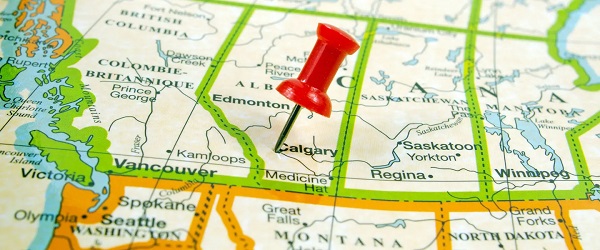
Alberta Next Panel calls to reform how Canada works

Canadian government launches trial version of digital ID for certain licenses, permits

End Supply Management—For the Sake of Canadian Consumers
-
 Business23 hours ago
ICYMI: Largest fraud in US history? Independent Journalist visits numerous daycare centres with no children, revealing massive scam
-
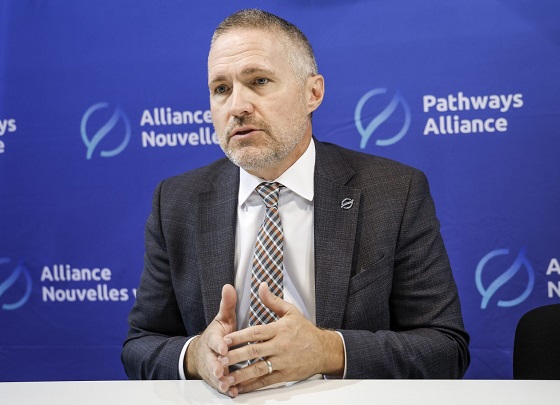 Alberta15 hours ago
Alberta project would be “the biggest carbon capture and storage project in the world”
-
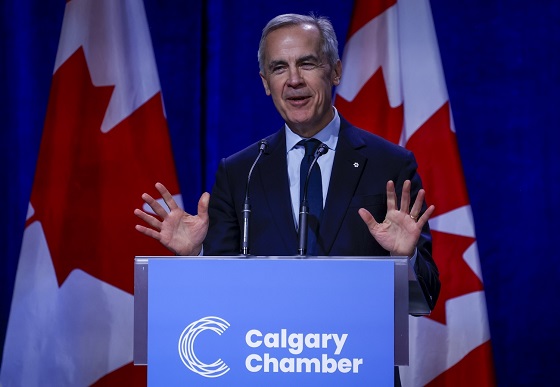 Energy12 hours ago
Canada’s debate on energy levelled up in 2025
-
 Energy14 hours ago
New Poll Shows Ontarians See Oil & Gas as Key to Jobs, Economy, and Trade
-
 Business13 hours ago
Socialism vs. Capitalism
-
 International2 days ago
China Stages Massive Live-Fire Encirclement Drill Around Taiwan as Washington and Japan Fortify
-
 Energy2 days ago
Rulings could affect energy prices everywhere: Climate activists v. the energy industry in 2026
-
 Digital ID2 days ago
The Global Push for Government Mandated Digital IDs And Why You Should Worry