
International
New Research Further Demonstrates Problems with Surface Temperature Records and Models

From Heartland Daily News

It is not just that the Earth has warmed less than biased temperature measurements indicate, it has also warmed less than climate models have said it should for the amount of CO2 humans have emitted into the atmosphere.
Climate Change Weekly has long detailed the severe problems with surface temperature records, driven largely by the Urban Heat Island (UHI) effect compromising the integrity of the vast majority of temperature stations.
In two studies for The Heartland Institute, meteorologist Anthony Watts detailed the extent to which the surface station record in the United States is compromised by station siting that violates the National Oceanic and Atmospheric Administration’s (NOAA) own standards for the proper, unbiased, siting of surface stations. Watts’ initial 2009 study found that 89 percent of the surface stations in NOAA’s and the National Weather Service’s (NWS) system were poorly sited and biased. After the study, NOAA/NWS closed some of the most severely compromised, ridiculously sited stations highlighted in report. Indeed, NOAA had already recognized the problem and had prior to the first study’s release established the U.S. Climate Reference Network (USCRN), consisting of 137 climate observing stations with the best equipment, existing in stable locations unlikely to ever be compromised by nearby development. At the same time, however, NOAA also added thousands of previously unregulated stations established and maintained by others to its system.
The larger system provides more comprehensive coverage, but the vast majority of the stations are, unsurprisingly, poorly sited. As a result, Watts’ follow up survey of NOAA’s surface station network found 96 percent of the stations used to determine U.S. average temperatures are biased upward due to poor siting. The UHI has compromised them.
How bad is the problem? As explained in an article in The Epoch Times, the U.S. Environmental Protection Agency has estimated that “daytime temperatures in urban areas are 1–7 degrees Fahrenheit higher than temperatures in outlying areas, and nighttime temperatures are about 2–5 degrees Fahrenheit higher.” Whereas the temperature record from the USCRN indicates little or no temperature change during its 18 years of existence, the broader network supports claims that the U.S. is warming. By the way, as detailed in previous Climate Change Weekly posts, what’s true for the United States is also true for the global surface station network and, since 2015, for the ocean temperature measurement system. Both are biased by poor siting compromising the validity of the temperatures measured.
A new report from the Heritage Foundation by Roy Spencer, Ph.D., a long-time friend of The Heartland Institute, principal research scientist at the University of Alabama in Huntsville, and currently a visiting fellow in The Heritage Foundation’s Center for Energy, Climate, and Environment, looks at a slightly different problem with temperatures: the difference between measured warming and climate model temperature projections. It is not just that the Earth has warmed less than biased temperature measurements indicate, it has also warmed less than climate models have said it should for the amount of CO2 humans have emitted into the atmosphere.
Spencer’s research found recent warming is likely not due solely to human greenhouse gas emissions, and the warming experienced is substantially less than climate models have predicted—43 percent less, in fact. And that’s even when readings from the UHI-biased stations are included.
Spencer examined summertime temperature readings for 12 Corn Belt states in the United States. Each of the 36 models he compared to measured warming by surface stations, weather balloons, and global satellites overstated the amount of warming experienced, with most of the models off by 100 percent or more. (See the graphic, below)

Spencer is also working on a large-scale study to explain the discrepancy between urban and rural temperature stations globally, and how that plays into recent claims temperatures are setting all-time records. His preliminary data suggests measured warming is strongly correlated to population density. As cities grow, and populations increase and become more densely packed, temperatures in urban and suburban areas rise faster than in the surrounding countryside, once again confirming Watts’ conclusion that the temperature record is compromised by UHI.
If Watts’ and Spencer’s research are correct, not only do climate models “run too hot,” as even some of their proponents have been forced to admit, but the regularly reported surface station record is running too hot as well.



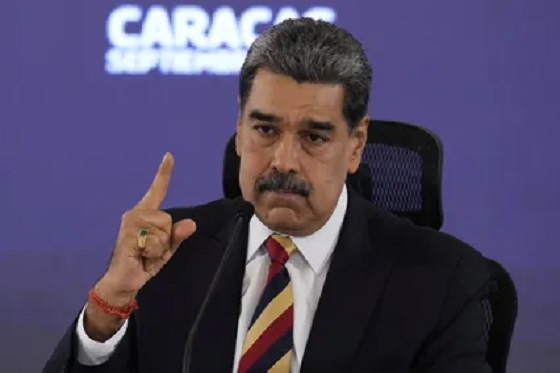
Venezuelan strongman Nicolás Maduro is striking a suddenly conciliatory tone toward Washington after a reported CIA drone strike targeted a cartel-linked docking area inside his country, claiming Caracas is now “ready” to negotiate with the United States on drug trafficking — and even dangling access to Venezuela’s oil sector as leverage.
In a sit-down interview recorded on New Year’s Eve with Spanish journalist Ignacio Ramonet and aired Thursday on state television, Maduro said the U.S. government has long known Venezuela is open to talks, insisting that if Washington wants a note-for-note agreement to combat narcotics flows, “we’re ready.”
He went further, suggesting that American energy firms could return in force, saying Venezuela is open to U.S. oil investment “whenever they want it, wherever they want it and however they want it,” explicitly referencing past dealings with Chevron.
Venezuelan President Maduro:
If the United States wants to seriously talk about an agreement to combat drug trafficking, we are ready. pic.twitter.com/3cWMyDxuC8
— Open Source Intel (@Osint613) January 2, 2026
The remarks come amid an aggressive U.S. pressure campaign that has seen at least 35 American strikes on suspected drug-smuggling vessels across the Caribbean and eastern Pacific since early September, operations U.S. officials say have killed more than 115 suspected traffickers.
Those actions are widely viewed as part of a broader effort to choke off cartel pipelines tied to the Maduro regime and destabilize a government Washington has long accused of functioning as a narco-state.
Last week’s strike — the first publicly acknowledged U.S. operation on Venezuelan soil since the maritime campaign began — was revealed by President Trump himself in a Dec. 26 radio interview, marking a sharp escalation.
Maduro refused to address the strike directly during the interview, saying only that he could “talk about it in a few days,” a silence that stood in contrast to his sudden eagerness to negotiate.
U.S. officials have been far less ambiguous. Secretary of State Marco Rubio said in December that the current relationship with Caracas is “intolerable,” accusing the regime of actively partnering with terrorist organizations and criminal networks that threaten U.S. national interests.
Maduro, who is under U.S. indictment on charges including drug trafficking, money laundering, and corruption, is now signaling flexibility just as American pressure tightens — a familiar pattern for a regime that has often talked cooperation when cornered, only to revert once the heat eases.
Whether Washington sees this latest outreach as a genuine shift or another tactical feint remains an open question, but the timing suggests the message was less about diplomacy than survival.
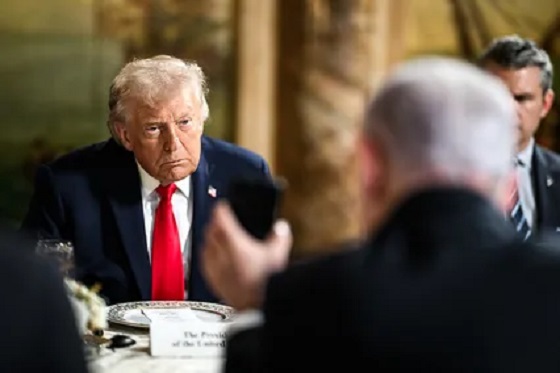
President Trump warned Friday that the United States stands ready to act if Iran’s regime escalates its crackdown on protesters, saying America would “come to their rescue” should peaceful demonstrators be violently killed as unrest spreads across the country. Writing on Truth Social, Trump said, “If Iran shoots and violently kills peaceful protesters, which is their custom, the United States of America will come to their rescue,” adding bluntly, “We are locked and loaded and ready to go.” His comments came as clashes between protesters and security forces erupted in multiple Iranian cities, leaving at least six people dead — the first confirmed fatalities since the latest wave of unrest intensified.
The demonstrations began as economic protests, driven by soaring prices, inflation, and a collapsing currency after years of sanctions tied to Iran’s nuclear program, but have quickly taken on a political edge. Shopkeepers in Tehran reportedly shut their doors in protest over economic stagnation, with similar actions and street demonstrations spreading into at least 15 cities, largely concentrated in western Iran. Iranian state media acknowledged deadly clashes in Lordegan and Azna, while state television reported that a member of Iran’s security forces was killed during unrest in Kouhdasht.
Tehran’s leadership responded sharply to Trump’s warning. Ali Larijani, head of Iran’s top security body, reportedly cautioned that U.S. involvement would “destabilize the entire region” and urged Trump to be “mindful of their soldiers’ safety.” Ali Shamkhani, an adviser to Supreme Leader Ali Khamenei, called Iran’s internal security a “red line,” warning that any American intervention would be met with a response. Even as Iranian officials attempt to strike a public tone of concern, the threat of force is unmistakable. President Masoud Pezeshkian described the protests over economic hardship as understandable and said Thursday that his government would “end up in hell” if it failed to fix the economy. At the same time, prosecutors and judiciary officials vowed zero tolerance. Lorestan prosecutor Ali Hasavand warned that participation in “illegal gatherings” or actions disturbing public order would be treated as crimes and punished “with the greatest firmness,” accusing “hostile individuals” of sowing chaos.
The unrest comes as Iran’s regional position appears weakened following setbacks to its allies in Gaza, Lebanon, and Syria, adding to pressure on the regime at home. While the current demonstrations remain smaller than the massive 2022 protests sparked by the death of Mahsa Amini — which left hundreds dead — the echoes are unmistakable. Similar nationwide unrest in 2019 over fuel prices eventually evolved into open calls to overthrow Iran’s clerical rulers. Trump’s message, characteristically direct, places Tehran on notice: if the regime chooses mass bloodshed again, he says the United States will not look away.
Georgia county admits illegally certifying 315k ballots in 2020 presidential election

ICYMI: Largest fraud in US history? Independent Journalist visits numerous daycare centres with no children, revealing massive scam

Alberta project would be “the biggest carbon capture and storage project in the world”

While Western Nations Cling to Energy Transition, Pragmatic Nations Produce Energy and Wealth
-
 Energy5 hours ago
Rulings could affect energy prices everywhere: Climate activists v. the energy industry in 2026
-
 Digital ID6 hours ago
The Global Push for Government Mandated Digital IDs And Why You Should Worry
-
 Bruce Dowbiggin4 hours ago
The Rise Of The System Engineer: Has Canada Got A Prayer in 2026?
-
 International1 day ago
Trump confirms first American land strike against Venezuelan narco networks
-
International4 hours ago
Maduro says he’s “ready” to talk
-
 Opinion2 days ago
Globally, 2025 had one of the lowest annual death rates from extreme weather in history
-
 Business1 day ago
How convenient: Minnesota day care reports break-in, records gone
-
 Business1 day ago
The great policy challenge for governments in Canada in 2026