
Artificial Intelligence
Middle schoolers are now using AI to create ‘deepfake’ pornography of their classmates



From LifeSiteNews
It’s happening all over the world: a generation weaned on hardcore pornography is increasingly enabled by AI technology to create imagery of people they know personally.
A recent news story out of Alabama should be getting far more attention than it is, because it is a glimpse into the future. Middle school students are using artificial intelligence (AI) to create pornographic images of their female classmates:
A group of mothers in Demopolis say their daughters’ pictures were used with artificial intelligence to create pornographic images of their daughters. Tiffany Cannon, Elizabeth Smith, Holston Drinkard, and Heidi Nettles said they all learned on Dec. 4 that two of their daughters’ male classmates created and shared explicit photos of their daughters. Smith said since last Monday, it has been a rollercoaster of emotions.
“They’re scared, they’re angry, they’re embarrassed. They really feel like why did this happen to them,” said Smith. The group of mothers said there is an active investigation with Demopolis Police. However, they wish for the school district to take action. They believe this is an instance of cyberbullying and there are state laws and policies to protect their girls.
“We have laws in place through the Safe School’s law and the Student Bullying Prevention Act, which says that cyberbullying will not be tolerated either on or off campus,” said Smith. “It takes a lot for these girls to come forward, and they did. They need to be supported for that. Not just from their parents, but from their school and their community,” said Nettles.
The school hasn’t given many details yet, with the Demopolis City Schools Superintendent Tony Willis saying in a statement that there is little they can do: “The school can only address things that happen at school events, school campus on school time. Outside of this, it becomes a parent and police matter. We sympathize with parents and never want wrongful actions to go without consequences – our hearts and prayers go out to all the families hurt by this. That is why we have assisted the police in every step of this process.”
We’ll be seeing a lot more of this in the years ahead, as a generation weaned on hardcore pornography is increasingly enabled by technology to create imagery of people they know personally. The rise of sexting took pornography and made it personal – educators and law enforcement are still grappling with how to curtail the nearly ubiquitous practice of sending and receiving intimate images, the majority of which are then shared with others. Many of these images, by virtue of the age of the students involved, constitute child pornography. AI-generated pornography will create a whole laundry list of other disturbing issues to deal with.
A quick scan of recent headlines will give you a sense of where this is headed. From Fortune: “‘Nudify’ apps that use AI to undress women in photos are soaring in popularity, prompting worries about non-consensual porn.” These apps allow people to “digitally undress” people they know and thus create nonconsensual pornography of girls and women. These apps have already acquired millions of users.

From MIT Technology Review: “A high school’s deepfake porn scandal is pushing US lawmakers into action.” At a New Jersey high school, boys had used AI to “create sexually explicit and even pornographic photos of some of their classmates,” with up to 30 girls being impacted. The sense of violation felt by the victims is profound.
From CNN: “Outcry in Spain as artificial intelligence used to create fake naked images of underage girls.” From the story: “Police in Spain have launched an investigation after images of young girls, altered with artificial intelligence to remove their clothing, were sent around a town in the south of the country. A group of mothers from Almendralejo, in the Extremadura region, reported that their daughters had received images of themselves in which they appeared to be naked.”
One girl was blackmailed by a boy with a doctored image of herself. Another cried to her mother: “What have they done to me?”
From the Washington Post: “AI fake nudes are booming. It’s ruining real teens’ lives.” From the story: “Artificial intelligence is fueling an unprecedented boom this year in fake pornographic images and videos. It’s enabled by a rise in cheap and easy-to-use AI tools that can “undress” people in photographs — analyzing what their naked bodies would look like and imposing it into an image — or seamlessly swap a face into a pornographic video.”
Those are just a few examples of dozens of stories from the past few months. The pornography crisis is being exacerbated further by AI, once again highlighting the unfortunate truth of a joke in tech circles: First we create new technology, then we figure out how to watch porn on it. The porn industry has ruined an untold number of lives. AI porn is taking that to the next level. We should be prepared for it.



From the Fraser Institute
Odds are, you can’t tell whether this sentence was written by AI. Schools across Canada face the same problem. And happily, some are finding simple solutions.
Manitoba’s Division Scolaire Franco-Manitobaine recently issued new guidelines for teachers, to only assign optional homework and reading in grades Kindergarten to six, and limit homework in grades seven to 12. The reason? The proliferation of generative artificial intelligence (AI) chatbots such as ChatGPT make it very difficult for teachers, juggling a heavy workload, to discern genuine student work from AI-generated text. In fact, according to Division superintendent Alain Laberge, “Most of the [after-school assignment] submissions, we find, are coming from AI, to be quite honest.”
This problem isn’t limited to Manitoba, of course.
Two provincial doors down, in Alberta, new data analysis revealed that high school report card grades are rising while scores on provincewide assessments are not—particularly since 2022, the year ChatGPT was released. Report cards account for take-home work, while standardized tests are written in person, in the presence of teaching staff.
Specifically, from 2016 to 2019, the average standardized test score in Alberta across a range of subjects was 64 while the report card grade was 73.3—or 9.3 percentage points higher). From 2022 and 2024, the gap increased to 12.5 percentage points. (Data for 2020 and 2021 are unavailable due to COVID school closures.)
In lieu of take-home work, the Division Scolaire Franco-Manitobaine recommends nightly reading for students, which is a great idea. Having students read nightly doesn’t cost schools a dime but it’s strongly associated with improving academic outcomes.
According to a Programme for International Student Assessment (PISA) analysis of 174,000 student scores across 32 countries, the connection between daily reading and literacy was “moderately strong and meaningful,” and reading engagement affects reading achievement more than the socioeconomic status, gender or family structure of students.
All of this points to an undeniable shift in education—that is, teachers are losing a once-valuable tool (homework) and shifting more work back into the classroom. And while new technologies will continue to change the education landscape in heretofore unknown ways, one time-tested winning strategy is to go back to basics.
And some of “the basics” have slipped rapidly away. Some college students in elite universities arrive on campus never having read an entire book. Many university professors bemoan the newfound inability of students to write essays or deconstruct basic story components. Canada’s average PISA scores—a test of 15-year-olds in math, reading and science—have plummeted. In math, student test scores have dropped 35 points—the PISA equivalent of nearly two years of lost learning—in the last two decades. In reading, students have fallen about one year behind while science scores dropped moderately.
The decline in Canadian student achievement predates the widespread access of generative AI, but AI complicates the problem. Again, the solution needn’t be costly or complicated. There’s a reason why many tech CEOs famously send their children to screen-free schools. If technology is too tempting, in or outside of class, students should write with a pencil and paper. If ChatGPT is too hard to detect (and we know it is, because even AI often can’t accurately detect AI), in-class essays and assignments make sense.
And crucially, standardized tests provide the most reliable equitable measure of student progress, and if properly monitored, they’re AI-proof. Yet standardized testing is on the wane in Canada, thanks to long-standing attacks from teacher unions and other opponents, and despite broad support from parents. Now more than ever, parents and educators require reliable data to access the ability of students. Standardized testing varies widely among the provinces, but parents in every province should demand a strong standardized testing regime.
AI may be here to stay and it may play a large role in the future of education. But if schools deprive students of the ability to read books, structure clear sentences, correspond organically with other humans and complete their own work, they will do students no favours. The best way to ensure kids are “future ready”—to borrow a phrase oft-used to justify seesawing educational tech trends—is to school them in the basics.

Paige MacPherson
Senior Fellow, Education Policy, Fraser Institute
Artificial Intelligence
AI is accelerating the porn crisis as kids create, consume explicit deepfake images of classmates

From LifeSiteNews
“Ten years ago it was sexting and nudes causing havoc in classrooms,” writes Sally Weale in a chilling new report at the Guardian. “Today, advances in artificial intelligence (AI) have made it child’s play to generate deepfake nude images or videos, featuring what appear to be your friends, your classmates, even your teachers. This may involve removing clothes, getting an image to move suggestively or pasting someone’s head on to a pornographic image.”
I have been covering the rise of the next horrific manifestation of our collective porn crisis here at LifeSiteNews since 2019, when I warned that the rise of “deepfakes” would inevitably result in people making artificial pornography of their peers. Just a few years later, I reported on stories of middle-schoolers making deepfake pornography of kids they attended class with; last year, I reported on the rise of “nudify” apps that can digitally undress people in photographs, and the trauma, bullying, and inevitable sexual blackmail that has resulted.
The Guardian report reveals how swiftly this crisis is escalating. One teacher described an incident in which a teenage boy took out his phone, chose a social media image of a girl from a neighboring school, and used the “nudify” app to digitally remove her clothes. The teacher was shocked to see that the boy wasn’t even hiding his actions, because he didn’t see what he was doing as shocking, or even shameful. “It worries me that it’s so normalized,” she said. Other students reported the boy, his parents were contacted, and the police were called. The victimized girl was not even told.
The crisis is global. “In Spain last year, 15 boys in the south-western region of Extremadura were sentenced to a year’s probation after being convicted of using AI to produce fake naked images of their female schoolmates, which they shared on WhatsApp groups,” Weale writes. “About 20 girls were affected, most of them aged 14, while the youngest was 11.”
A similar situation unfolded in Australia, where 50 high school students had deepfake images distributed; in the United States, 30 female students in New Jersey discovered that “pornographic images of them had been shared among their male classmates on Snapchat.”
The mother of one student in Australia said that “her daughter was so horrified by the sexually explicit images that she vomited.” In the United Kingdom, the problem has exploded overnight:
A new poll of 4,300 secondary school teachers in England, carried out by Teacher Tapp on behalf of the Guardian, found that about one in 10 were aware of students at their school creating “deepfake, sexually explicit videos” in the last academic year. Three-quarters of these incidents involved children aged 14 or younger, while one in 10 incidents involved 11-year-olds, and 3% were younger still, illustrating just how easy the technology is to access and use. Among participating teachers, 7% said they were aware of a single incident, and 1% said it had happened twice, while a similar proportion said it had happened three times or more in the last academic year. Earlier this year, a Girlguiding survey found that one in four respondents aged 13 to 18 had seen a sexually explicit deepfake image of a celebrity, a friend, a teacher or themselves.
Predictably, teachers are also being targeted. Girls and women are left shattered by this victimization. Laura Bates, author of The New Age of Sexism: How the AI Revolution Is Reinventing Misogyny, writes: “It feels like someone has taken you and done something to you and there is nothing you can do about it. Watching a video of yourself being violated without your consent is an almost out-of-body experience.” Boys, meanwhile, are engaging in criminal behavior often without even knowing it. In the world they have grown up in, pornography is normal – and this is merely the next step.
The experts that Weale interviews are, as usual, at a loss of what can be done about this crisis. They emphasize education, while admitting that this is the equivalent of taking a water pistol to a raging forest fire. They are skeptical that guidelines or bans around technology at school will help. Understandably, educators are demoralized and even despairing. Pornography and sexting have already transformed schools. Deepfake pornography is now making an already ugly crisis far more personal, and there is no indication that the problem can be stopped without dramatic action.
The only genuine solution was put forward by Dame Rachel de Souza, the children’s commissioner for England. She has advocated that “nudification apps such as ClothOff” be simply banned. “Children have told me they are frightened by the very idea of this technology even being available, let alone used,” de Souza stated. De Souza is correct. The solution to the porn crisis is both tremendously difficult, but extraordinarily simple: we must simply make this content – and these apps – illegal.
The good news is that the first step in this direction has already been taken in the U.K. On November 3, the government tabled the Crime and Policing Bill in Parliament. It includes an amendment criminalizing pornography featuring strangulation or suffocation – usually referred to as “choking” – with legal requirements for tech platforms to block this content from U.K. users.
This is the first time a genre of pornography has been criminalized on the basis that even if it is consensual, it genuinely harms society. That is an encouraging precedent, because it applies to virtually all hardcore pornography – and certainly to the “nudification” apps that are set to make middle school a hyper-sexualized hell for women and girls.
The porn industry is destroying society. We must destroy it first.



Wayne Gretzky’s Terrible, Awful Week.. And Soccer/ Football.

Western Campuses Help Build China’s Digital Dragnet With U.S. Tax Funds, Study Warns
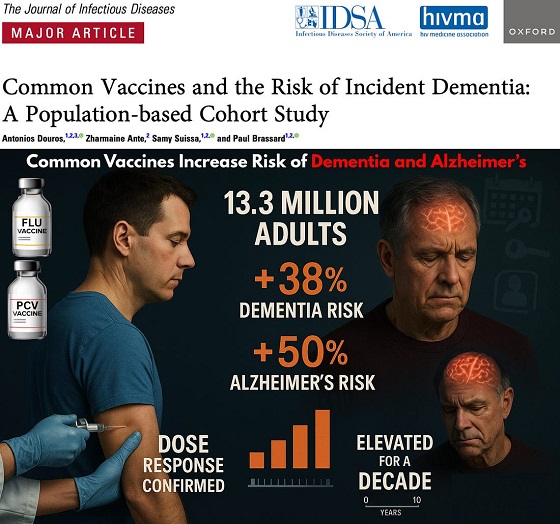
Common Vaccines Linked to 38-50% Increased Risk of Dementia and Alzheimer’s
The $50 Billion Question: EVs Never Delivered What Ottawa Promised
-
 COVID-192 days ago
Trump DOJ seeks to quash Pfizer whistleblower’s lawsuit over COVID shots
-
 Alberta2 days ago
Alberta introducing three “all-season resort areas” to provide more summer activities in Alberta’s mountain parks
-
 Agriculture2 days ago
Growing Alberta’s fresh food future
-
 International2 days ago
Trump admin wants to help Canadian woman rethink euthanasia, Glenn Beck says
-
 Alberta2 days ago
The case for expanding Canada’s energy exports
-
 Censorship Industrial Complex2 days ago
Ottawa’s New Hate Law Goes Too Far
-
 Business1 day ago
Fuelled by federalism—America’s economically freest states come out on top
-
 Automotive1 day ago
Politicians should be honest about environmental pros and cons of electric vehicles